Bahrain introduces 5% VAT regime Jan 2019
Bahrain has become the third of six Gulf Cooperation Council (GCC) states to implement a 5% VAT regime. The six states agreed in 2018 to form a VAT and Customs

Bahrain has become the third of six Gulf Cooperation Council (GCC) states to implement a 5% VAT regime. The six states agreed in 2018 to form a VAT and Customs

Non-resident become subject to reverse charge on B2B; customer must report transaction Croatia is to modify the rules on applying the reverse charge on goods and services for non-residents from

From 1 January 2019, Turkey has allowed limited recovery of Value Added Tax declared and paid on sales invoices which have subsequently good bac. The right to deduct is now

Russia is to raise its Value Added Tax standard rate from 18% to 19% from 1 January 2019. The special reduced rate on the B2B and B2C supply of Russian

Saskatchewan is introducing its regional sales tax, Provincial Sales Tax (PST) on digital or electronic services provided by non-resident providers from 1 January 2019. Saskatchewan will also make facilitating marketplaces liable

e-book VAT rate harmonised with paper equivalents The Council of the European Union has today agreed to permit member states to reduce the Value Added Tax rates on income from

18-month VAT implementation completes The French Pacific territory of New Caledonia has completed the implementation of its local version of Value Added Tax – taxe générale à la consommation, TGC.

From 1 January 2019, the 27 member states of the EU adopted harmonised rules on the VAT treatment of single-use and multi-use retail vouchers. These reforms are enacted by the

The European Union is to introduce a €10,000 pan-EU e-services registration threshold. This means that initially small EU businesses will be able to use the VAT return and rate of

On 1 July 2018, Australia ended the import Goods and Services Tax exemption for small-value parcels. Import GST will instead have to be charged in the online checkout for any

Argentina brought non-resident providers of digital (or electronic) services into its Value Added Tax net in June 2018. Rather than imposing the obligation to VAT register and collect taxes, it

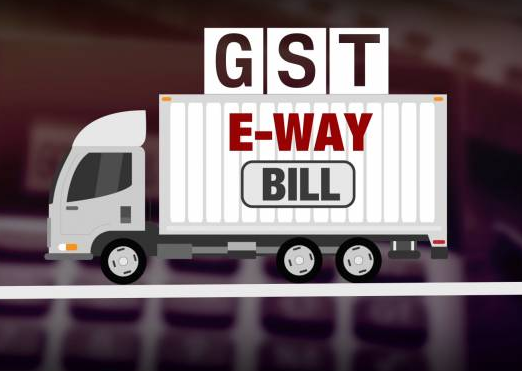
India introduced goods transport e-way bills in April 2018 as part of the implementation of its Goods & Services Tax on 1 July 2017. The requires a digital filing notification

E-services VAT obligations for foreign providers and marketplaces On 1 January 2018, the United Arab Emirates (UAE) implemented a 5% Value Added Tax regime. This included requiring non-resident providers of

E-services VAT obligations for offshore providers and marketplaces On 1 January 2018, the United Arab Emirates (UAE) implemented a 5% Value Added Tax regime. This included requiring non-resident providers of

The Baltic state of Estonia has raised the Value Added Tax registration threshold to €40,000. This will apply from 1 January 2018. It had previously been set at €16,000. Check

Portugal is to enable importers to avoid the cash payment of import VAT by introducing deferred VAT from 1 March 2018. Traders will be able to report the import through

VAT on digital services provided by non-residents The Gulf state of Saudi Arabia implemented VAT on electronic or digital services provided by resident or non-resident providers on 1 January 2018.

COVID-19 tax support to key sectors The Baltic state of Latvia has introduced a reduced Value Added Tax rate of 5%. This will apply to certain fresh fruit, berries and
VAT automation products that simplify your international VAT determination, invoicing and reporting