EU ECOFIN agrees to scrap the €150 Customs exemption on small parcels
April 2026 Transitional flat-fee before full 2028 Customs Reform
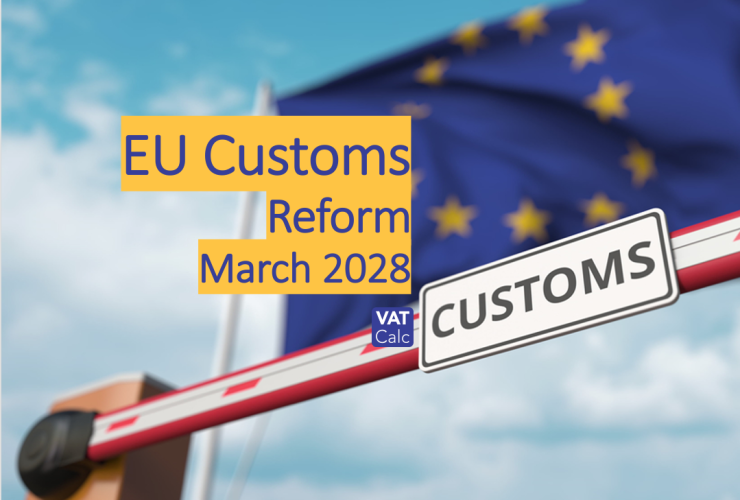
EU finance ministers at ECOFIN meeting have formally agreed to abolish March 2028 the long-standing €150 customs duty exemption for low-value goods entering the EU—a regime widely criticised for distorting competition, encouraging fraud, and incentivising environmentally wasteful micro-shipments. The change forms a core part of the EU’s wider 2028 Customs Reform Package, but crucially, ministers also committed to delivering a temporary anti-fraud measure already in 2026 to stem abuse ahead of the new system.
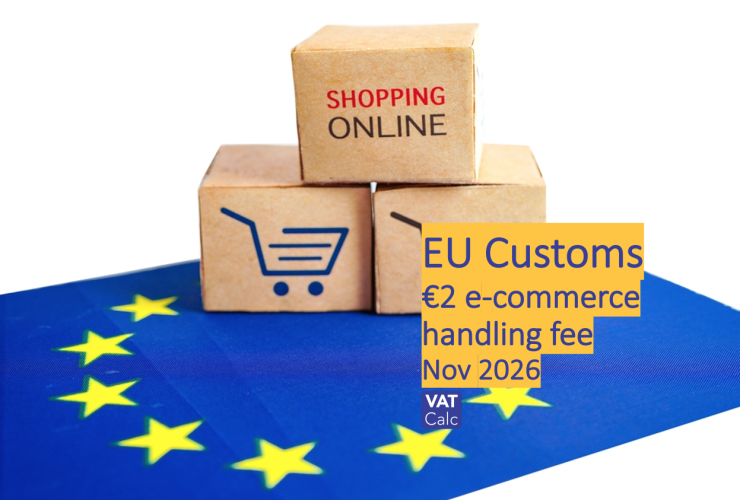
The early 2026 transitional measure is likely to be the proposed €2 customs levy being discussed by EU member states. This could be in place by the end of the first quarter of 2026 – so April.
This marks one of the most significant customs policy shifts in decades, reshaping how global e-commerce vendors ship low-value goods into the bloc.
Why the €150 threshold had to go
Under the current rules, goods worth under €150 can enter the EU without customs duties, even though VAT is charged from the first euro under the 2021 e-commerce reform. The effect has been dramatic:
-
Up to 65% of small parcels are undervalued to fall below the €150 line
-
91% of shipments valued under €150 in 2024 came from China
-
Non-EU sellers increasingly split orders into multiple ultra-low-value parcels, increasing packaging waste and logistics emissions
-
EU businesses face systematic undercutting by importers declaring artificially low values
Abolishing the threshold aligns customs treatment with VAT rules and removes the incentive to fragment shipments or misdeclare values.
Full implementation depends on the 2028 EU Customs Data Hub
The rule change formally kicks in once the EU Customs Data Hub is operational, expected in 2028.
This new hub is central to the EU’s reform vision: a single digital platform enabling customs authorities across all Member States to receive data, risk-analyse consignments, and calculate customs duties per item—a capability essential for processing the hundreds of millions of small parcels arriving annually.
The hub is still under negotiation between the Council and Parliament as part of the broader EU Customs Reform Package, which aims to replace fragmented national systems with a single shared architecture.
With real-time data analysis, importer pre-loading, and automated duty calculation, the hub will finally make it technically feasible to apply full customs rules to every parcel, regardless of value.
ECOFIN agree a 2026 interim measure
While 2028 promises a long-term structural fix, Member States stressed that abuse of the €150 threshold is already at crisis levels. To bridge the gap, ECOFIN agreed to a 2026 transitional solution:
-
A simple, rapid mechanism to levy customs duties on low-value consignments
-
Running 2026–2028, until the data hub is live
-
Designed specifically to cut undervaluation fraud and discourage parcel-splitting
-
Technical work on the format will start immediately
This is effectively an accelerated anti-fraud measure—a stopgap that avoids another two years of unchecked abuse. It mirrors the logic used in the 2021 VAT e-commerce reform: implement a “quick-and-clean” measure first, follow with full reform later.
Although details are not final, expect a structure such as:
-
flat-rate duties on low-value shipments, or
-
simplified per-parcel customs charges, or
-
mandatory duty prepayment by platforms / postal operators
The priority is speed and administrability rather than full harmonisation.