Import VAT relief under pressure: why Article 143 compliance is getting harder
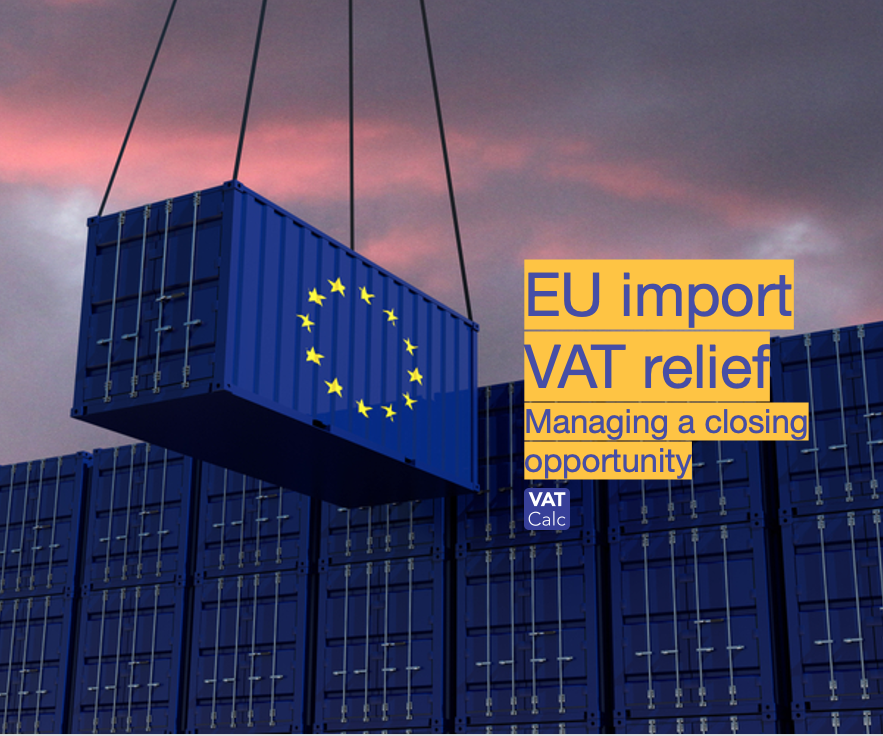
- VAT Directive Article 143 allows import VAT relief when goods are cleared in one EU Member State and immediately supplied to another
- Tax authorities now view these structures as high-risk, with enforcement tightening across the EU
- France’s 2026 reforms show how access to Procedure 42 is becoming more administratively demanding

And how VATCalc’s legislative-led determination and reporting keeps you the right side of the audit.
Clearing goods in one Member State, taxing them in another
EU VAT law has long allowed businesses to import goods into one Member State while accounting for VAT in another. Article 143 of the VAT Directive provides an exemption from import VAT where goods are imported into the EU and immediately dispatched as part of an exempt intra-Community supply to a VAT-registered customer in another Member State.
In operational terms, this is widely known as Procedure 42. It underpins many centralised distribution models, particularly where goods are imported through major logistics hubs before being delivered across the Single Market.
On paper, the mechanism is straightforward. In practice, it has become one of the most scrutinised VAT reliefs in the EU.
Why tax authorities distrust Procedure 42
Over time, Member States and EU institutions have identified Procedure 42 as structurally vulnerable to fraud. The European Court of Auditors has highlighted repeated weaknesses, including:
- Poor verification of customer VAT identification numbers
- Limited cross-checks between customs declarations and VAT reporting
- Fragmented audit trails where importers lack a substantive VAT presence
The core issue is visibility. Customs authorities clear goods at the border, while VAT authorities assess intra-EU supplies later, often using different systems and datasets. Where those systems are not aligned, import VAT relief can be claimed without effective downstream verification.
As a result, the exemption itself has remained intact at EU level, but access to it is being tightened administratively.
France: a clear signal of the enforcement shift
France provides one of the clearest examples of this trend. From 2026, France has fundamentally redesigned how non-EU businesses may access Procedure 42 when importing goods into French territory.
Historically, France permitted non-EU importers to rely on one-off fiscal representation, often using a logistics provider’s French VAT number for individual transactions. This allowed goods to be imported and dispatched intra-EU without the non-EU seller holding a permanent French VAT registration.
That model has now been restricted. From 2026, non-EU businesses importing via France must:
- Hold their own French VAT registration, or
- Appoint a fully accredited fiscal representative, or
- Reroute supply chains to avoid France as the Member State of import
The underlying EU VAT exemption has not changed. What has changed is the compliance threshold required to access it.
Why technology now determines viability
In this environment, Procedure 42 is no longer just a tax rule — it is a systems problem. VATCalc’s single, legislatively coded tax engine is designed precisely for these scenarios. By linking customs events, Article 143 logic, intra-EU supply treatment and VAT reporting within one application, VATCalc provides the audit trail that tax authorities are now demanding.
As Member States raise the bar for import VAT relief, businesses face a clear choice: redesign supply chains, absorb higher compliance costs — or adopt technology that can manage Article 143 correctly, consistently and defensibly.
The exemption still exists. The tolerance for error does not.