Robot taxes, SaaS levies and VAT: governments scramble to plug the AI labour tax gap
Artificial Intelligence promises extraordinary productivity gains.
But it is also creating a growing challenge for governments: how do you tax economies where machines increasingly generate the value instead of people? And what to tax?

While governments struggle with robot taxes, token levies and AI profit-sharing (raising corporate taxes on businesses won’t cut it!) VAT may yet prove the most stable and enforceable tax base in increasingly automated economies.
AI threatens tax’s twin roles: funding governments and redistributing wealth
For decades, modern tax systems have relied heavily on labour. Income taxes, payroll taxes and social contributions remain the backbone of public finances across most developed economies. VAT and sales taxes provide the second major pillar.
But if AI automates large areas of professional, administrative and knowledge-based work, more income may shift from wages toward corporate profits, intellectual property and capital ownership. That could place pressure on two traditional functions of taxation:
- raising government revenues
- redistributing wealth more evenly across society
The debate over “how to tax AI” is therefore rapidly moving from theory into mainstream economic policy. Ideas to tax AI, from token or robot taxes to excess AI levies, are raging. But more promise may come from public participation in AI company shares to ensure all benefit from the gains.
Governments are already experimenting with new AI-era taxes
Alongside broader tax reform, policymakers are also exploring more targeted AI-related taxes.
Proposals being debated include:
- Robot taxes on businesses replacing workers with automation. Even OpenAI has recently discussed targeted taxes on automated labour as part of wider proposals to cushion AI-driven job disruption. The company has also floated public wealth funds and broader capital taxation as part of a future “AI social contract”.
- Token taxes based on AI processing usage. Billionaire investor Mark Cuban recently proposed a small federal levy on AI “tokens” processed by large AI providers, arguing it could raise billions while encouraging more efficient AI infrastructure and reducing energy usage. Academic researchers are also beginning to explore token taxes as a practical way to tax AI consumption at the point models are used rather than where companies are located.
- Automation levies tied to labour displacement. These would effectively tax companies based on how much human labour they replace through AI systems or robotics. Supporters argue this could offset the erosion of payroll taxes and fund retraining or social support programmes. Some economic papers now argue a form of “Pigouvian automation tax” may eventually be needed if AI creates excessive labour displacement incentives.
- Social taxes on excess AI profits. In South Korea, senior policymakers recently proposed redistributing part of the AI semiconductor boom through a form of “national dividend” funded by excess AI-related corporate tax revenues. The suggestion triggered significant market concern, illustrating how politically sensitive AI redistribution policies may become.
- Broader digital consumption taxes. California’s proposed extension of sales tax to SaaS and digital software from 2027 is not officially an “AI tax”, but it reflects a wider global trend toward expanding indirect tax bases around cloud, digital and AI-enabled business models. That may ultimately prove more practical than highly targeted AI-specific taxes.
- Shifting taxation away from labour entirely. Jeff Bezos last week called for no wage taxes on salaries below $75,000 to recognise the salary-destroying AI threat. And Vinod Khosla, major OpenAI backer, recently argued that salaries below $100,000 should eventually become tax-free, funded instead through significantly higher corporation taxes on AI-driven productivity gains.
Can corporation tax fill the AI labour tax gap?
Many economists argue the simplest response to AI-driven labour disruption may not be entirely new AI taxes at all, but higher taxation of the businesses benefiting most from AI.
If AI increasingly shifts income away from labour and toward capital, governments may simply seek larger contributions from:
- AI developers (OpenAI; Anthropic etc)
- Hyperscalers (Amazon; Google; Oracle etc)
- semiconductor companies
- digital platforms
- highly profitable businesses using AI to reduce labour costs
This could include:
- higher corporation taxes
- excess profit taxes
- digital services taxes
- minimum global tax regimes
- AI-linked social contribution levies
But identifying exactly where AI profits arise may prove far more difficult than many political proposals assume. Just look at the failure of Pillar 1 Digital Services Taxes in pinning down agreement on new paradigms, and spark retaliatory tariffs from the losers.
Are the main beneficiaries the foundation model providers like OpenAI and Anthropic? The hyperscalers providing infrastructure such as Microsoft, Amazon Web Services and Google Cloud? Semiconductor firms like NVIDIA? Or the much broader group of businesses simply using third-party AI tools to automate tasks, reduce staffing costs and improve margins?
AI productivity gains may ultimately diffuse across the wider economy rather than concentrate solely among a handful of technology firms. In that sense, AI could become economically pervasive in the same way electricity, software and the internet became embedded across almost every sector.
The problem: nobody really knows what to tax
These ideas attempt to capture value from increasingly digital and automated economies. But they also face major practical and economic challenges.
The first problem is defining the tax base itself.
What exactly counts as a “robot” in a modern AI economy? How should governments measure taxable AI “tokens” when computing activity is fragmented across global cloud infrastructure and constantly recombined across models and platforms?
There is also concern that highly targeted AI taxes could distort innovation. A robot tax, for example, could discourage businesses from investing in productivity-enhancing technologies, while token taxes on AI usage may simply push processing activity into lower-tax jurisdictions.
The enforcement challenge is equally significant. AI infrastructure, cloud computing and intellectual property are highly mobile, allowing profits and digital activity to shift internationally far more easily than traditional industries. Governments are arguably already struggling to tax multinational digital businesses effectively under existing corporation tax systems. AI may simply accelerate existing weaknesses around profit shifting, intellectual property ownership and digital nexus rules.
For this reason, many economists believe governments will ultimately prefer broader and more resilient tax bases over highly specialised “AI taxes”.
Autonomous AI may break the old nexus rules
There is a deeper international tax problem too. AI does not just challenge what governments tax. It challenges where they tax it.
Traditional permanent establishment rules were built around physical presence: offices, employees, branches, warehouses or human agents concluding contracts. But autonomous AI can generate revenue, deliver services, support decisions or execute transactions in a country without any of those traditional markers.
This may force tax authorities to shift from asking “where is the business physically present?” to “where are the economic effects of the AI activity occurring?”
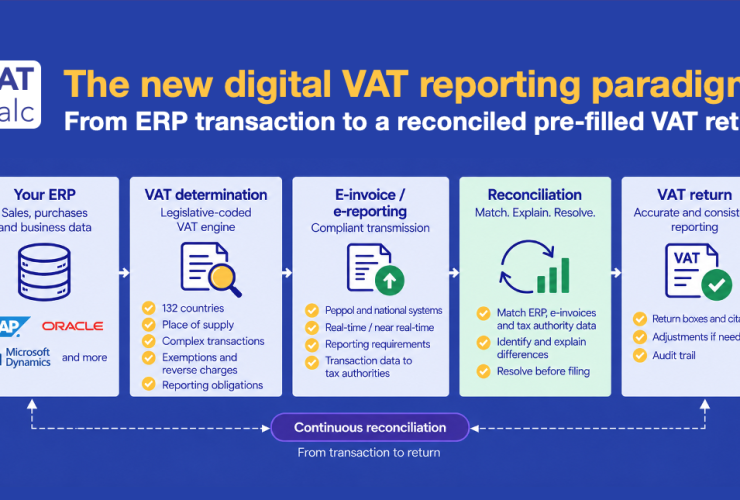
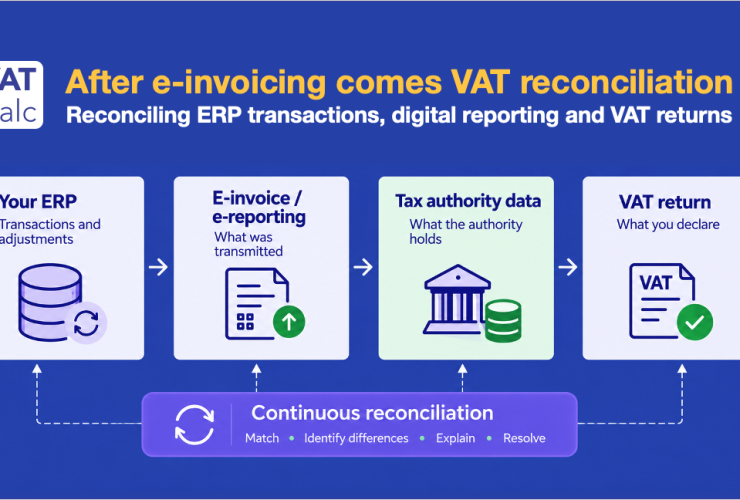
That mirrors the direction already taken by VAT systems, which increasingly tax activity where consumption takes place rather than where the supplier’s infrastructure sits. It also helps explain why e-invoicing, digital reporting, platform reporting and real-time transaction controls are becoming so strategically important.
Autonomous AI agents could create unexpected VAT registrations, fixed establishment questions, permanent establishment exposure and local filing obligations across multiple jurisdictions at once. In practice, AI may not only reshape the tax base. It may also redraw the map of taxable presence itself.
AI could accelerate the shift from labour to consumption and capital taxes
AI may not create an entirely new tax system. But it could accelerate a shift already underway away from labour taxation and toward consumption and capital.
If fewer people earn taxable wages relative to the overall economy, governments will increasingly look toward taxes that capture economic activity elsewhere, including:
- VAT and sales taxes
- corporation taxes
- capital gains taxes
- digital services taxes
- wealth taxes
VAT may become especially important because consumption continues regardless of whether income comes from salaries, investments or AI-generated profits. Even highly automated societies still consume goods and services.
Tax administration enters the AI era
While the debate over taxing AI continues, tax authorities’s AI is already modernising enforcement.
AI itself is increasingly being used to:
- analyse transaction data
- identify VAT anomalies
- detect fraud patterns
- automate compliance reviews
Combined with e-invoicing and real-time reporting mandates, this is creating a far more digitised and transaction-driven tax environment globally.
The irony may be that AI does not just reshape the tax base. It also becomes one of the primary tools governments use to monitor, enforce and protect it.