Temporary VAT cuts have a mixed record. But targeted correctly, could VAT become a fiscal multiplier rather than simply a revenue raiser?
VAT is normally the tax governments turn to when they need money.
Broad base. Reliable revenues. Difficult to avoid.
But there is another way to think about consumption taxes: not as a fiscal brake, but as an accelerator.
A recent NIESR guest article by economist Mark Cliffe argues for a fiscal strategy of “carrots now, sticks later”. Cut the cost of desirable investment today, while signalling higher taxation of less desirable consumption tomorrow. The aim is to pull expenditure forward and stimulate growth.
That raises an interesting VAT question.
Could a temporary VAT cut create a growth multiplier?
Two VAT cuts. Two very different economic effects
The UK now provides an almost perfect experiment.
From 1 October 2026, VAT on household electricity is temporarily being cut from 5% to zero until 31 March 2027. The government estimates an average household saving of around £45 a year. That provides welcome relief.
But it is unlikely to be much of a growth multiplier. Households were going to use electricity anyway. The VAT cut mostly makes existing consumption cheaper. Some of the saving may be spent elsewhere, but the direct behavioural effect is limited.
Now compare that with another UK VAT cut. (BTW, lots of similar ill-thought-through energy vat cuts exist – see Spain and more)
Installations of qualifying energy-saving materials, including solar panels, insulation, heat pumps and battery storage, are currently zero-rated. The temporary zero rate runs until 31 March 2027, after which the 5% reduced rate returns. (GOV.UK)
That VAT cut can change a decision.
A household considering £15,000 of solar panels has an incentive to install them before the tax advantage disappears. The spending happens earlier. An installer gets work. Suppliers receive orders. The household acquires a productive asset and potentially lowers future energy costs.
The first VAT cut provides relief. The second can provide stimulus.
That distinction matters.
VAT as a growth multiplier
Fiscal multipliers normally enter the debate around government infrastructure spending. Cliffe in his article points to estimates suggesting that some high-return infrastructure investment could ultimately generate GDP gains of 1.5 to 2 times the original investment.
VAT incentives work differently. But the same principle is interesting.
- A €1 billion VAT cut that merely discounts purchases which would have happened anyway has a weak multiplier.
- A €1 billion VAT incentive that unlocks or accelerates several billion euros of private investment could have a much larger economic effect.
That is where VAT becomes interesting as growth policy.
The test should therefore not be simply:
How much VAT revenue does the government sacrifice?
It should also be:
How much additional expenditure does each euro of VAT relief trigger?
Most temporary VAT cuts fail that test
Governments have made extensive use of temporary VAT cuts during recent economic shocks.
Food. Electricity. Gas. Fuel. Hospitality.
On this blog, I’ve has repeatedly questioned their effectiveness, particularly as an inflation response.
There is no guarantee the full reduction reaches consumers. Suppliers can retain some of the benefit through margins. Universal VAT cuts are poorly targeted because higher-income households receive the relief too. And cutting VAT on something consumers were going to buy anyway creates little additional economic activity. It may be justified as household support.
But relief should not be confused with stimulus.
Temporary can be the point
There is another important distinction.
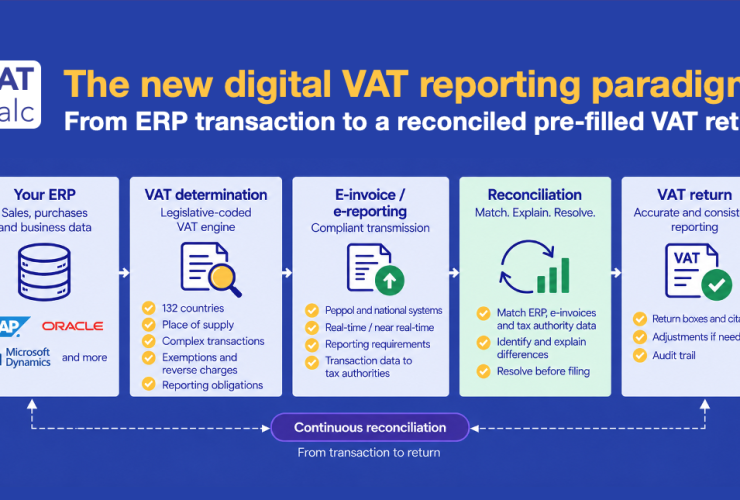
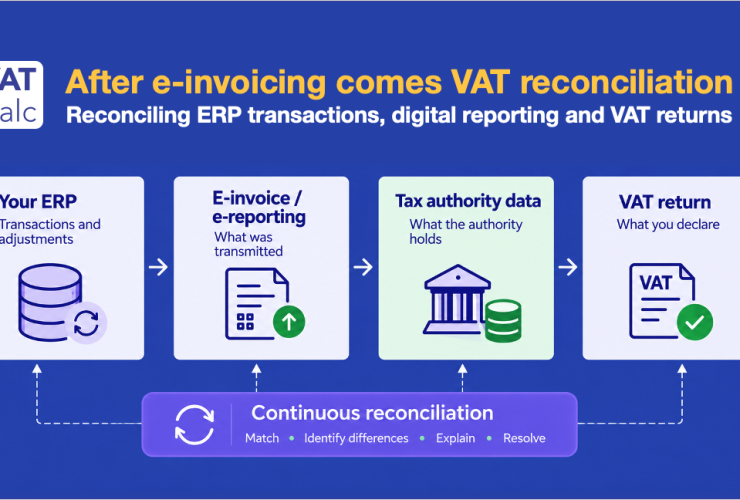
VAT policymakers often regard temporary rates as a nuisance. Businesses have to change ERP tax codes, invoicing, pricing and reporting systems, only to reverse the changes later.
Economically, however, the expiry date can be precisely what makes the policy work.
A permanent VAT reduction says: this investment is cheaper.
A temporary VAT reduction says: do it now.
That is much closer to Cliffe’s “carrots now, sticks later” proposition. Future tax changes can reinforce the signal: favour the low-carbon investment today while announcing higher future taxation of the carbon-intensive alternative.
The objective is not merely substitution. It is acceleration.
The politics of temporary VAT trap remains
There is an obvious problem which I should point out. Governments are much better at introducing temporary VAT relief than withdrawing it.
Hospitality VAT cuts introduced during COVID provide the classic example. Emergency relief was repeatedly extended in several countries as sectors lobbied against returning to the previous rate.
Once businesses have priced around a reduced VAT rate, restoration becomes politically difficult. What began as temporary stimulus risks becoming permanent tax expenditure.
That weakens the whole multiplier argument. If consumers believe the temporary rate will simply be extended, there is much less reason to bring expenditure forward. See more example with VAT cuts to fight inflation.
A temporary VAT stimulus only works properly if taxpayers believe it is temporary.
Beware the VAT Christmas tree
There is a bigger tax policy objection.
The economically clean VAT has a broad base and as few rates and exemptions as possible. Start using VAT to encourage home renovation, green technologies, EVs, tourism, restaurants, healthy foods and dozens of other politically favoured activities and the tax rapidly becomes a Christmas tree. See the EU greening of VAT examples I’ve talked about in the past.
Every incentive creates a boundary. Every boundary creates classification disputes. And every successful relief attracts another industry asking why it is still paying the standard rate.
The compliance costs are real too. Temporary rate changes mean ERP configuration, tax determination changes, invoice updates and effective-date management across potentially millions of transactions.
Any growth benefit has to justify that complexity.
Target the multiplier, not the VAT rate
This suggests a better test for temporary VAT cuts.
Don’t ask whether cutting VAT stimulates growth. Ask what the VAT cut makes somebody do differently.
Cutting VAT on electricity consumers were already going to use? Mostly relief. Cutting VAT on restaurant meals people were already going to buy? Potentially expensive support for one sector.
But temporarily cutting VAT on capital expenditure that households or businesses might otherwise postpone? Much more interesting.
Energy efficiency is the obvious candidate. But the principle could extend to renovations, technologies or other investments where governments want to accelerate private spending.
VAT would no longer simply redistribute the price of existing consumption. It could unlock new expenditure.
Governments looking for growth normally ask whether they can afford to cut VAT.
Perhaps the better question is how much private investment can each euro of VAT cut unlock?