
VATCalc’s Artificial Intelligence Item Classification automatically understands and classifies the goods and services your business buys and sells. This helps:
- Sales invoice processes determine VAT accurately
- Accounts Payable teams validate supplier invoices; and
- Compliance teams identify classification and VAT errors before returns are submitted.
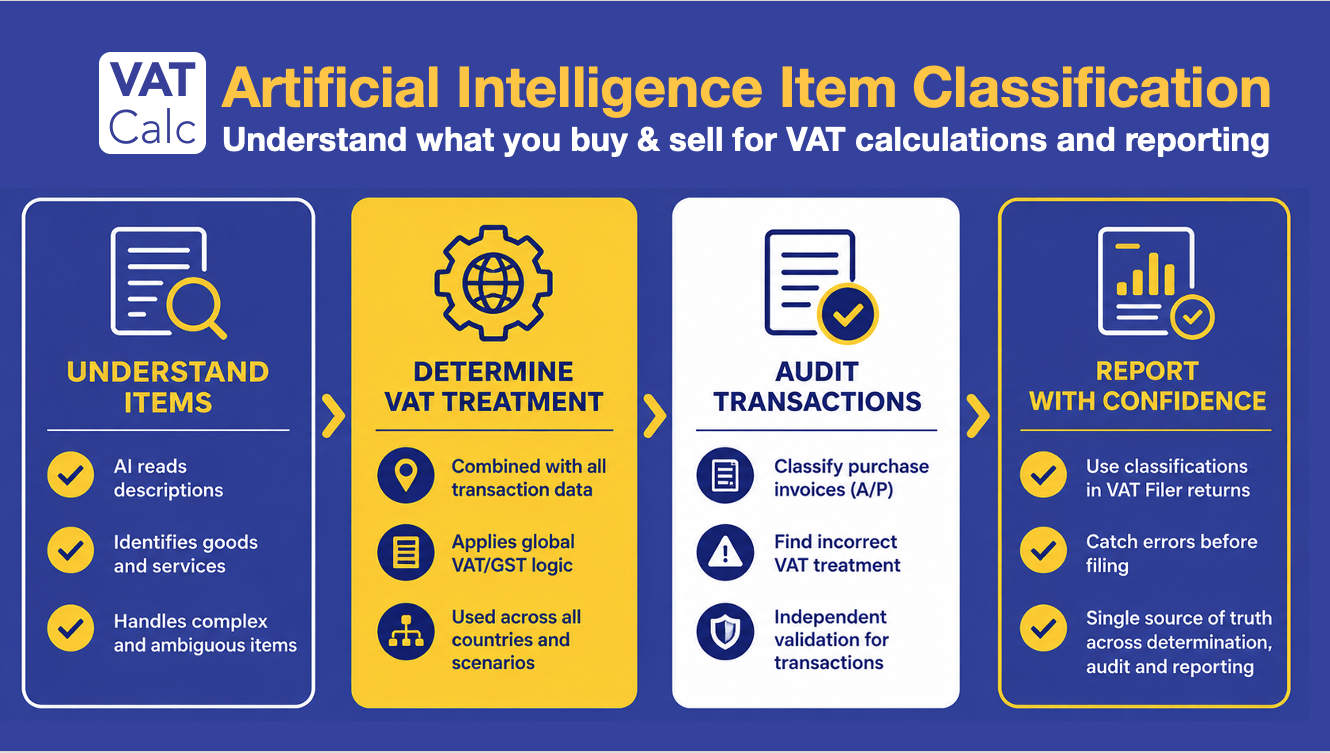
And because Calculator, Auditor and VAT Filer operate on the same platform, the same classification intelligence can be used across VAT determination, transaction auditing and compliance. No other classification service can do this for you.
Let AI understand what you buy and sell
Correct VAT starts with knowing what is actually being supplied.
But ERP data, supplier invoices and product catalogues rarely arrive neatly classified for indirect tax. Descriptions can be technical, abbreviated or ambiguous. Traditionally, tax teams have had to map products manually or build rules around vendors, GL accounts, projects and cost centres.
ViDA and e-invoicing deadlines pile on the pressure
The challenge of validating item classification to ensure the right to deduct input VAT for tax or A/P teams is becoming all the more difficult with tight deadlines on e-invoicing and e-reporting. For example, 2030 ViDA gives purchase e-reporting of just 5 days!
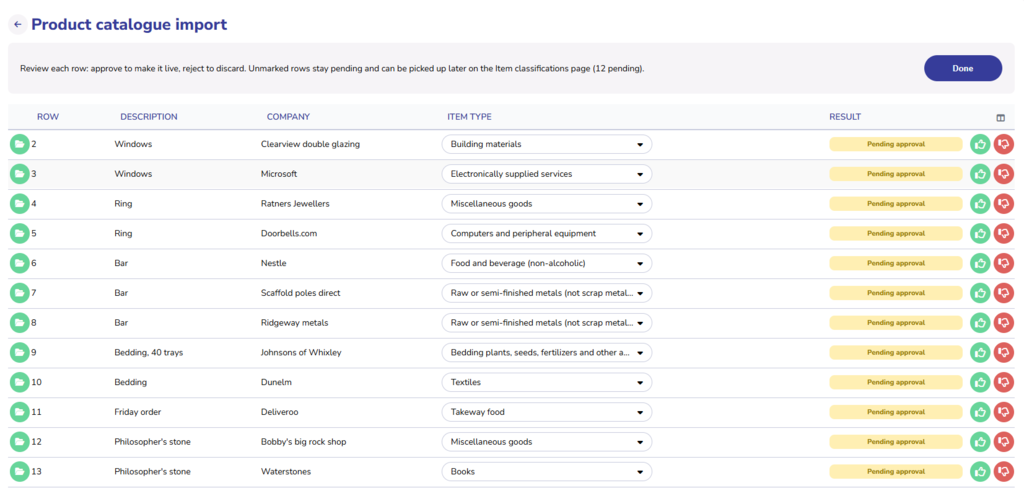
VATCalc AI takes a different approach to tackle all of the above. It combines the item description with counterparty context and trading activity to understand the supply and map it to the appropriate VATCalc item type.
Context matters. Windows supplied by Microsoft is not the same item as windows supplied by a glazing company.
Classify your catalogue or classify in real time
Businesses can upload or synchronise their goods and services catalogue and let VATCalc classify the master data in advance. Classify once and reuse the intelligence as those items appear in subsequent transactions.
But not everything a business buys, or sells, will already be neatly classified.
VATCalc can also identify previously unseen items in real time during tax determination.
The AI uses the available description and counterparty context to establish what is being supplied before the Tax Engine applies the appropriate VAT rules. The classification drives the correct tax treatment immediately and the results are automatically added to the catalogue, with workflow provided to approve this classification for future use.
Who can benefit from automated item classification?


Turn basic data into tax-ready intelligence
VATCalc doesn’t just classify. It enriches.
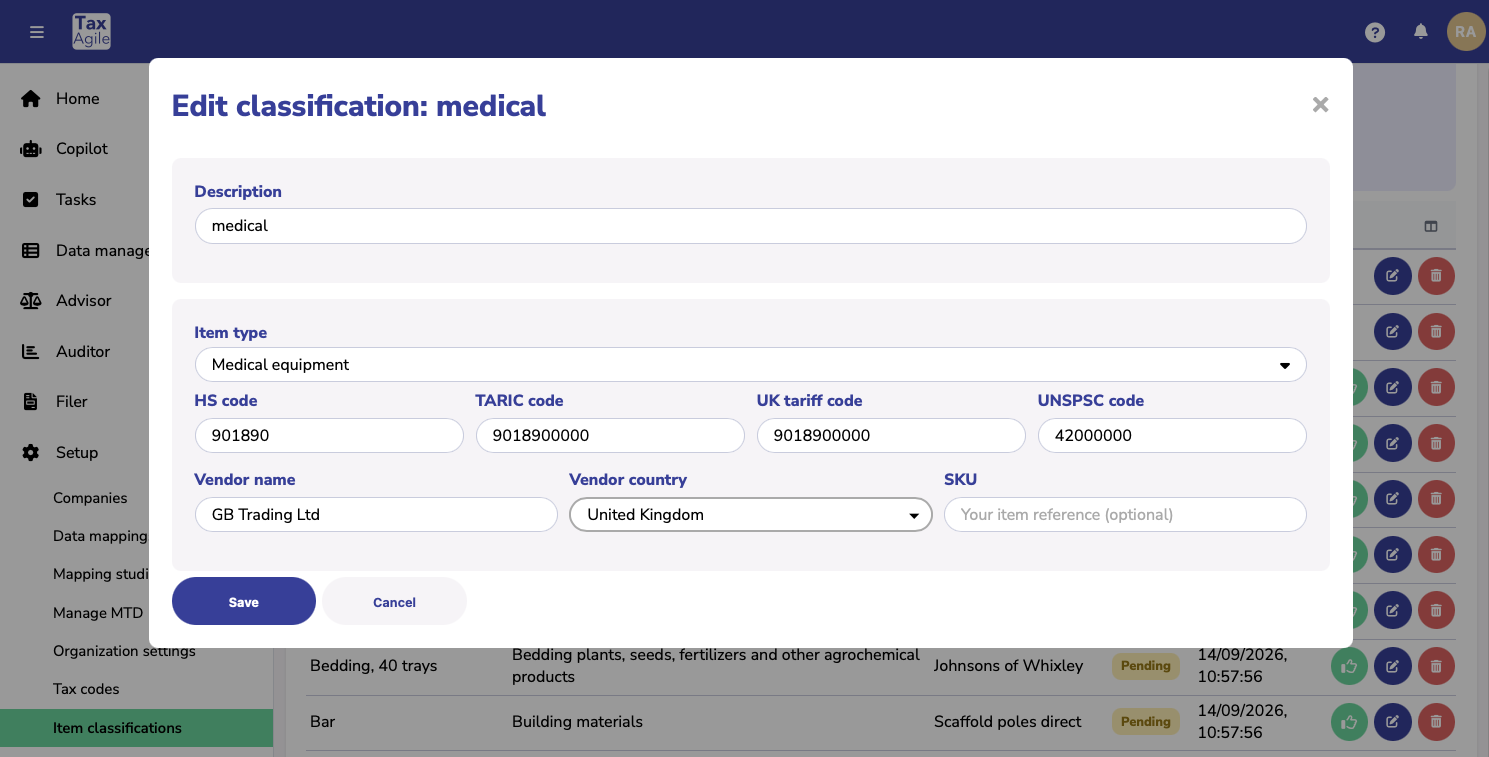
Basic source data can be supplemented with structured tax information including VATCalc item types, HS codes, TARIC codes, UK tariff codes and UNSPSC classifications.
This reduces dependence on perfectly maintained ERP master data and provides richer information for downstream tax processes.
From classification to VAT control
Item classification is not a standalone VAT rate lookup. It feeds directly into VATCalc’s full Tax Engine, where it is combined with the other transaction facts needed to determine the correct VAT treatment.
The same intelligence can then be used by VATCalc Auditor to validate invoices and transactions, including tax calculated outside VATCalc, and by VAT Filer to identify classification and VAT issues before return submission.
That means one classification can support the transaction throughout its tax lifecycle:
Classify → Enrich → Determine → Invoice → Report
Contact us for a FREE trial
AI Item Classification puts an end to hundreds of hours of manual effort across businesses to understand and correctly assess the VAT on their invoices