New HMRC VAT Assist service will run rule-based checks on draft VAT return figures
But this is not transaction-level VAT reporting
HMRC is preparing to introduce a new pre-filing checking service for UK VAT returns from around April 2027.

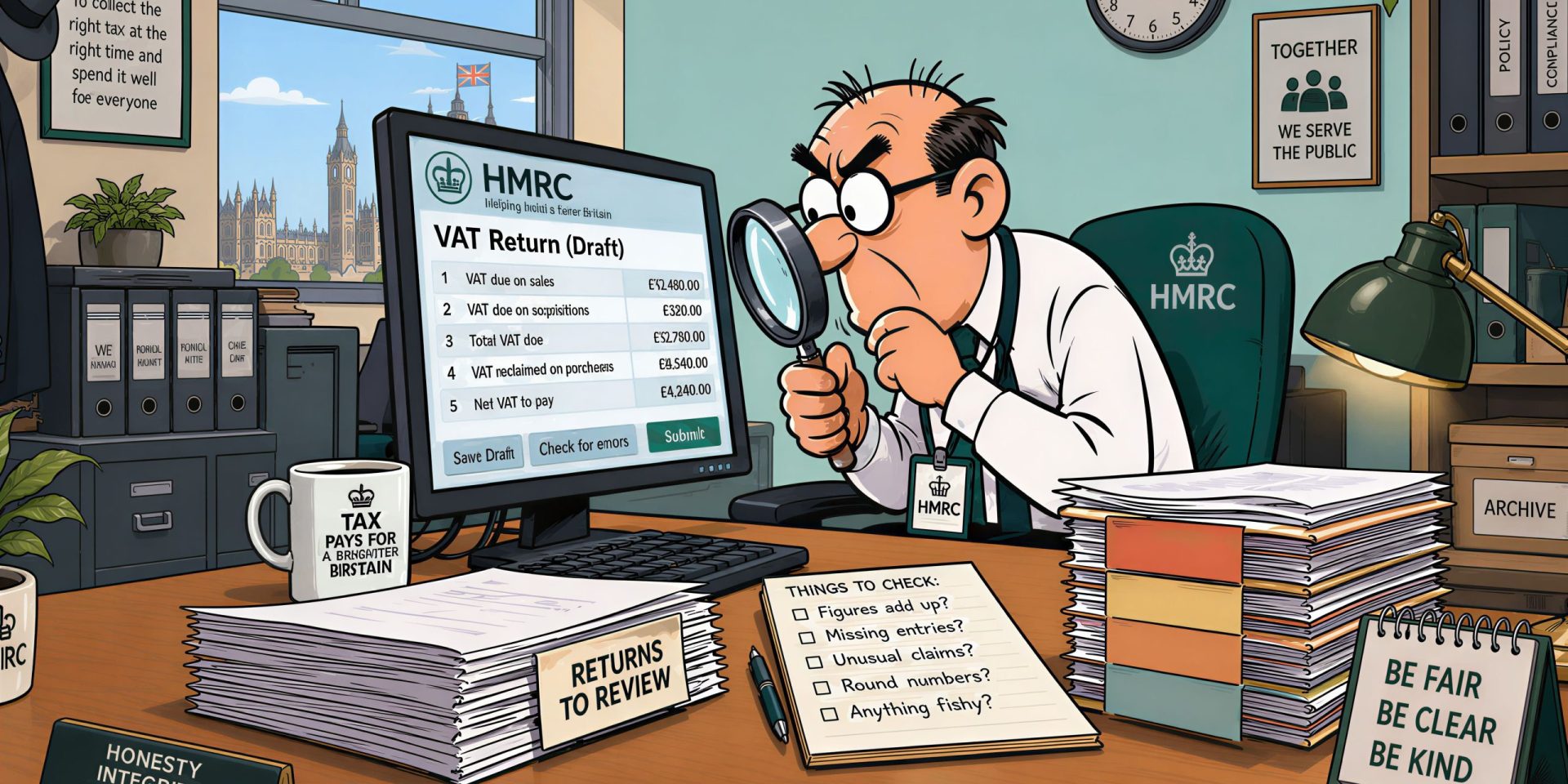
Called VAT Assist, the service will allow Making Tax Digital (MTD) software to send draft VAT return data to HMRC before the return is formally submitted. HMRC will run automated checks and send back a warning, or “digital nudge”, where it identifies a potential error.
HMRC says the objective is to help businesses get their VAT returns right while they are submitting them, rather than identifying potential errors afterwards.
But this is not a move to pre-file detailed VAT transaction data with HMRC.
Draft VAT return data, not transactions
VAT Assist operates on the VAT return data being prepared for submission. The underlying sales and purchase invoices, individual transactions, products and VAT treatments are not being submitted through VAT Assist.
HMRC’s API documentation is explicit that software can send draft return data and request feedback “without formally submitting the return”.
The draft data is transmitted to HMRC through an API and analysed in real time against other information HMRC already holds about the taxpayer.
HMRC says third-party software can already perform its own checks. However, software providers do not have access to the additional taxpayer information held within HMRC systems, which HMRC says enables VAT Assist to provide further insight.
Simple rules, not AI
VAT Assist should also not be confused with AI analysing a business’s accounting records.
HMRC describes it explicitly as a “rule-based system”. Its purpose is to identify common potential errors in VAT returns and issue an appropriate nudge.
HMRC also says there are business validation rules checking that the VAT return has been completed in full and that values have been entered into the correct fields.
Where the rules identify a potential problem, VAT Assist returns a short, plain-English message through the API. This may also contain a link to relevant GOV.UK guidance.
That is very different from transaction-level VAT auditing, which can interrogate the accounting data behind the VAT return and identify the individual invoices or VAT treatments potentially causing an error.
VAT Assist is essentially asking: do the figures on this VAT return look right based on the rules and information HMRC already has?
Voluntary: Businesses do not have to use VAT Assist or follow the nudge
Importantly, VAT Assist does not make a tax decision or prevent the business from submitting its return.
HMRC says acting on the feedback is voluntary. If the taxpayer believes its return is correct or that the warning does not apply, it does not have to change the return.
Third-party software will display HMRC’s message to the taxpayer and then confirm back to HMRC that the message has been presented.
HMRC acknowledges there is a risk that a digital nudge may not be relevant to a particular taxpayer. It says the rules will therefore be tested and reviewed, including monitoring the frequency and relevance of warnings after launch.
Another pre-filing VAT check
VAT Assist nevertheless introduces another layer into the UK VAT compliance process.
The process will effectively become:
Accounting transactions → VAT calculation and validation → draft VAT return → HMRC VAT Assist check → potential digital nudge → final VAT return submission
HMRC plans to make the service available to third-party VAT software providers, with the VAT Assist API already available in alpha for sandbox testing.
The direction is towards more errors being identified before a VAT return reaches HMRC.
But VAT Assist should not be mistaken for the continuous transaction-level reporting being introduced by tax authorities elsewhere. For now, it is a relatively simple rule-based check of draft VAT return data against information HMRC already holds – not HMRC receiving and auditing the underlying transactions before filing.
See more in our UK VAT Guide.