
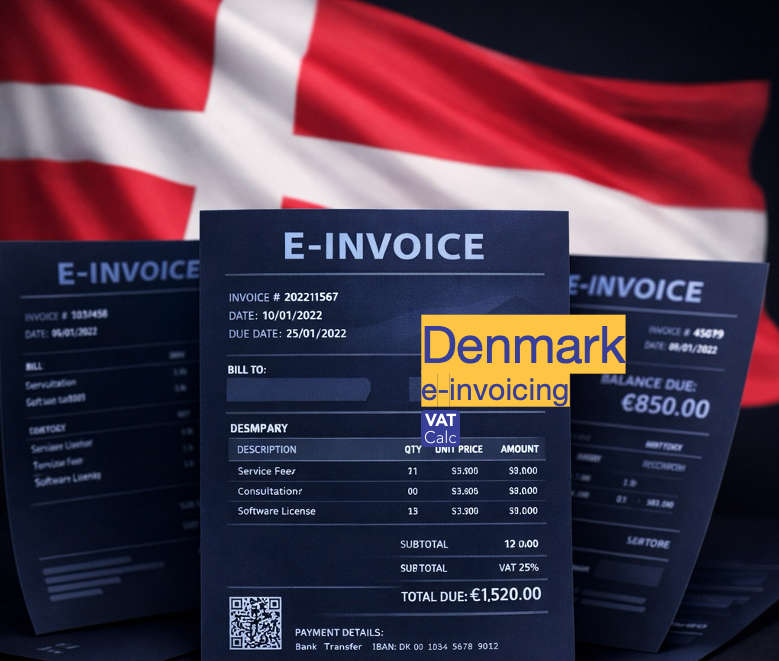
Denmark moves NemHandel to Peppol BIS e-invoicing
• Denmark plans to transition NemHandel from OIOUBL to Peppol BIS
• NemHandel BIS 4 is expected to become the new national standard
• Full migration is targeted for mid-2029

Denmark is preparing a major structural shift in its national e-invoicing framework. In a strategy paper published by the Danish Business Authority in March 2026, the government set out plans to move NemHandel from the domestic OIOUBL format to the Peppol BIS standard. This reflects the upcoming 2030 VAT in the Digital Age reforms, mandating e-invoicing on intra-community invoicing.
Danish e-invoicing mandate is now being rolled out.
NemHanel is the long-standing B2G e-invoicing framework in Denmark. Denmark wants a more interoperable and future-ready model for structured invoicing, one that is better aligned with wider European standards and easier to support over the long term.
A New National Standard
Under the proposal, OIOUBL would gradually be replaced by NemHandel BIS 4, described as a Danish implementation of the Peppol BIS format with local extensions.
The transition is expected to run over several years, with full migration targeted for mid-2029. During that period, businesses and software providers are likely to face a phased coexistence model before Peppol BIS becomes the dominant format.
Preparing for ViDA Digital Reporting Requirements
This is more than a technical document format update. It reflects a broader policy shift.
By moving closer to Peppol and EN 16931-aligned standards, Denmark is positioning NemHandel within the same interoperability framework already used widely across Europe for public procurement and e-invoicing. It reflects obligations under ViDA Digital Reporting Requirements in 2030.
The move also supports the Danish government’s wider digital bookkeeping agenda and strengthens the foundations for more standardised transaction data. That matters as tax administrations and policymakers increasingly push for structured, machine-readable invoice data as part of broader compliance modernisation.
VATCalc perspective
For VAT and e-invoicing teams, Denmark’s strategy is another sign that the future lies in standardised, interoperable invoice data models. The real challenge is no longer just producing an electronic invoice, but ensuring platforms can scale across multiple countries as domestic requirements increasingly sit within a common European framework.
See more in our Danish VAT guide.


