
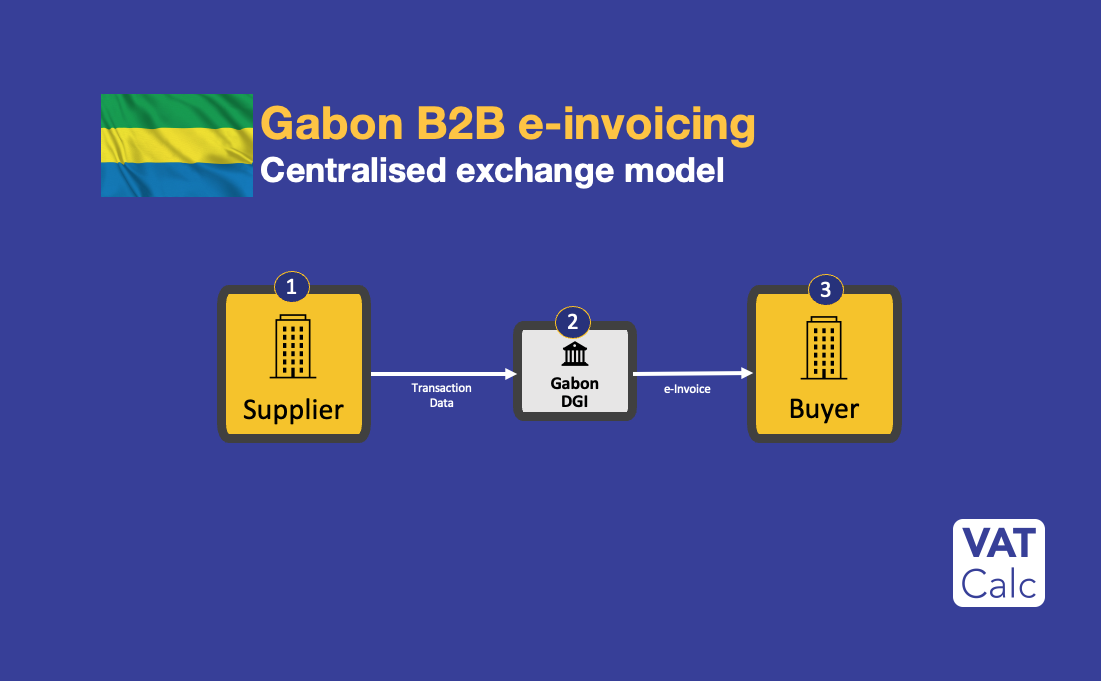
Gabon mandatory e-invoicing for VAT deductibility
Gabon is mandating e-invoicing in 2026 following the publication of Finance Law 2026 (Law No. 041/2025), 0 December 2025. The reform introduces a structural change to the VAT system: electronic invoices will become the exclusive legal basis for claiming VAT deductions.
There is a 6-month soft landing phase until July 2026. However, much of the technical details are still outstanding
2026 rollout of e-invoicing
The timetable set by the Finance Law is:
- 30 Dec 2025: Finance Law 2026 published
- Jan 2025: New rule linking VAT deduction to e-invoices becomes effective
- July 2026: e-invoices expected to become mandatory for VAT deduction
Factures électroniques normalisées
At the centre of the reform is the introduction of standardised electronic invoices, known as “factures électroniques normalisées” (FNE). Under the new rules, input VAT will only be deductible where it is clearly stated on a compliant electronic invoice issued through the authorised format.
This creates a fundamental compliance requirement for businesses operating in Gabon:
- Suppliers must issue compliant electronic invoices for taxable transactions
- Buyers must actively request and retain compliant electronic invoices
- Input VAT deductions are only permitted when supported by a valid electronic invoice showing VAT separately
Six-month transition to July 2026
To allow businesses time to transition, the legislation provides a six-month grace period following promulgation. During this transitional phase, companies may still support VAT and income tax deductions using documentation proving the payment of customs duties in place of a compliant electronic invoice. After this period expires, electronic invoices will become the sole acceptable supporting document.
Technical and operational details missing still
However, key implementation details remain pending. The Finance Law establishes the legal framework, but technical specifications and operational requirements such as invoice formats, reporting processes, and system integration obligations will need to be clarified through subsequent regulations or guidance from the tax authorities.
Further announcements from the Gabonese authorities are expected to define the technical architecture of the system and confirm the precise implementation timeline. Businesses should monitor these developments closely and prepare for a shift to fully digital invoice-based VAT compliance.