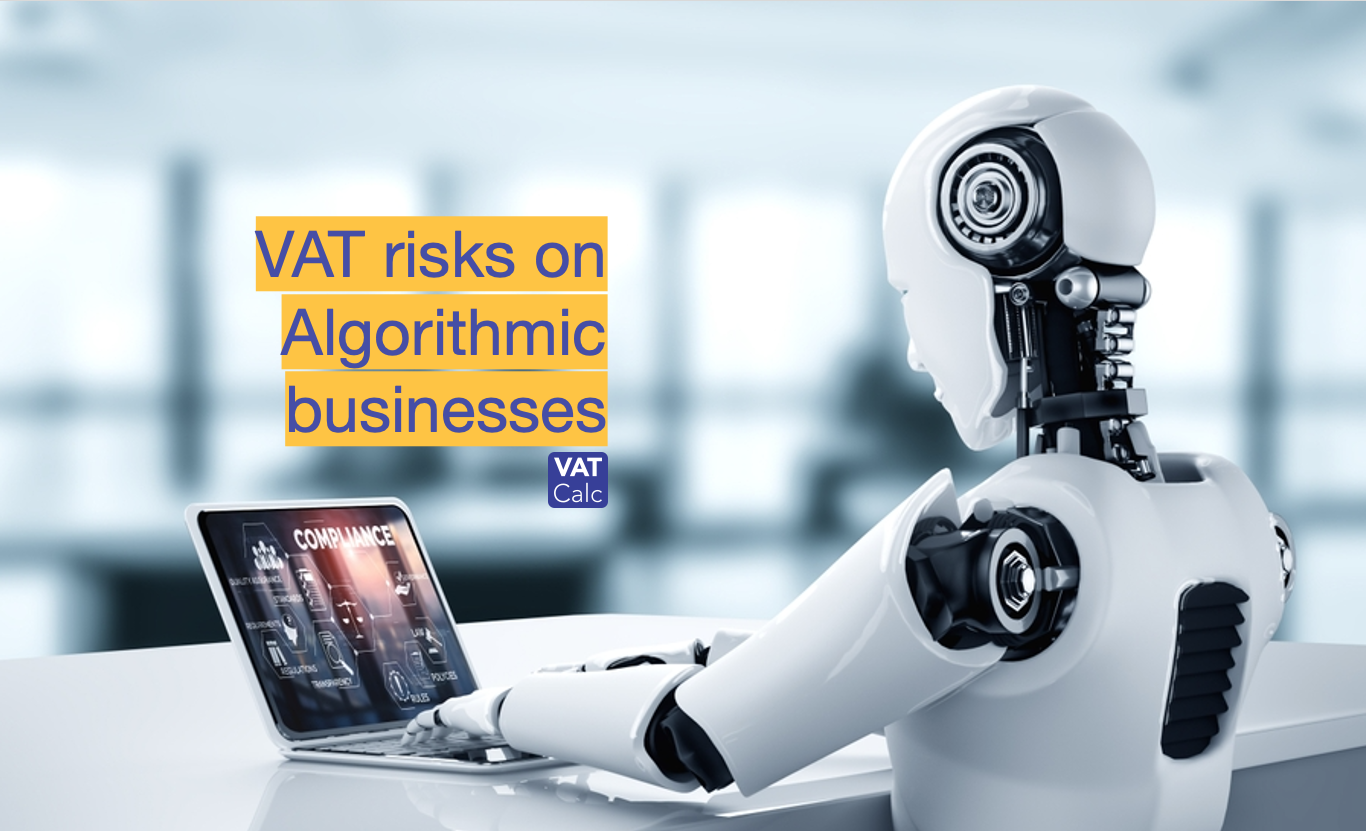
Autonomous AI agents executing transactions trigger VAT registration, fixed establishment, and compliance risks
The emergence of autonomous agentic AI is not just an income tax problem. It is increasingly a VAT exposure problem. AI systems are now executing core economic activities without human intervention – upending the rule book used for VAT determination and residency.

For all taxes, be especially VAT, that raises a sharper question: where is the taxable supply actually made?
From AT generative tools to taxable actors
An “algorithmic business” is not a taxpayer. But in VAT terms, that is almost irrelevant. VAT looks to where economic activity is carried out, not who or what performs it. If an AI agent:
- negotiates pricing;
- selects customers or counterparties; and
- executes transactions (digital services, financial trades, platform sales),
then it is performing core supply functions, not administrative support.
That distinction matters because:
- Under EU-style rules derived from the EU VAT Directive, the place of supply for services depends heavily on where the supplier is established or operates.
- If the AI effectively is the operational centre, its location, or infrastructure, becomes relevant.
VAT FE risk: servers are not neutral
Historically, servers were dismissed as “auxiliary” for VAT establishment. That position is weakening. Where an AI agent runs on cloud infrastructure in a jurisdiction and performs value-creating functions, tax authorities can argue:
- a fixed establishment (FE) for VAT exists; or
- supplies are effectively made from that jurisdiction.
This mirrors permanent establishment thinking under the OECD Model Tax Convention, but VAT often applies a lower threshold. For example:
- A non-EU business deploying an AI pricing and fulfilment agent on EU servers for digital services could trigger local VAT registration obligations.
- If the AI determines transaction terms, the “place of supply” analysis may shift toward where the AI operates, not where management sits.
Marketplace and deemed supplier complications
AI models also amplify VAT risks in platform economies. Where AI agents:
- dynamically match buyers and sellers,
- set terms, or
- process payments,
they may push businesses into deemed supplier rules (common in e-commerce and digital platforms).
This can result in:
- unexpected VAT liability on gross transaction values;
- reclassification of the business model; and
- loss of reliance on intermediary or agency treatments.
Scale risk: VAT compliance at machine speed
AI introduces a scale problem VAT systems were not designed for:
- thousands of transactions per hour;
- real-time pricing changes; and
- cross-border micro-supplies.
This increases:
- misclassification risk (rates, exemptions, place of supply);
- e-invoicing and reporting errors; and
- audit exposure, particularly as tax authorities digitise controls.
What can businesses do practically
Businesses deploying AI-driven models should treat VAT as an architectural issue, not a reporting afterthought:
- Map decision-making vs execution: where does the AI actually create value?
- Assess fixed establishment exposure linked to cloud regions and infrastructure.
- Review platform roles against deemed supplier rules.
- Embed VAT logic upstream into AI workflows, not downstream corrections.
AI does not create new VAT principles. It exposes the limits of how we apply them.
When machines perform “initiative, judgment, and execution” at scale, VAT authorities are likely to follow the substance. And in that substance, the AI is no longer just a tool. It is where the business happens.
VATCalc safely incorporating AI into tax calculations and returns
See how else VATCalc is applying Artificial Intelligence since 2023 to enhance VAT determination, returns and e-invoicing:
- AI and item classification in VAT determination;
- Tax advice generated by AI from our VAT expert-maintained tax engine
- Tax code mapping with AI to reduce significantly tax engine implementations and testing