
Long-discussed VAT reform could simplify compliance whilst raising prices on food, books and renovations
Belgium is again discussing a simplification of its VAT rate structure, with proposals resurfacing to merge the country’s two reduced VAT rates of 6% and 12% into a single intermediate rate of 9%.

Whilst no legislation has been published, the proposal has re-emerged during federal budget and tax reform discussions. It was originally developed as part of Belgium’s broader tax reform programme before being shelved when political agreement could not be reached.
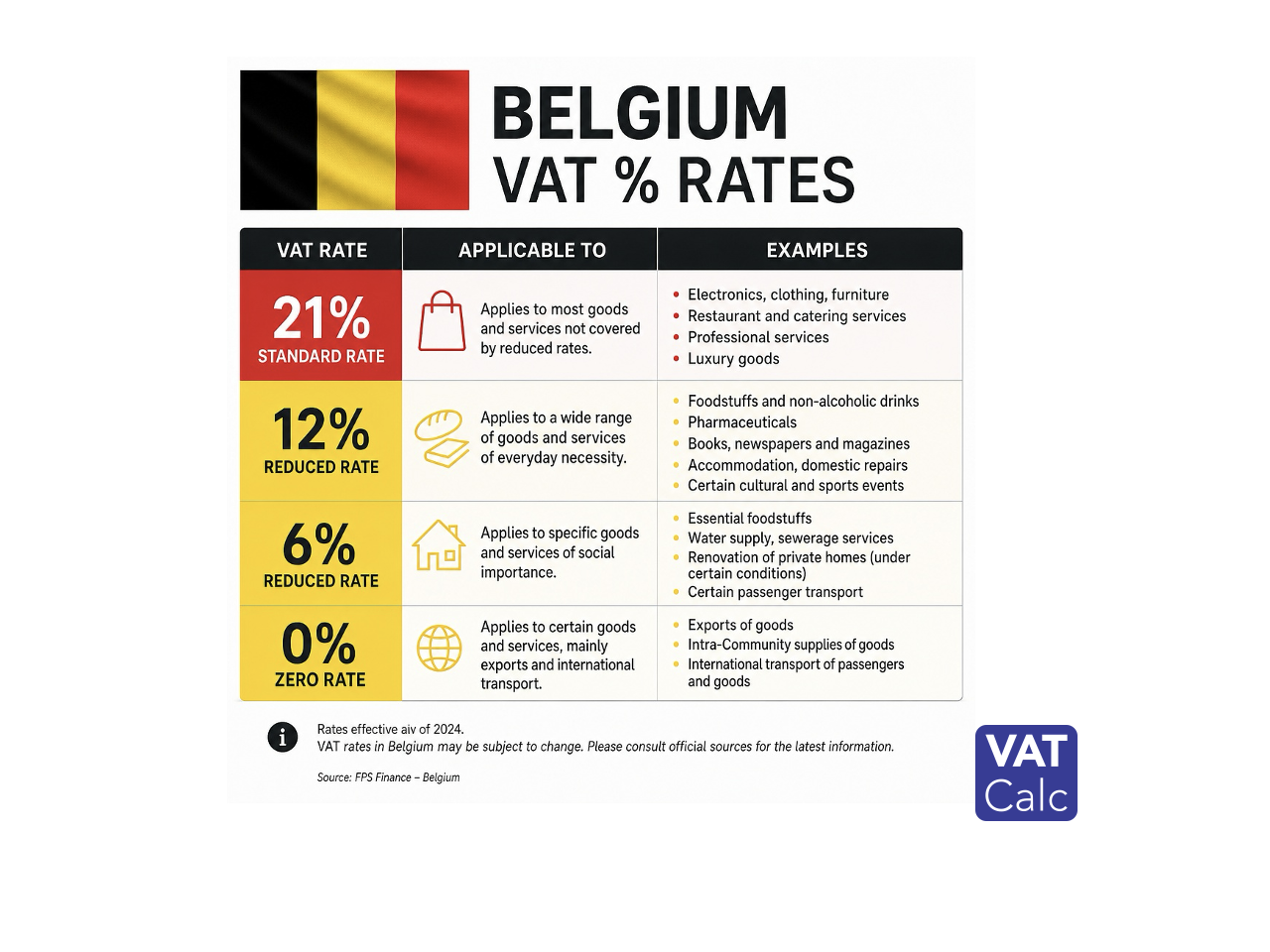
Belgium currently operates four VAT rates: 0%; 6%; 12%; and its 21% standard rate
See more in our Belgian VAT guide.
The 6% reduced rate applies to many essential goods and services, including food, medicines, books, cultural activities and certain residential renovation works. The 12% rate covers sectors such as social housing, some restaurant supplies and other specific activities.
A move to a single 9% reduced rate would simplify compliance and classification rules. Businesses would face fewer disputes over rate qualification, whilst the tax authorities would benefit from a less complex VAT framework.
Realistic medium-term reform option but with political obstacles
However, the proposal would create winners and losers.
Products and services currently benefiting from the 6% rate would face a 50% increase in VAT, potentially resulting in higher consumer prices for everyday essentials. Home renovation projects, including many energy-efficiency improvements, could also become more expensive.
By contrast, supplies currently taxed at 12% would enjoy a VAT reduction, although these sectors generally represent a smaller proportion of household spending.
The proposal forms part of a wider trend in Belgium towards reviewing reduced VAT rates. Recent reforms have already altered rates across hospitality, leisure and environmental sectors as the government seeks to modernise and rationalise the VAT system.


