
Could Member States undermine ViDA’s promise of harmonised VAT reporting?
Brussels takes aim at gold-plating
The European Commission has announced plans for a new Pact against gold-plating, as part of its 2027 Work Programme published on 4 November 2026.
Gold-plating occurs when Member States add national requirements beyond those necessary to implement EU legislation, potentially increasing bureaucracy, compliance costs and fragmentation of the Single Market.
The proposed Pact has three objectives:
- Secure commitments from Member States to avoid unnecessary national requirements.
- Review existing gold-plating and identify obligations that could be removed.
- Prevent new gold-plating through implementation guidance, monitoring and earlier engagement.
The Commission is also exploring AI tools to identify unnecessary national additions. For businesses preparing for VAT in the Digital Age (ViDA), the initiative is particularly timely.
VAT digital reporting is already on Brussels’ radar
The Commission’s accompanying 2026 Annual Overview Report on Simplification, Implementation and Enforcement specifically identifies digital tax reporting as an area where businesses have warned against additional national requirements.
This is significant. Even before ViDA’s principal digital reporting obligations take effect in July 2030, businesses are concerned that national implementation could undermine harmonisation.
ViDA aims to replace fragmented reporting requirements with a more consistent European framework. But will Member States resist adding their own requirements?
One EU standard. Twenty-seven national variations?
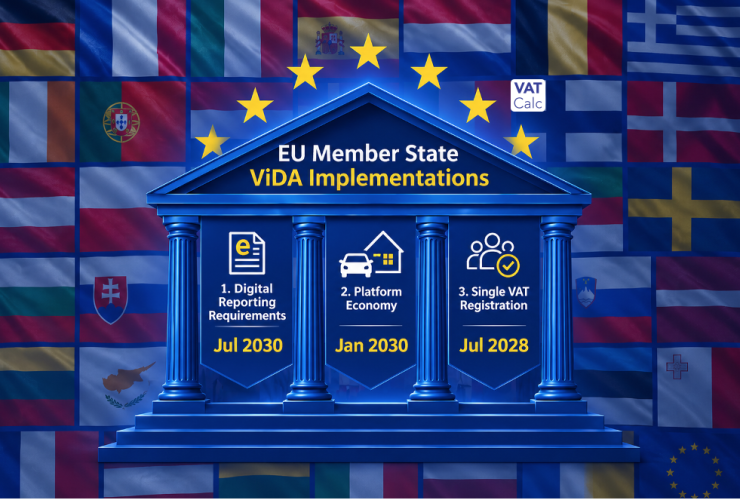
From 1 July 2030, ViDA introduces harmonised digital reporting requirements for intra-Community B2B transactions, supported by structured electronic invoicing. By January 2035, existing domestic digital transaction reporting systems must be aligned with the EU framework.
However, Member States retain discretion over domestic reporting requirements. This creates scope for additional national data fields, validation controls, reporting processes and technical specifications.
Not all such differences constitute gold-plating. Some are legitimate national choices permitted under EU legislation. Nevertheless, the commercial consequences can be similar.
A few extra invoice fields, different validation rules or country-specific correction procedures may appear modest individually. Collectively, they require businesses to maintain separate national configurations, integrations and controls.
More fundamentally, e-invoicing does not eliminate the underlying complexity of VAT determination. Businesses must still apply the correct tax treatment before transmitting transaction data.
Standardising how VAT data is reported is not the same as harmonising how VAT compliance works.
Can the Pact protect ViDA?
The Commission’s initiative is welcome, but its effectiveness will depend on meaningful cooperation from Member States.
Brussels can challenge national measures that breach EU legislation. However, it cannot simply prohibit additional domestic requirements where EU law expressly permits national discretion. The Pact therefore relies partly on political commitments and persuasion rather than binding restrictions.
This matters as Member States develop their national e-invoicing and reporting systems ahead of 2030 and 2035. Without discipline, unnecessary national variations could gradually erode ViDA’s promised simplification.
Europe risks achieving the impressive feat of harmonising VAT reporting standards while preserving 27 different ways of complying with them.