E-invoicing mandates may not include non-residents without VAT Fixed Establishment; but e-reporting may
The European Commission’s VAT Committee has opinion that non-resident, VAT-registered in any EU member state should not be included in e-invoice mandates. Only those with a in-country Fixed Establishment (e.g. a local office or branch) for VAT should be in-scope.
However, their transactions may still fall within the obligations for live or near-real time e-reporting of the transactions to the tax authorities.
The VAT Committee consists of representatives of the member states and the Commission and examines the application of EU provisions raised by the Commission or a member state. However, because it is an advisory committee, it can currently only agree non-binding guidelines on the application of the VAT Directive.
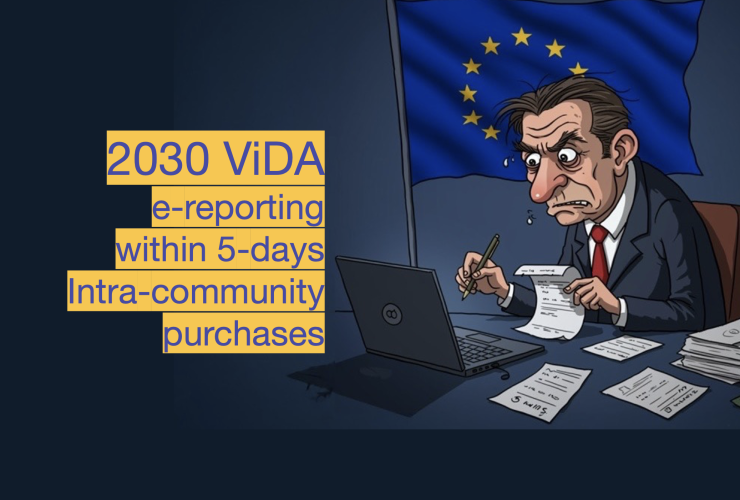
This comes ahead of the July 2030 EU ViDA e-invoicing mandate, which obliges structured e-invoices between B2B parties on intra-community transactions. Plus e-reporting to the tax authorities.
VAT Committee excludes non-residents from e-invoicing
At its 126th meeting on 21 March 21 2025, the EU VAT Committee discussed how ViDA will affect electronic invoicing in EU countries.
The main conclusions of the meeting included:
-
Foreign businesses not required to use e-invoicing
If a business is not based in the member state (i.e., it has no office or headquarters there), that country cannot force it to send or receive e-invoices—even if the business is VAT-registered there and conducts business there.
-
How to tell if a business is ‘Established’
To determine if a business is considered “established” in a country (which could trigger e-invoicing rules), authorities must follow the rules set out in Articles 10 and 11 of the VAT Implementing Regulation. This helps determine whether a business has a fixed base or location in a country.
-
What if the business has a local office or branch?
If a foreign business does have a fixed establishment (like a branch or warehouse) in an EU country, and that office is involved in selling or buying goods or services there, then the country can require that part of the business to use e-invoicing for those specific transactions.
-
e-Reporting may still be mandated
Even if a non-resident business is not required to use e-invoicing, EU countries may still require it to report its transactions in other ways (e.g., through digital and e-reporting real-time reporting).