French lawmakers vote to exempt all SMEs and microbusinesses from mandatory e-invoicing
Would cancel the September 2027 rollout if government does not block

France’s National Assembly voted on 3 November 2026 to exempt SMEs, microbusinesses and agricultural businesses from mandatory e-invoicing and e-reporting. The amendment to the 2027 Finance Bill passed by 101 votes to 74, despite government opposition.
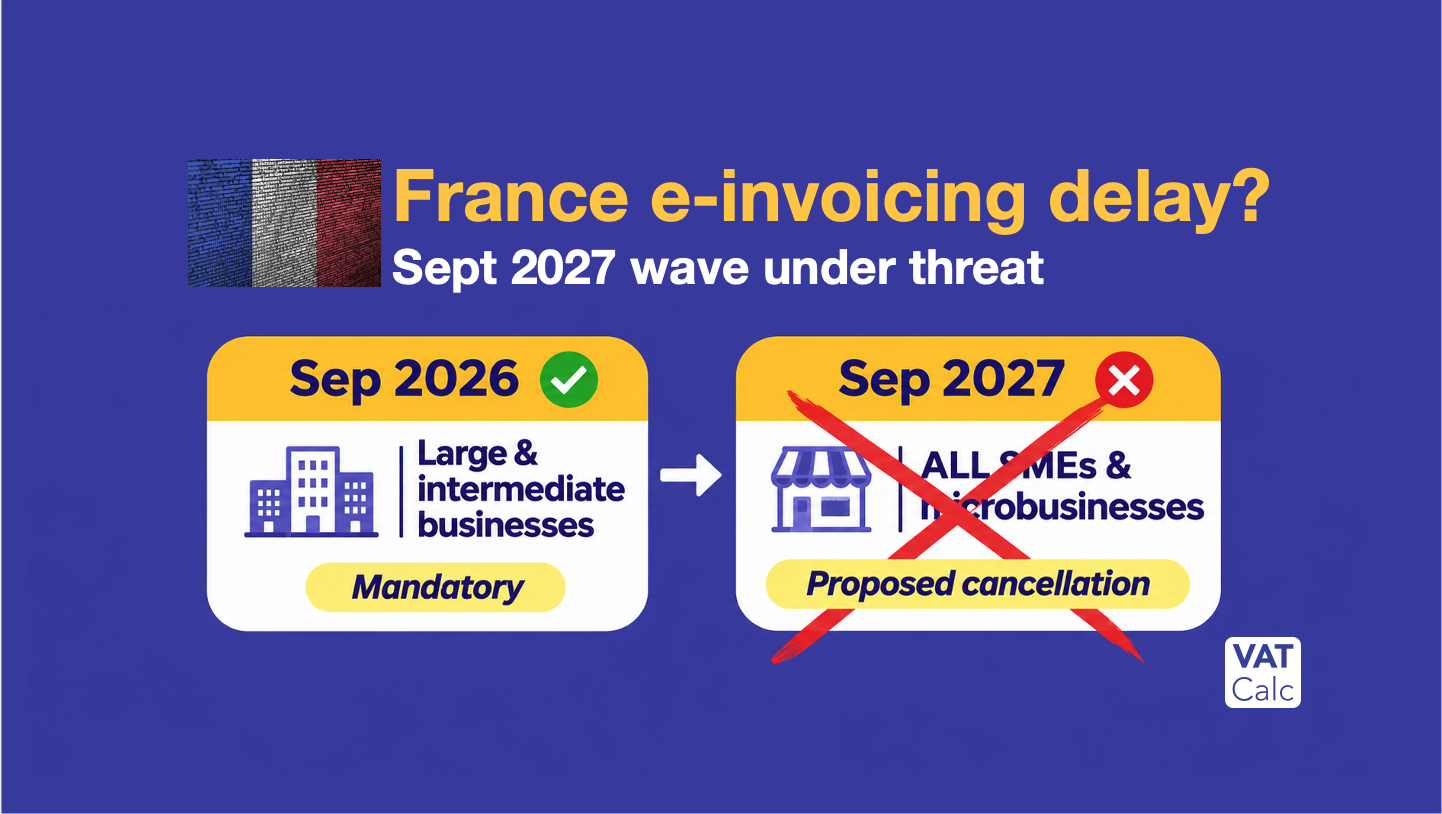
If enacted, the amendment would effectively scrap the entire September 2027 implementation wave, rather than merely postpone obligations for the smallest businesses.
Who would be exempt?
Amendment I-3426, introduced by Mathilde Hignet of La France Insoumise (LFI), would exempt:
- All SMEs and microbusinesses with fewer than 250 employees and turnover not exceeding €50 million or a balance sheet total not exceeding €43 million.
- Agricultural businesses, regardless of size.
The exemption covers both e-invoicing and e-reporting, with no replacement implementation date or expiry.
Why is the second wave of SME’s being challenged?
France abandoned plans for a free Public Invoicing Portal (PPF) in October 2024, requiring businesses instead to use accredited private platforms.
The amendment’s sponsors argue that mandatory tax compliance should not depend on purchasing commercial services. They also cite additional costs, payment delays and cybersecurity concerns.
The government defends the private-platform model, arguing that competition provides choice while avoiding the risks of a single centralised portal.
September 2027 rollout would be scrapped
France’s existing implementation timetable is:
- September 2026: Large and intermediate-sized enterprises must issue e-invoices.
- September 2027: All SMEs and microbusinesses must begin issuing e-invoices.
The amendment would remove the entire September 2027 wave, indefinitely exempting these businesses from mandatory e-invoicing and e-reporting.
It could also remove their existing obligation to receive e-invoices, which commenced in September 2026.
Will the moratorium become law?
The amendment must still survive the remaining parliamentary stages, including consideration by the Senate. The government could seek to remove it, potentially using the Article 49.3 constitutional procedure.
Given government opposition, its inclusion in the final 2027 Finance Act remains uncertain. All existing e-invoicing deadlines therefore remain in force.
The proposed exemption could leave substantial gaps in France’s digital VAT reporting system, undermining the completeness of transaction data available to the tax authority. And make it a real challenge for counterparties to track their trading partners’ e-reporting and e-invoicing obligations.
More fundamentally, the vote raises a wider question for mandatory digital tax reforms: should businesses be required to purchase private technology to comply with tax law?
See more in our French VAT country guide