21 September is St Matthew’s Day
And for those of us working in tax, he is perhaps the most important saint in the calendar.
Before becoming an Apostle and Evangelist, Matthew had a rather less celebrated profession. He was a tax collector.
According to the Gospel of Matthew, Jesus encountered him “sitting at the tax booth” and simply said: “Follow me.” Matthew got up and followed him.
It was quite a career change.
Tax collector to Apostle
Tax collectors were not especially popular in first-century Judea. They collected taxes on behalf of the Roman authorities and were widely associated with an unpopular fiscal system, and sometimes with overcharging taxpayers.
So, perhaps reassuringly for modern tax professionals, hostility towards taxation considerably predates VAT.
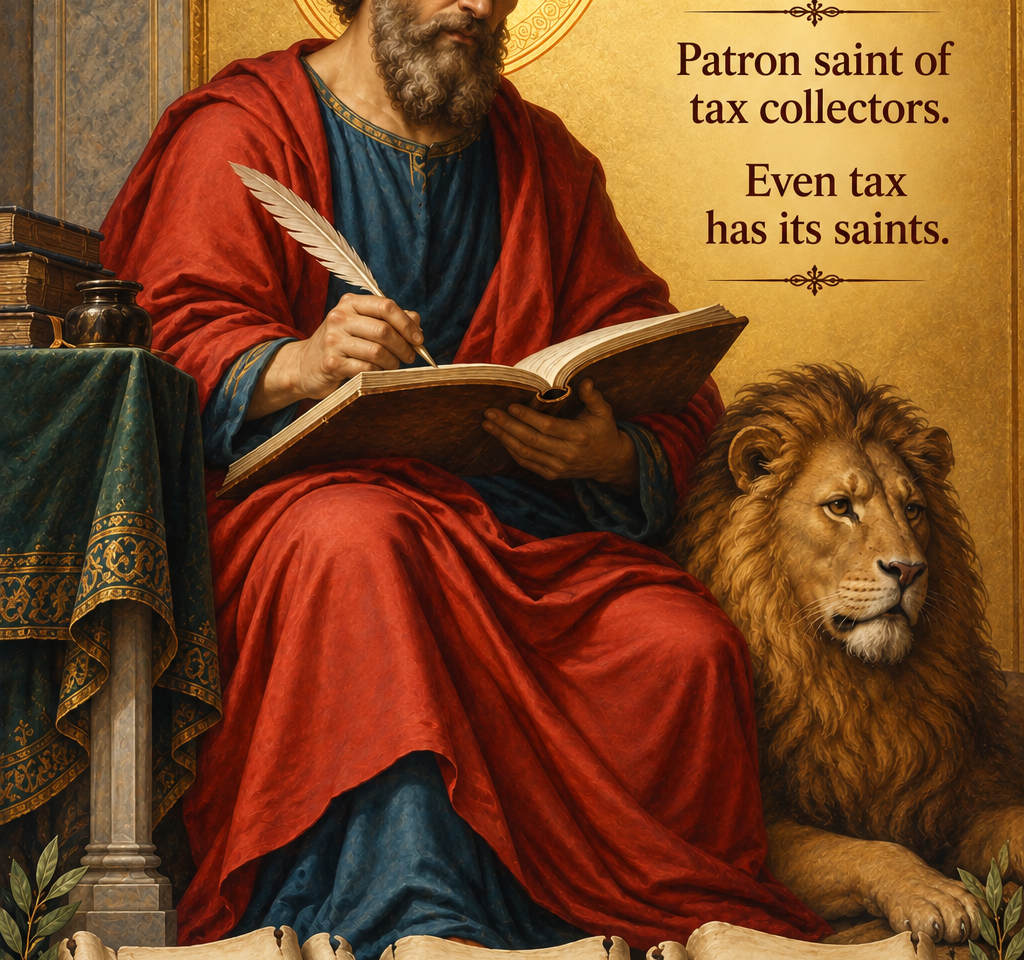
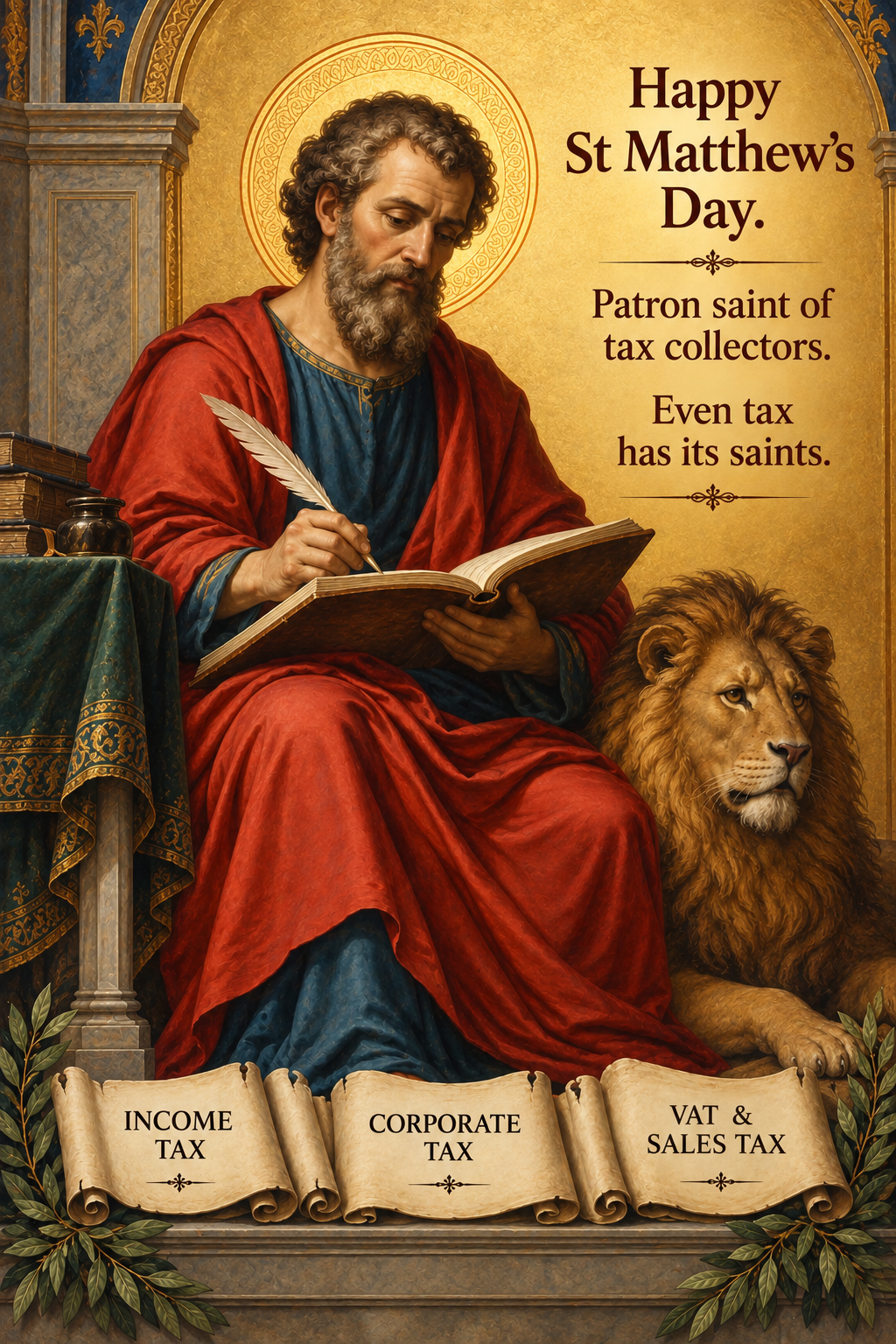
Matthew subsequently became one of the Twelve Apostles and is traditionally identified as the author of the Gospel of Matthew. Christian tradition later made him the patron saint of tax collectors and accountants.
He therefore has a surprisingly strong claim to being the patron saint of indirect tax professionals too.
What would St Matthew have made of VAT?
Matthew’s tax booth was considerably simpler than today’s tax environment.
There were no VAT registrations, place-of-supply rules, partial exemption calculations or triangulation simplifications. There was certainly no five-day ViDA digital reporting deadline.
On the other hand, some aspects of tax would probably have seemed familiar.
- Tax determination: Somebody still had to decide what was taxable and how much was due.
- Tax collection: Governments still wanted their money.
- Record keeping: Matthew is traditionally portrayed writing, although admittedly not completing a VAT return.
- Cross-border trade: The Roman Empire was an enormous single market. Unfortunately, nobody had thought of the One Stop Shop.
- Tax disputes: Taxpayers and tax collectors did not always agree. Some things really are timeless.
And had electronic invoicing existed in first-century Galilee, we suspect the Romans would have been enthusiastic supporters of clearance.
The original tax transformation
There is also something pleasing about Matthew’s story for anyone who has spent a career in tax.
He started with tax collection. He moved into writing and explaining rules. His work was subsequently translated into hundreds of languages and distributed around the world.
In modern terminology, that is quite a tax transformation programme.
Whether he would have approved of VAT, GST, sales tax, corporate tax or today’s increasingly complex digital reporting regimes is impossible to know.
But every profession deserves a patron saint.
Tax has St Matthew.