UK Chancellor considered reducing domestic fuel VAT from 5% to 0% in 26th Nov Budget
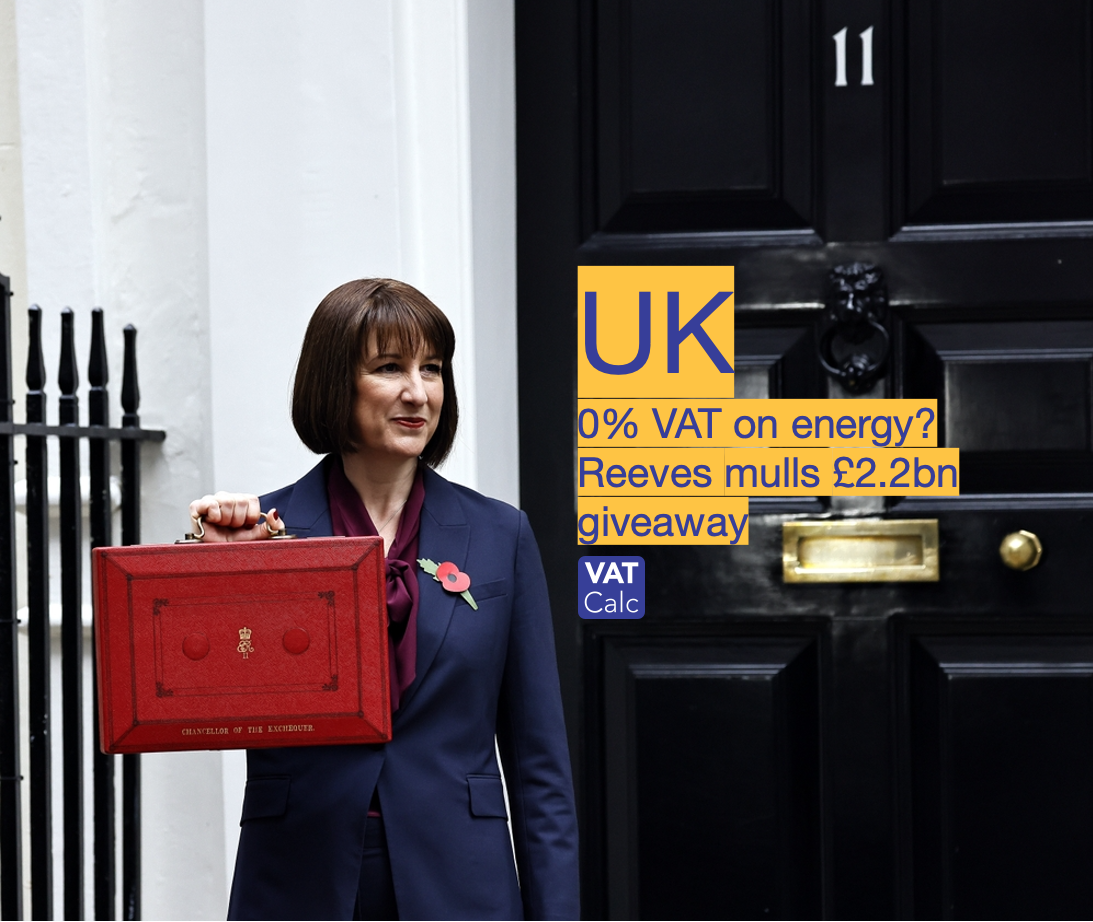
The UK’ Chancellor Rachel Reeves has reported to abandon October 2025 hints she is looking at ways to cut home fuel bill. This could have included scrapping the 5% VAT on domestic fuel bills in the 26th November Budget. Ms Reeves in September asked officials to examine the option of reducing the current 5% VAT on gas and electricity to 0%, a move intended to help households cope with high energy costs and broader inflationary pressures.

During the inflation spike of 2022/23, many other countries cut VAT on fuel to help deliver immediate relief to hard pressed consumers. Heading into this budget, with a worrying expanding deficit and stalled growth, the Chancellor has also being looking at widening the VAT base as well as changing the VAT registration threshold.
On the surface, the idea has clear political appeal: an average household saving of £86 per year, applied automatically to bills, requires no application process or bureaucracy. But beneath the simplicity lies a deeper policy dilemma. The measure would cost the Treasury £2.2 billion annually and deliver benefits indiscriminately across the income spectrum.
VAT cut is blunt and regressive
One of the chief criticisms of cutting VAT on domestic fuel is its lack of targeting. Because VAT is charged on consumption, the households that spend more on energy—often larger, wealthier homes—would gain more in absolute terms than poorer households.
-
A single person in a modest flat might save far less than £86.
-
A family in a large detached house with higher energy consumption could save considerably more.
This raises the risk of the policy being regressive: directing more financial benefit towards higher-income households who are least likely to be struggling with energy bills.
£2.2 billion cost when Chancellor needs more revenues
At an estimated £2.2 billion per year, the VAT cut would be one of the most expensive single measures in the cost of living toolkit. This comes at a time when the Treasury is under pressure to maintain fiscal discipline, service high levels of public debt, and fund other pressing priorities such as the NHS and infrastructure investment. Every pound spent on a universal VAT cut is a pound not available for more targeted, cost-effective interventions.
Alternative targeted measures
Instead of, or alongside, a blunt VAT cut, the government could consider more targeted approaches that direct support where it is most effective:
-
Direct Energy Rebates for Low-Income Households
-
A means-tested energy rebate could provide cash support directly to households on benefits or below a certain income threshold.
-
Unlike a universal VAT cut, this ensures that limited Treasury funds go directly to those struggling most with affordability.
-
-
One-off energy debt forgiveness programme
- With over £4.2 billion in household energy debt, mostly held by low-income families, forgiving this debt would immediately reduce average bills by about £55 per year (by eliminating bad debt charges).
-
Expansion of the Warm Home Discount
-
Currently, this scheme offers eligible households a £150 rebate on winter energy bills. Expanding the scheme’s value or widening eligibility could provide more substantial and better-targeted relief.
-
-
Targeted Winter Fuel Payments
-
Extending or enhancing winter fuel payments for pensioners and vulnerable groups could cushion those at greatest risk from cold homes and high bills. This though would highlight the policy U-turn More than 10 million pensioners lost out on the payments, worth up to £300, when the pension top-up became means-tested last year.
-
-
Energy Efficiency Investments
-
Longer-term, the most sustainable way to reduce bills is through lowering demand. Expanding funding for insulation, heat pumps, and home retrofits could permanently reduce household energy costs while advancing climate goals.
-
Though these measures take longer to implement, they deliver enduring value compared to a temporary VAT cut.
-
-
Tiered or Capped Pricing
-
A more structural reform could involve offering a basic amount of energy at a subsidised or capped rate for all households, with higher consumption charged at market rates. This would protect essential usage while discouraging excessive consumption by wealthier households.
-