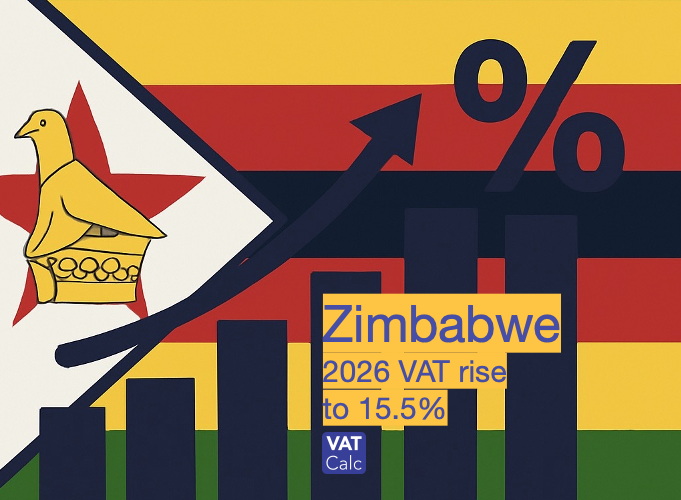
Zimbabwe brings non-resident digital platforms into the VAT Jan 2026
Zimbabwe is preparing to introduce a value-added tax regime for cross-border digital services, joining a growing number of African jurisdictions seeking to tax consumption of online services supplied by offshore providers with no local establishment.

Under measures announced in the 2026 national budget, a 15 percent indirect tax will apply to payments for digital services supplied by non-resident platforms from 1 January 2026.
The reform is explicitly aimed at international platforms that have experienced rapid uptake in Zimbabwe over the past decade, including streaming services (Netflix, Spotify, Amazon Prime), ride-hailing applications, digital content subscriptions, and satellite-internet offerings such as Starlink. According to government statements, consumption of these services has been fuelled by significant digital infrastructure expansion: Internet subscriptions have more than doubled over the last ten years, reaching approximately 12.5 million in 2025.
Policy design: withholding at source
A notable feature of the regime is the collection mechanism. Rather than registering foreign suppliers for VAT in Zimbabwe, domestic financial intermediaries – banks and mobile-money operators – will be obliged to withhold 15 percent at the point of payment before remitting funds overseas. This essentially shifts compliance from remote suppliers to local payment processors, a model deployed by other African countries in the absence of full VAT platform registration systems.
The government frames this as an efficiency measure to secure revenue from services that are difficult to police under conventional VAT nexus rules, particularly given that most suppliers lack a physical presence or taxable establishment.
Rationale: revenue mobilisation and competitive neutrality
The Minister of Finance, Mthuli Ncube, has positioned the new levy as a response to structural changes in consumption patterns. Rapid digitisation has increased the volume of economic activity conducted through platforms outside Zimbabwe’s tax perimeter, leading to fiscal leakage and perceived asymmetries vis-à-vis domestic service providers, who are subject to full taxation and compliance burdens.
Authorities also emphasise alignment with regional trends. Nigeria, Kenya, Uganda, Tanzania and Sierra Leone have each adopted variants of digital VAT regimes, in most cases requiring non-resident suppliers to register and account for tax based on supplies to resident consumers.
Strategic context for African digital VAT
Zimbabwe’s approach reflects two policy trends across the region: first, recasting consumption taxes to reflect the scale of digitalisation; second, targeting non-resident suppliers that have previously fallen outside domestic tax systems. While regimes vary in technical design, the common objective is competitive neutrality in the provision of services and the mobilisation of new revenue streams.
As digital access and consumption continue to expand, governments will increasingly view non-resident platforms as taxable participants in local markets. Zimbabwe’s 2026 reform represents a significant step toward formalising this principle, albeit with trade-offs that will require careful monitoring of consumer behaviour, revenue performance and market dynamics in the first year of implementation.