Expansion; errors; costly advisors are more telling you to automate VAT determination
Most finance and tax teams don’t wake up one day and say, “Let’s buy a tax engine.” Instead, they slowly realise that their current systems — ERP rules, spreadsheets, or manual processes — can’t keep up with the complexity and pace of VAT compliance.
The result? Errors, inefficiencies, and frustrated teams. But add the pressure of global e-invoicing and EU ViDA changes to live invoice calculations, this issue because an imperative to ensure business and invoice processes aren’t brought to a standstill.
Here are the five clearest signals that it’s time to invest in a proper VAT tax engine:

1. You’re Expanding Across Borders
Selling into new countries means navigating new VAT rules, rates, and obligations. What’s zero-rated in one jurisdiction might be fully taxable in another. Without a tax engine, every new market becomes a project of manual research and ERP customisation — a process that rarely scales.
2. VAT Errors Keep Surfacing
Do audits or internal reviews keep uncovering errors in rates, exemptions, or invoice wording? These aren’t just “one-off mistakes.” They’re symptoms of a system that doesn’t have VAT rules built in. A tax engine codifies legislation so that every transaction is validated automatically.
3. You’re Spending Too Much on Local Advisors
If your business relies heavily on local VAT consultants for routine compliance checks, it’s a sign your systems don’t provide enough certainty. A tax engine can reduce this dependency, giving in-house teams confidence that determinations are accurate and audit-proof.
4. Manual Reconciliations Are Out of Control
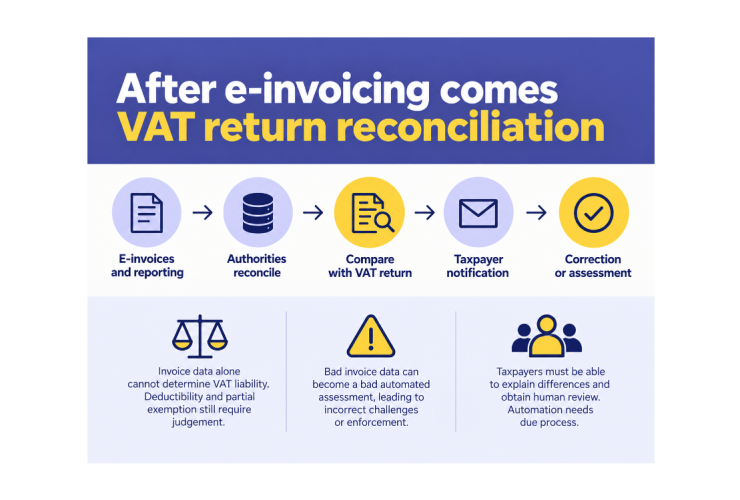
Do your teams spend hours reconciling VAT in invoices with VAT in returns? If your invoicing platform and reporting tools aren’t connected by the same logic, mismatches are inevitable. A tax engine like VATCalc’s Calculator, built on codified laws, ensures invoices, returns, and e-reports all align seamlessly.
5. Compliance Change Feels Overwhelming
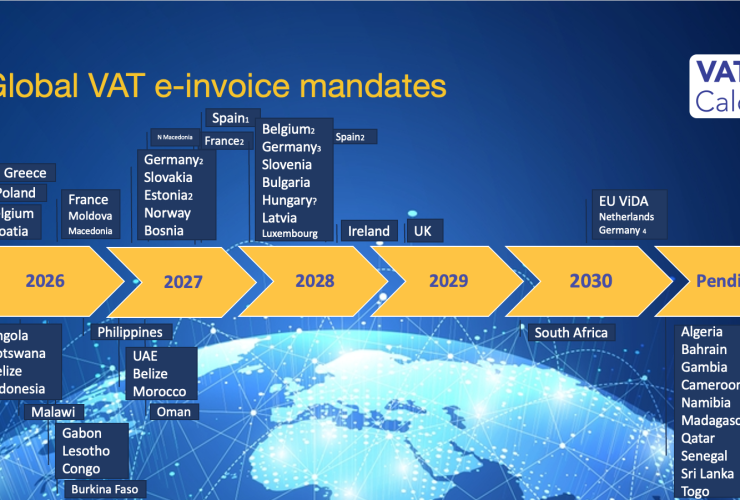
From e-invoicing mandates to real-time reporting, VAT compliance is digitising fast. If your current processes buckle every time a rule changes, it’s time to upgrade. A tax engine updates in line with legislative changes, so compliance doesn’t break when the law moves.
Why VATCalc’s Calculator Is Different
Unlike generic engines, VATCalc’s Calculator is based on fully codified national VAT laws and the EU VAT Directive. This means that VAT calculations are done based on actual countries’ tax legislation, so fully supportable in the case of audits or challenges from counter-parties. As ViDA reforms rollout live e-invoicing reporting, this will become vita.
Calculator also integrates directly with Filer, so calculation and reporting share one source of truth — cutting costs, reducing risk, and giving teams confidence they’re always compliant.
If these signs sound familiar, it’s time to stop firefighting VAT and start future-proofing with VATCalc.
Contact us for a FREE trial
VAT automation products that simplify your international VAT determination, invoicing and reporting processes