
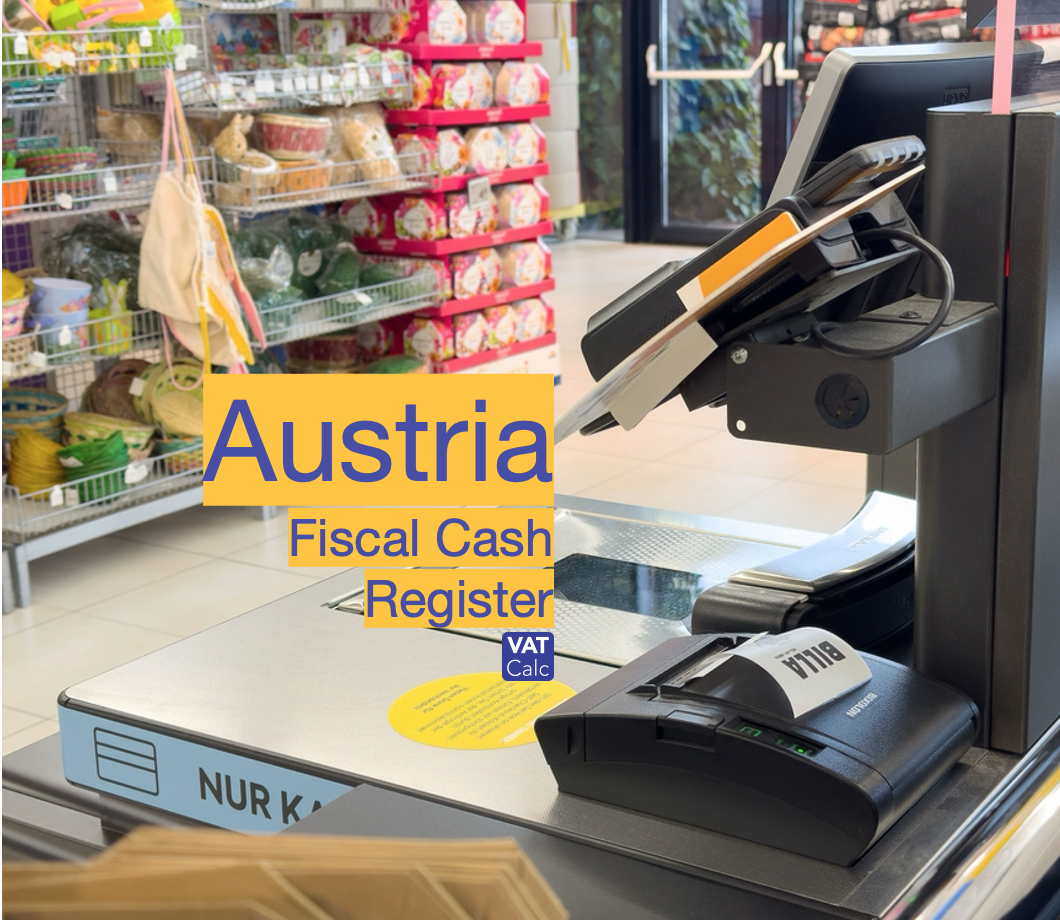
Austria’s fiscal cash register regime 2026 reforms
- Austria’s fiscal cash register regime, built on the RKSV framework introduced in 2017, continues to mandate secure, tamper-proof transaction recording with QR-coded receipts, while preserving strong safeguards against VAT and tax fraud.
- From 1 January 2026, the Cash Register Package 2026 raises the exemption threshold to €45,000 for small and seasonal sellers, and permanently embeds simplifications such as the 15-product-group recording rule.
- From 1 October 2026, businesses may issue optional digital receipts with no value limit, modernising compliance and reducing administrative burden while maintaining transparency and auditability.
Austria’s approach to fiscal cash registers has long been one of the more structured and technology-driven models in Europe. The foundation was laid in 2017 with the introduction of the Cash Register Security Regulation (Registrierkassensicherheitsverordnung, RKSV), which significantly tightened controls around cash and card transactions in order to protect tax revenues and improve auditability.
Cash Register Package 2026: what changes
From 2026, Austria will retain the RKSV’s core security principles but adjust how and when they apply:
Higher exemption threshold
From 1 January 2026, businesses covered by the “cold hands” rule – such as market stalls and outdoor sellers – will only be required to operate a fiscal cash register once annual revenues exceed €45,000, up from €30,000. This inflation-adjusted threshold is designed to keep the smallest operators outside the system altogether.
Optional digital receipts
From 1 October 2026, the obligation to issue a receipt can also be met by providing a digital receipt on site, for example via a QR code or web link. There is no transaction value limit for digital receipts. Paper receipts remain available on request, ensuring consumer choice while giving businesses a practical alternative.
Permanent simplified recording
The long-standing 15-product-group rule will become a permanent feature of Austrian law. Eligible retailers can continue to record sales by assigning them to up to 15 product categories rather than itemising each individual product, significantly reducing daily administrative effort.
How the system continues to work
Even with these simplifications, the underlying RKSV process remains intact for businesses in scope:
- transactions are securely recorded and digitally signed at the point of sale;
- a receipt (paper or digital) is generated with an embedded QR code; and
- the tax authorities can verify authenticity and data integrity by scanning that code.
See more details in our Austrian VAT guide.


