Brazil’s 2026-32 VAT implementation includes targeted “Cashback” relief for poorest
-
Brazil’s 2026–2032 VAT reform introduces a targeted “Cashback” mechanism to address VAT’s regressive impact while preserving a broad tax base and largely uniform rates.
-
Instead of relying on exemptions or reduced rates, Cashback delivers personalised VAT calculations based on their spend on the new CBS and IBS taxes
-
Eligible families will receive full or partial refunds of CBS and IBS paid on essential goods and services to their bank accounts
- Global trend as tax authorities capitalise on digitalisation of VAT to deliver targeted support to deserving households
Personalised VAT instead of wasteful reduced rates
As Brazil transition to its new dual rate VAT regime (CBS federal plus IBS state/municipal taxes) between 2026 and 2033, one of the most notable policy innovations is the introduction of a targeted VAT refund mechanism—commonly referred to as “Cashback.” This measure seeks to resolve a long-standing tension at the heart of VAT design: how to preserve efficiency and neutrality while addressing the tax’s regressive impact on lower-income households.
To alleviate the perceived regressive nature of VAT on low-income consumers, global VAT regimes come with a myriad of reduced VAT rates on essentials – from basic foodstuffs to public transport. But this is widely accepted as wasteful of precious government spend since it is a blanket tax break given to all irrespective of their ability to pay.
Brazil’s reform agenda adopts a different solution. Rather than fragmenting the VAT base, policymakers have embraced a model often described as Personalized VAT (P-VAT). Under this approach, consumption remains broadly taxed at standard rates, but relief is delivered directly to vulnerable households through refunds. In Brazil, this mechanism has been formalised as Cashback.
How Cashback taxes are refunded
The cashback mechanism works as a reimbursement of part of the taxes paid on the consumption of goods and services covered by the new VAT system. The mechanics can be summarized as follows:
- Purchase and Tax Incidence: A household purchases goods and services that fall under CBS/IBS taxation. These taxes are embedded in the price paid by the consumer.
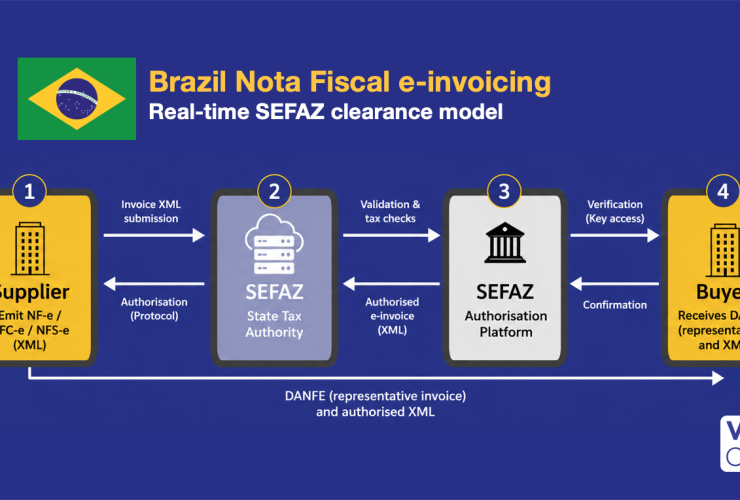
- Tax Sharing and Reporting: Retailers or service providers issue tax-compliant invoices/receipts showing CBS/IBS collected at the point of sale. This data is electronically tracked (similar to existing invoice systems in Brazil).
- Cashback Calculation and refund: A portion of the CBS and IBS paid is calculated for rebate. In draft policy discussions and transitional designs, 100% of CBS and 20% of IBS on essential utilities have been cited as potential reference points (though final percentages will be set by further legislation). The cashback amount is credited or transferred back to the family, typically via electronic transfer mechanisms linked to their CPF. The responsibility for returning the CBS portion falls to the federal government and the IBS portion to state/municipal authorities.
2027 CBS Cashback implementation
Implementation is expected to be phased, with initial elements of the new VAT system and accompanying cashback rules rolling out over several years. Proposed timelines suggest Cashback may start in alignment with the broader VAT rollout (e.g., CBS 2027 and IBS later), but exact dates depend on further regulatory acts.
Global targeted support to soften regressive nature of VAT
The refund mechanism is not new to Brazil. Since 2021, the state of Rio Grande do Sul has operated the Devolve ICMS programme, providing quarterly VAT refunds to more than 600,000 low-income families. But like schemes in other jurisdictions like Canada and Japan, there is no digital personalisation to the calculations.
Digital VAT payments credits is underway in Columbia, Uzbekistan or planned for Uruguay. It has been recognised in papers such as International Monetary Fund published Working Paper by Artur Swistak and Rita de la Feria.