Germany tightens e-invoicing rules
Clarity on XML data and attachments; operational strain looms
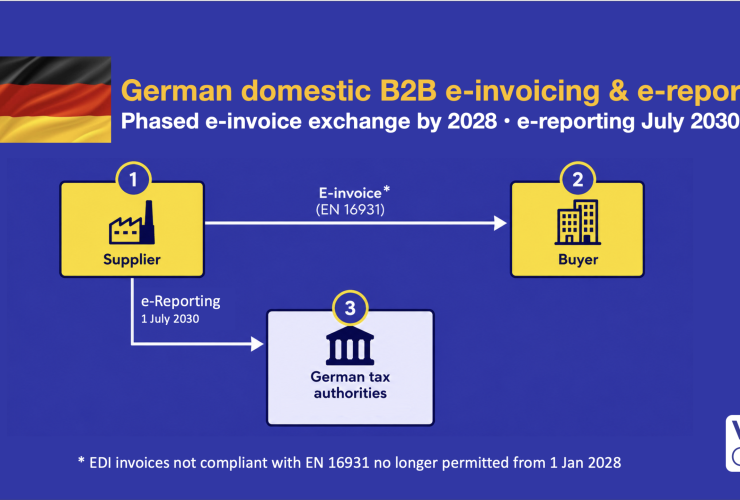
Germany’s Federal Ministry of Finance (BMF) has updated its e-invoicing FAQs (March 2026), providing important clarification ahead of mandatory 2027 B2B e-invoicing.

The guidance confirms a stricter interpretation of what constitutes a compliant E-Rechnung, reinforcing principles already set out in the October 2025 administrative letter, but with clearer practical implications. It comes as July 2030 EU Digital Reporting Requirements come over the horizon.
Read about VATCalc’s e-invoicing reconciliation functionality to ensure fully synchronisation with VAT returns.
XML as single source of truth
At the core is a firm requirement: 100% of mandatory VAT data must sit within the structured XML. Key invoice fields such as supplier/customer details, invoice number, tax amounts and descriptions must be machine-readable. Any reliance on PDFs or images for required VAT data will invalidate the invoice.
The BMF has also clarified treatment of supporting documents. References to external documents are no longer sufficient. If an invoice points to a contract, timesheet or delivery note, that document must be embedded within the e-invoice file. The invoice must therefore be a self-contained data package, not a pointer to external sources.
Other practical confirmations include:
- Monthly summary invoices remain valid, provided the supply period is clearly defined in the XML
- Corrections must be issued as e-invoices once mandates apply, with structured references to the original invoice
- Complex invoices (for example construction or staged contracts) may use attachments for detail, but must summarise and reference these clearly in the XML
While technically consistent with Germany’s digital reporting trajectory and the EU’s VAT in the Digital Age (ViDA) direction, the implications are significant. Embedding supporting documents will increase file sizes, strain transmission channels, and require tighter integration between ERP, invoicing, and document management systems. There is also a risk that non-machine-readable attachments undermine automation gains.
The FAQs are not legally binding, but they signal clear enforcement intent.