EU publishes ViDA e-invoicing and Digital Reporting Requirements 2026-35 work programme
The European Commission has published 20 May 2026 a detailed implementation work programme for the Digital Reporting Requirements (DRR) and e-invoicing pillars of VAT in the Digital Age (ViDA).
This confirms an aggressive timetable toward mandatory harmonised digital VAT reporting across the EU by July 2030.

Roadmap for legislative and IT infrastructure build
The roadmap provides businesses and software providers with the clearest indication yet of how the EU intends to operationalise real-time cross-border VAT reporting, structured e-invoicing and the future central VIES platform.
The programme also confirms that Member States have already started developing national DRR reporting systems alongside the future central VIES platform. This suggests ViDA has now entered a genuine implementation phase, with technical builds beginning even while several core policy questions remain unresolved.
However, despite the increasingly detailed technical planning, major disagreements remain unresolved. In several areas, divergence between Member States may actually be deepening rather than narrowing.
ViDA DRR and e-invoicing timetable
2026 – draft implementing regulations
- Q2 2026: Publication of the EU e-invoicing standard
- Q3 2026: Regulation for common electronic messaging and first central VIES implementing regulation covering registration, e-invoice data reporting and responsibilities between the Commission and Member States
- Q4 2026/Q1 2027: Second central VIES implementing regulation covering access rights and permissions
2027-2029 – IT build and pilots
- Q1 2027: second implementing regulation on the central VIES
- Development of central VIES infrastructure
- Technical implementing acts
- Further explanatory guidance
- Transitional regime discussions
- Member State onboarding and pilots
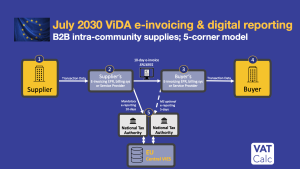
July 2030 – intra-community digital reporting and e-invoicing
- ViDA Digital Reporting Requirements and mandatory e-invoicing framework enters into force
2030-2035 – harmonisation of domestic regimes
- Transitional coexistence of national and EU models
- Potential gradual harmonisation of domestic regimes
- Further alignment of reporting and transmission models
EN 16931 and central VIES work accelerates
The Commission confirmed continued progress on the EU’s harmonised e-invoicing model built around EN 16931, formally approved for ViDA purposes on 13 February 2026.
Additional developments include:
- circulation of a second draft of the DRR Explanatory Notes
- work on a common EU e-invoice messaging model
- ongoing Peppol pilot projects involving tax authorities
- public consultation running through June 2026
- final publication of the DRR Explanatory Notes targeted for Q1 2027
The roadmap also confirms growing focus on interoperability, transmission architecture and invoice lifecycle processing.
Yet many of the most commercially significant operational questions remain unresolved.
Major disagreements remain unresolved
One of the largest concerns is that core DRR terminology still lacks consensus.
Member States and stakeholders continue to disagree on:
- what constitutes invoice issuance
- transmission and receipt definitions
- the definition of a “transaction” for DRR purposes
- reporting of VAT rates and tax amounts
- handling of corrections and credit notes
- treatment of advance payments
- hybrid invoice models
- intra-Community transaction extensions
- reporting requirements for sensitive goods
- product classification obligations within digital reporting
Questions also remain around:
- attachments embedded within structured invoices
- reporting of non-required data
- sanctions and penalties
- invoice acceptance and validation processes and controls
These are not minor points. They directly impact ERP configuration, middleware design, tax engine logic and transaction reporting controls.
While these may appear highly technical, they directly influence how ERP systems, e-invoicing platforms and tax engines will need to structure and transmit transaction data under the future DRR regime.
Fragmentation risks continue to grow
The roadmap also highlights growing tension between EU harmonisation ambitions and entrenched domestic e-invoicing systems already operating in Member States such as Italy, France and Spain.
Particularly significant is the Commission’s evolving position on service provider accreditation. Proposed EU accreditation criteria now appear to be advisory rather than mandatory, increasing the possibility of national divergence between certified provider regimes.
At the same time, operational realities continue to complicate harmonisation:
- B2B invoices may still be issued without VAT numbers at the point of supply
- formal validation controls are not necessarily prerequisites for invoice validity
- treatment of legacy EDIFACT invoice formats
- Member States remain divided on transitional measures through to 2035
This creates a growing risk that Europe may harmonise invoice semantics while continuing to fragment operationally across:
- transmission models
- reporting obligations
- validation controls
- clearance approaches
- service provider frameworks
Clear roadmap, but interoperability challenges remain
The Commission’s workplan demonstrates that ViDA implementation is now moving firmly from political agreement into operational execution.
However, the DRR pillar remains the most technically ambitious and politically sensitive part of the entire ViDA package.
The EU is clearly progressing toward harmonised digital VAT reporting. But the continuing disagreements on definitions, operational controls and transition models underline a growing concern for businesses:
Europe may ultimately achieve common e-invoice standards while still leaving companies to navigate multiple competing national digital VAT ecosystems.