Tax authorities are cutting VAT non-compliance investigations from nine months to three
The OECD has highlighted the growing impact of artificial intelligence in VAT administration, with some tax authorities reducing the time needed to identify and investigate VAT non-compliance from around nine months to just three.
Tax audits using AI is already driving more accurate audits in the UK and elsewhere many professionals are warning.

Speaking at the OECD Tax and Development Days 2026 conference, Hanna Lee, Tax Policy Advisor at the OECD, explained how AI is helping tax authorities analyse vast datasets while significantly reducing the costs associated with cleaning and reviewing information.
The announcement provides a glimpse into how tax authorities are beginning to use AI in practice, moving beyond experimentation and into operational compliance programmes.
Why VAT is an ideal target for AI
VAT systems generate enormous volumes of structured data through:
- VAT returns
- E-invoices
- Digital reporting submissions
- Customs declarations
- Payment information
- Marketplace reports
The challenge for tax authorities is no longer collecting data. It is identifying meaningful risks hidden within billions of transactions.
AI is increasingly being used to:
- Detect unusual trading patterns
- Identify suspicious VAT refund claims
- Highlight potential missing trader fraud
- Prioritise audit cases
- Analyse connections between businesses and transactions
- Reduce false positives generated by traditional rule-based risk engines
This allows tax authorities to focus scarce compliance resources on the highest-risk cases.
The hidden objective behind e-invoicing
For many governments, e-invoicing programmes have been promoted primarily as anti-fraud measures. However, AI may become the bigger long-term benefit.
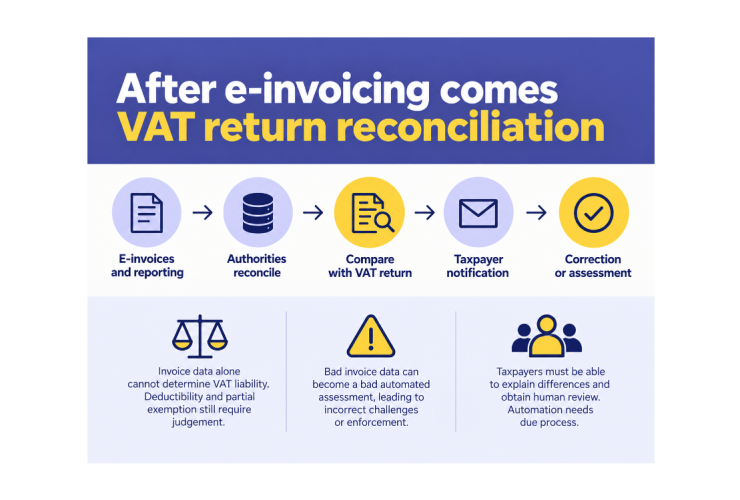
As countries introduce continuous transaction controls, real-time reporting and mandatory e-invoicing, tax authorities gain access to unprecedented volumes of structured transaction-level data.
The combination of e-invoicing and AI creates the ability to analyse entire supply chains rather than isolated VAT returns.
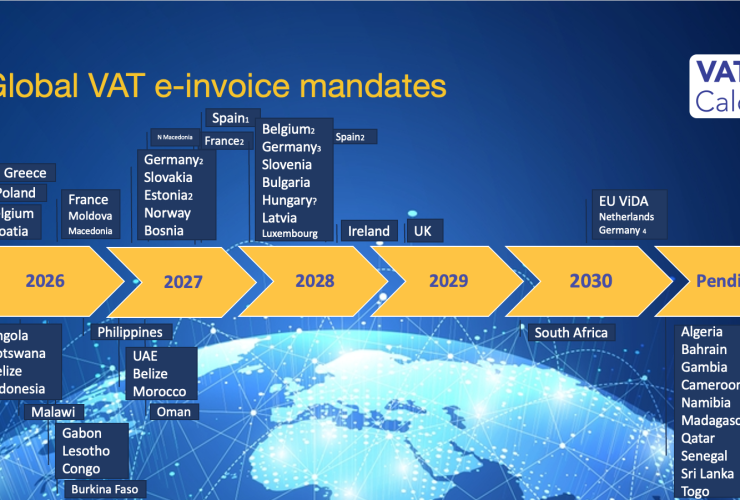
This trend is likely to accelerate as major reforms such as the EU’s VAT in the Digital Age (ViDA) package generate increasing volumes of standardised digital VAT data.