Importers could account for import VAT directly in their VAT returns from 2030, removing a significant cash-flow and administrative burden
Germany has taken an important step towards ending the requirement for businesses to pre-finance import VAT.

On 10 September 2026, the German Conference of Finance Ministers approved plans for an import VAT offsetting model, under which import VAT would be reported through the periodic VAT return rather than paid separately to customs.
The federal government has been asked to introduce the necessary legislation, with the new system targeted to be available from 1 January 2030.
See more in our German VAT guide.
Import VAT paid and recovered at the same time
Currently, German import VAT is assessed and collected by customs. Without a payment deferment arrangement, it is generally payable within ten days.
Businesses entitled to full VAT recovery may deduct the same import VAT through their periodic VAT return. This creates a timing difference between paying the tax and recovering it, potentially tying up significant amounts of working capital.
The proposed model would change this.
Importers would instead declare the import VAT liability in their periodic VAT return and simultaneously claim the corresponding input VAT deduction.
For a business with full VAT recovery:
Import VAT due → VAT return → simultaneous input VAT deduction → no net cash payment
This would largely remove the financing cost associated with import VAT.
Catching up with other EU countries
Germany has discussed such a reform for years. The Netherlands introduced an import VAT offsetting mechanism as far back as 1969, while Belgium followed in 1979.
Germany’s existing arrangements have therefore been regarded as a competitive disadvantage for ports and logistics operations, particularly Hamburg, compared with Rotterdam and Antwerp.
The reform could make Germany more attractive as an EU entry point for goods imported from third countries.
2030 is the target, not yet the law
The September decision is an important policy milestone, but businesses should not yet treat the 2030 implementation date as final.
Federal legislation is still required. Germany will also need to establish data exchange between the federal customs administration and state tax authorities and build the supporting IT infrastructure.
The detailed eligibility rules are also unresolved.
A key question will be whether importers can use the offsetting mechanism automatically or whether they will require customs authorisations, guarantees or other approvals. An administratively heavy authorisation process could reduce much of the simplification the reform is intended to deliver.
Import VAT becomes a VAT reporting and reconciliation issue
The change would also shift import VAT further from being primarily a customs payment process towards becoming part of the VAT reporting process.
Businesses will need reliable reconciliation between customs declarations, import transactions, VAT determination and the amounts ultimately reported in their VAT returns.
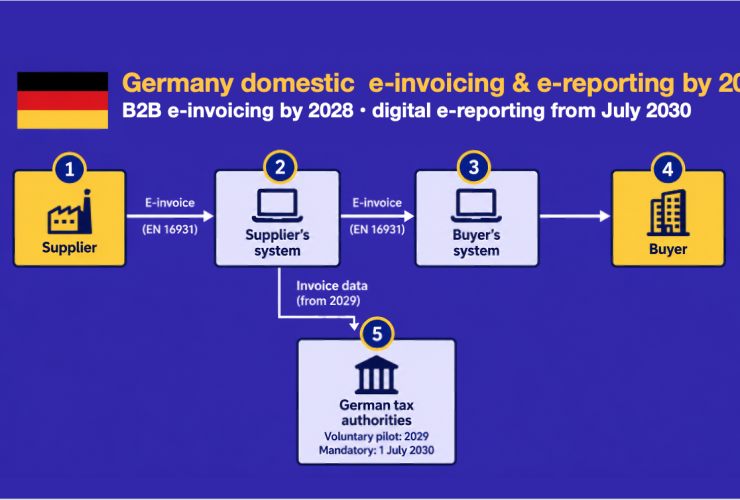
That makes the quality and consistency of transaction-level tax data increasingly important. By 2030, Germany’s import VAT reform will sit alongside the wider digitalisation of European VAT compliance, including e-invoicing and digital reporting under ViDA.
For multinational businesses, these reforms increasingly reinforce the need for VAT determination, transaction data, e-invoicing and VAT reporting to operate from the same underlying tax logic rather than as separate compliance processes.
Until the new German legislation takes effect, the existing import VAT payment, deferment and recovery rules continue to apply.