Three weeks of French e-invoicing expose the bigger challenge: getting tax and ERP data right across the compliance chain
France’s mandatory B2B e-invoicing regime went live on 1 September 2026 for large and intermediate-sized enterprises (ETIs), with all French businesses required to be able to receive electronic invoices.

Three weeks into the reform, the first operational data from DGFiP and AIFE is providing a much clearer picture of how the system is performing.
Volumes are rising quickly and compliance rates have improved significantly since the first days of the launch. But the data is also exposing an important distinction: connecting to an Authorised Platform (PA) is one thing. Getting compliant invoice data successfully through the entire chain is another.
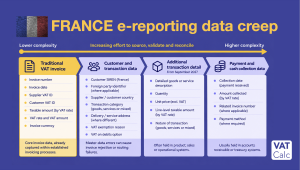
This is largely down to the extra data required of e-reporting, as detailed below:
8.38 million compliant invoice files in three weeks
Between 1 and 21 September, almost 8.38 million compliant F1 files were received by the Public Invoicing Portal (PPF).
Adoption amongst businesses subject to the September 2026 issuing mandate is also accelerating:
- 63% of large enterprises had issued at least one electronic invoice by 21 September
- 41% of ETIs had issued an electronic invoice
- most Authorised Platforms were now achieving compliance rates above 90%.
This represents a significant improvement on the position just one week earlier. By 14 September, 56% of large enterprises had issued an electronic invoice and the figure for ETIs was just over one-third.
E-reporting is also starting to build. The PPF had received 7,488 compliant F10 files by 21 September, with volumes accelerating as businesses began reporting completed periods.
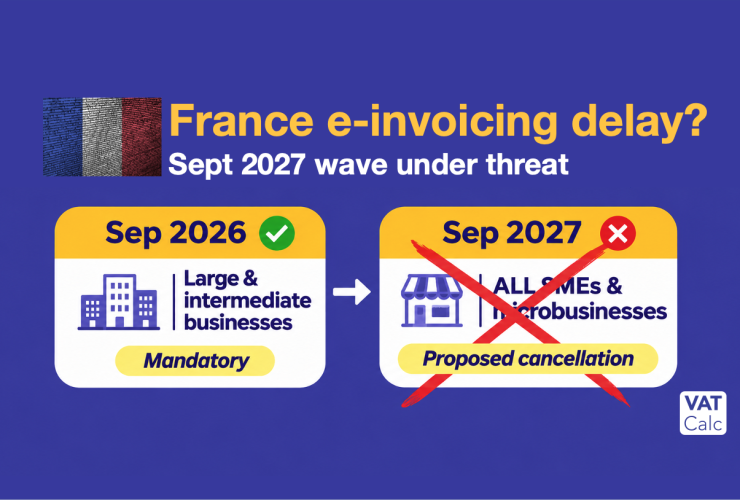
The September 2026 launch requires large enterprises and ETIs to issue e-invoices and comply with e-reporting requirements. All French businesses must already be able to receive e-invoices. SMEs and micro-enterprises join the issuing and e-reporting mandate from 1 September 2027.
Early rejection rates are falling
The improving compliance rates are significant given the problems experienced during the first days of the mandate.
On 10 September alone, the PPF received 924,040 F1 flows, of which 402,423 were non-compliant. This represented a rejection rate of 43.5%.
Between 11 and 13 September, around 32% of non-compliant flows resulted from missing mandatory data. Other problems included invalid formats, SIREN identifiers missing from the central Directory and inconsistencies in VAT data.
These figures were never likely to represent the mature French system. The third-week data now suggests platforms are progressively resolving many of the initial problems.
But it also demonstrates how individual configuration errors can have an enormous impact.
The bigger problem may be upstream
Not all of France’s early rejection problems are e-invoicing platform failures.
Missing mandatory fields, invalid SIREN numbers and VAT inconsistencies frequently originate much earlier in the transaction chain, including customer and supplier master data held in ERP and accounting systems.
Historically, imperfect master data could remain in those systems for years without preventing an invoice from being issued. Mandatory structured e-invoicing changes that. The data must now satisfy automated validation rules before the transaction can move successfully through the compliance chain.
The distinction matters. An Authorised Platform can identify and reject defective data, but it cannot necessarily correct the underlying customer record in the sender’s ERP.
Other failures are genuinely platform-side. The third AIFE monitoring update showed how one PA’s incorrect use of F10 tags within F1 flows generated a large proportion of almost 143,000 rejected F1 files over three days.
France is therefore exposing problems at several levels simultaneously: source data, ERP mapping, platform configuration, directory routing and network interoperability.
This could become still more significant from 1 September 2027, when SMEs and micro-enterprises enter the mandatory issuing and e-reporting regime.
One platform error triggers thousands of rejections
Between 18 and 20 September, 142,923 F1 files failed compliance checks.
Most of these failures reportedly came from a single Authorised Platform which had incorrectly included F10 e-reporting tags within F1 invoice flows.
Once this exceptional issue is removed, the remaining problems are familiar data-quality failures. They include:
- duplicate invoices failing uniqueness checks
- missing mandatory invoice data
- inconsistencies in VAT information
- invalid SIREN identifiers.
F10 e-reporting is experiencing similar issues. These include missing reporting-period dates, invalid country and unit codes, formatting problems and errors relating to credit notes.
The experience illustrates one of the central challenges of continuous transaction controls. A platform may be technically connected, but relatively small mapping or configuration errors can generate very large numbers of rejected transactions.
Interoperability means more than connecting
France’s decentralised model depends upon invoices and associated data moving successfully across the complete chain:
ERP → Authorised Platform → recipient’s Authorised Platform → recipient
That requires more than technical connectivity.
Invoice data must be complete, correctly structured, routed to the correct recipient and consistent with French VAT requirements. The platforms themselves must also manage directory information and communicate correctly with other parts of the French infrastructure.
The latest AIFE update has exposed another example of this.
When an Authorised Platform closes a company’s final active directory line following termination of its contract, the business can be left temporarily without an active routing address. This can cause technical rejections and make it more difficult for a replacement platform to take over.
France has therefore had to clarify the process for maintaining a default directory line where a business leaves one PA without immediately transferring to another.
This is an important reminder that interoperability extends beyond exchanging invoice files. Identification, routing, platform portability and lifecycle management all have to work too.
B2G Chorus Pro connectivity remains incomplete
The interaction between the new PA network and France’s existing public-sector Chorus Pro system is providing another interoperability test.
By 21 September, 25,331 B2G invoices had been transmitted through the new Authorised Platform channel in 10,610 flows.
However, only 63 of approximately 150 PAs were connected to Chorus Pro, up from 62 a week earlier.
Between 18 and 20 September, 310 invoices remained pending for 28 platforms which had not yet established the required connection.
Connection to Chorus Pro is mandatory for PAs handling these transactions.
The figures again demonstrate that participation in the French e-invoicing ecosystem does not necessarily mean that every part of the end-to-end transaction chain is already operational.
France still has more than 160 potential platforms
DGFiP published updated Authorised Platform lists on 22 September 2026.
Across registered platforms and candidates still progressing through the process, the French market potentially comprises around 163 providers, slightly down from around 166 two months earlier.
The market is increasingly diverse and international. It includes ERP and invoicing software providers, EDI operators, tax compliance businesses, document management providers, fintechs, procurement platforms and multi-country VAT compliance providers.
This makes interoperability particularly important.
France is not operating a single centralised invoice exchange. Businesses may use different platforms, and those platforms must exchange compliant invoice data while also interacting correctly with the French Directory, PPF and, where relevant, Chorus Pro.
Three weeks in: compliance improves, but the lesson remains
France’s e-invoicing launch appears to be stabilising quickly.
Almost 8.38 million compliant F1 files had reached the PPF by 21 September, adoption amongst large enterprises and ETIs continues to rise and most Authorised Platforms are now reportedly achieving compliance rates above 90%.
But scale is exposing something more important.
A single platform configuration error generated a large proportion of almost 143,000 rejected F1 files over just three days. Other failures continue to arise from duplicate invoices, missing mandatory fields, incorrect VAT data and invalid business identifiers.
Directory management and incomplete Chorus Pro connectivity demonstrate that routing and interoperability remain challenges too.
These issues will become still more important when France brings SMEs and micro-enterprises fully into the issuing and e-reporting mandate on 1 September 2027.
For multinational businesses, the challenge is therefore moving beyond simply selecting an Authorised Platform.
ERP data, VAT determination, invoice creation, directory routing, transmission, receipt, e-reporting and ultimately the VAT return must all reconcile across the same compliance chain.
In summary – it’s not formats; it’s end-to-end data
France’s first three weeks suggest that the real e-invoicing challenge is not the invoice format itself. It is maintaining accurate and consistent tax data from the ERP, through VAT determination and invoice creation, across the platform network, and ultimately into e-reporting and the VAT return.