
E-invoicing is usually presented as an administrative reform: replace the PDF, automate invoice exchange and reduce manual VAT reporting.
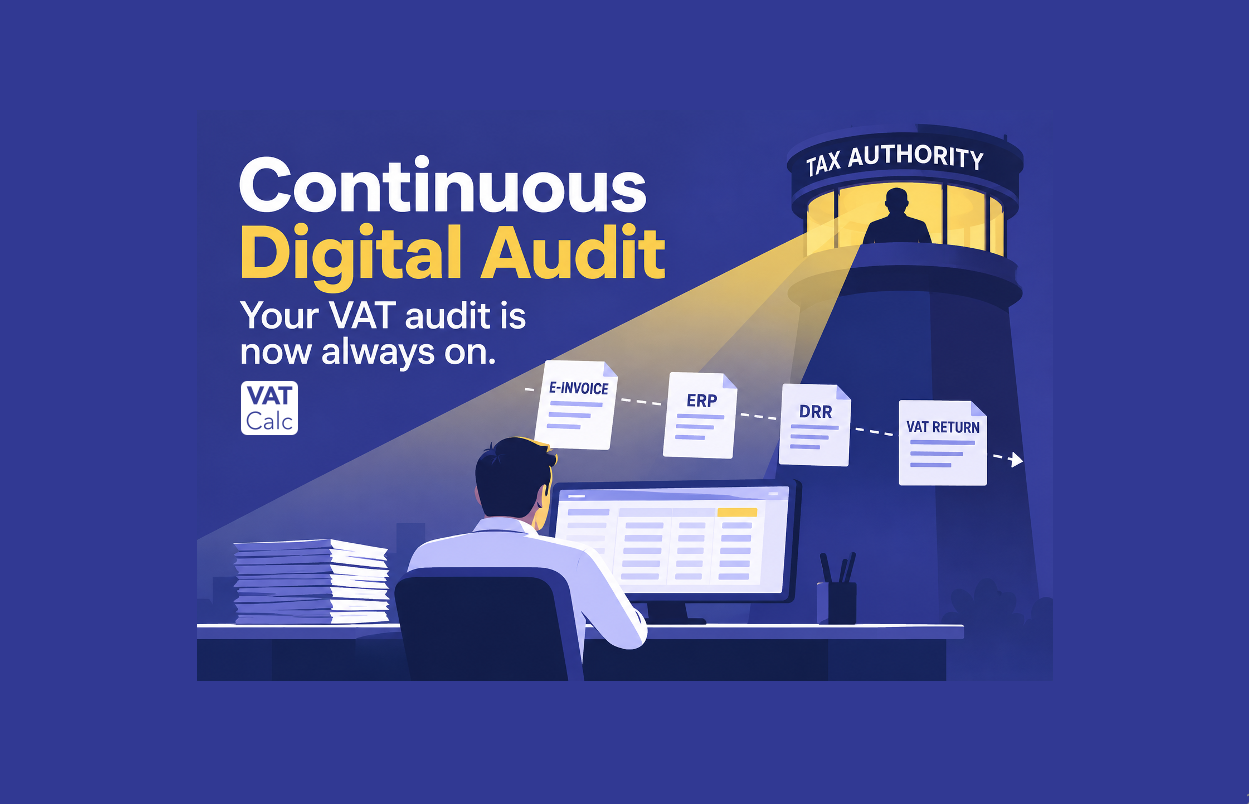
But there is another side to the transformation. E-invoicing and continuous transaction controls give tax authorities transaction data earlier, in greater detail and increasingly before the VAT return is filed. The result could be a fundamental change in the relationship between businesses and tax authorities. Periodic VAT compliance is starting to look more like continuous digital audit.
From VAT returns to transactions
Traditionally, tax authorities received a VAT return periodically and investigated anomalies afterwards. E-invoicing changes that sequence. Authorities can receive invoice data in real time or near real time, compare sales and purchases, identify unusual VAT treatments and reconcile counterparties before the return is even submitted.
For businesses, the question therefore changes. It is no longer enough to ask whether the VAT return is correct. They increasingly need to know whether the individual transactions supporting it will withstand automated scrutiny.
That is a considerably higher compliance standard, particularly for large businesses processing millions of transactions through multiple ERP and invoicing systems.
More data does not necessarily mean less work
Governments understandably see e-invoicing as an opportunity to reduce the VAT gap and automate compliance. Pre-filled VAT returns are the logical extension, but automation does not necessarily remove work for taxpayers. It can simply move it upstream.
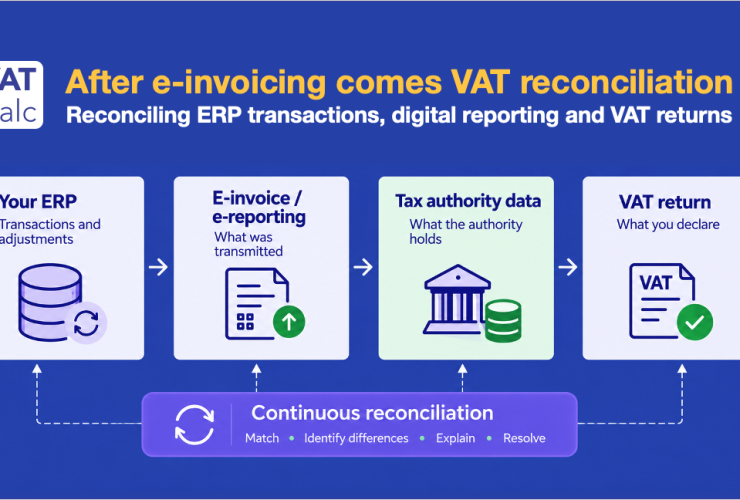
ERP data may not agree with e-invoice data. An invoice can pass technical validation while containing the wrong VAT treatment. Corrections, credit notes, timing differences and missing invoices create further discrepancies. Most importantly, the tax authority may end up holding a different version of the taxpayer’s transaction record from the one sitting in its accounting system.
The OECD has warned that the rapid proliferation of different national digital transaction reporting regimes is creating increasingly significant compliance challenges for businesses operating across jurisdictions.
Reconciliation therefore becomes much more important. Businesses need to understand discrepancies before the tax authority’s systems identify them.
EU ViDA takes this further
The EU’s VAT in the Digital Age reforms will bring cross-border B2B transactions into digital reporting based on structured e-invoice data, while national e-invoicing and reporting regimes continue developing alongside it.
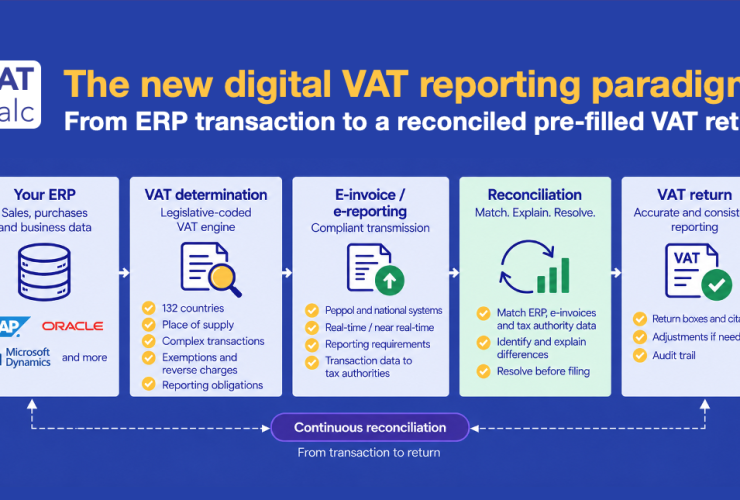
Businesses are therefore not simply implementing another invoice format. They are creating the transaction-level tax data that authorities will increasingly use to assess their VAT position. VAT determination needs to be right when the transaction occurs, rather than corrected months later during preparation of the VAT return.
This is also why VATCalc increasingly treats determination, e-invoicing, reconciliation and VAT reporting as one process. Our Auditor can re-determine transaction VAT and compare the result against accounting and e-invoice data before filing, helping identify differences before they become tax-authority queries.
The VAT return isn’t disappearing; its role is changing. As tax authorities gain access to the transactions behind it, VAT compliance moves progressively closer to the point of sale and purchase.
And with that comes something businesses need to prepare for: the VAT audit may increasingly never really stop.