Germany’s latest e-invoicing guidance exposes an curious puzzle:
Passing an e-invoice validator is not the same as getting VAT right
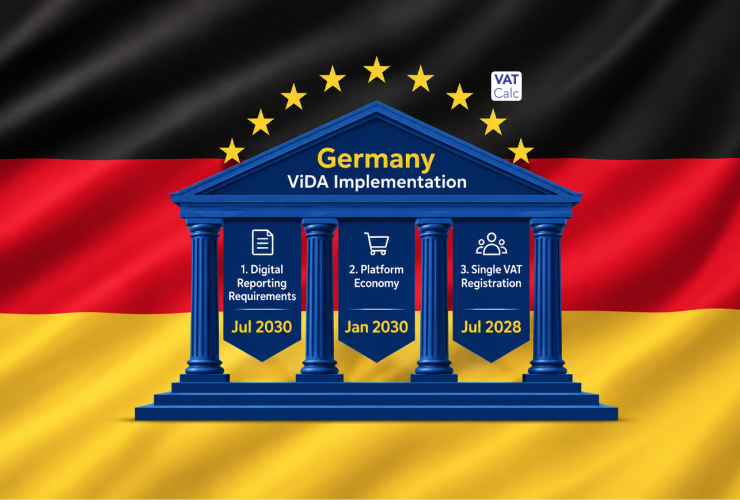
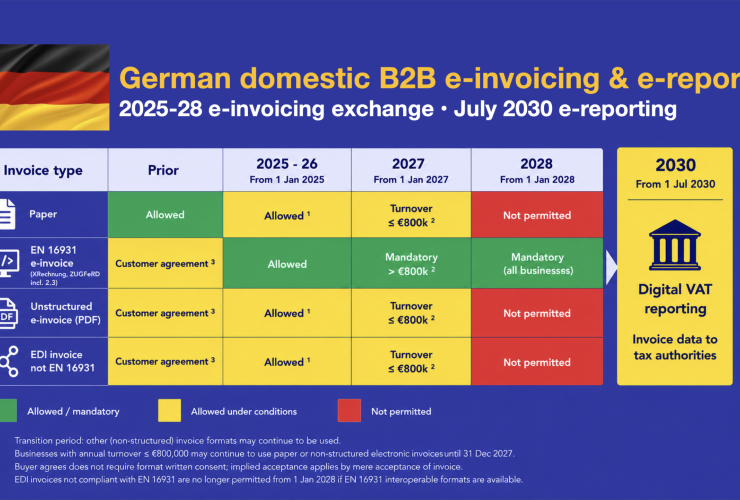
The Germany phased e-invoicing is rolling out 2025-28, and intra-community EU e-reporting starts July 2030 with ViDA.

Germany’s B2B e-invoicing mandate is built around structured, machine-readable invoices. In theory, that makes automation easy: validate the invoice, accept it and process it.
Except VAT is rarely that binary.
Germany’s latest BMF guidance highlights an important distinction. An invoice that fails certain technical requirements may not automatically be invalid for VAT purposes. And it’s not just a problem for Germany – EU’s VAT in the digital Age threaten to spread it across 26 other member states.
A red validation flag does not always mean reject
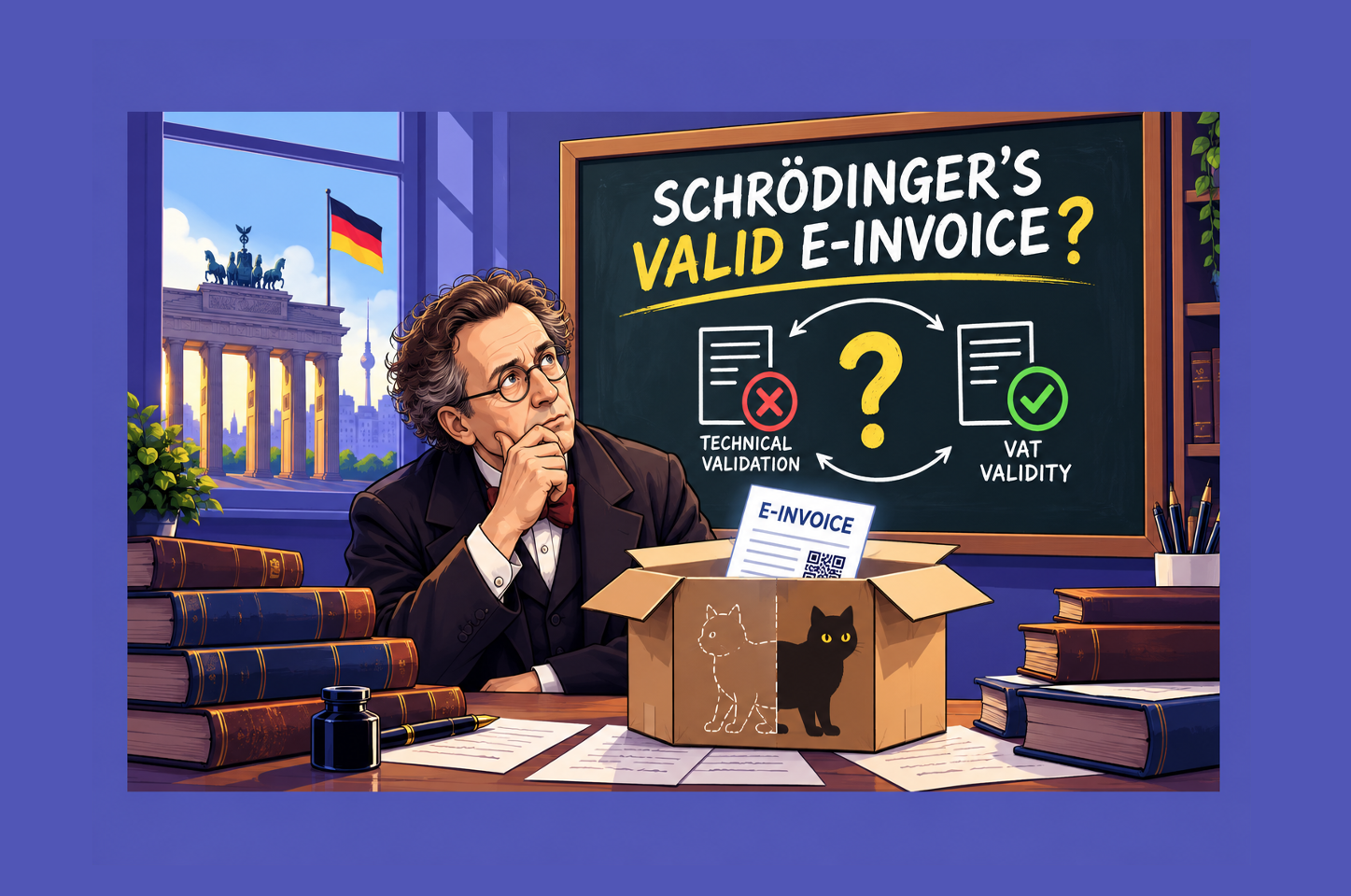
Technical conformity and VAT validity are two different tests.
An invoice may fail an EN 16931 validation rule or other technical requirement without necessarily losing its validity for VAT. Much depends on the error and whether the information required under German VAT law is still present.
That creates an immediate problem for automated accounts payable. Many systems are effectively designed around pass or fail. If the structured invoice fails validation, reject it and ask the supplier for another.
Germany shows why that can be the wrong response.
A missing mandatory VAT particular, a structural e-invoicing defect and a less consequential technical error do not necessarily have the same legal result. Treating them all as “invoice rejected” risks creating payment delays, supplier disputes and manual intervention.
Not quite the automation dividend businesses were promised.
A perfect e-invoice can still have the wrong VAT
There is another side to the problem: An invoice can pass every technical validation rule and still apply 19% German VAT when the transaction should be reverse charged. It could apply the wrong VAT rate, exemption or place-of-supply treatment.
Technically perfect. Fiscally wrong. This is the weakness in treating e-invoice validation as a proxy for VAT compliance.
EN 16931 can tell a system whether data is present, correctly structured and consistent with defined business rules. It cannot, on its own, establish whether the underlying transaction has been taxed correctly.
That requires VAT determination. And what VATCalc’s single tax engine and e-reconciliation platform tackles.
Germany’s e-invoicing paradox points to a much bigger ViDA problem.
This matters well beyond Germany.
Europe already has EN 16931 as its common e-invoicing standard. But a common standard is of limited value if 27 tax authorities build different validation rules and legal consequences around it.
The test for ViDA should therefore be simple: an invoice that complies with the European standard should not become valid, invalid or technically unacceptable depending on which side of an EU border it lands.
Businesses need to be able to implement once and deploy everywhere. Otherwise Europe risks replacing 27 VAT systems with 27 digital VAT systems.
And we need this soon – ideally through the ViDA Digital Reporting Requirements process
One last thought – invoice is the invoice?
Germany adds another twist with hybrid e-invoices such as ZUGFeRD, where structured XML sits alongside a human-readable PDF.
If the two conflict, the structured data takes precedence. That creates an awkward internal-control question: an AP employee may review and approve the PDF, while the data subsequently processed, retained or analysed for tax purposes comes from the XML.
In other words, the invoice a human approves may not contain exactly the same information as the invoice a machine audits.
That makes reconciliation between the visual and structured versions important. Otherwise businesses could successfully automate invoice processing while creating a new mismatch between what people see and what their systems — and potentially tax auditors — see.
Schrödinger would probably approve.