Germany has begun transposing the EU VAT in the Digital Age reforms into national law, with the first ViDA measures due to apply from 1 January 2027

Germany’s 2026 Annual Tax Act (Jahressteuergesetz 2026 – JStG 2026) includes the country’s first legislative implementation of Directive (EU) 2025/516, the ViDA Directive.
The German Cabinet approved the bill on 12 August 2026. It received its first reading in the Bundestag on 8 October and was referred to the Finance Committee. The legislation is therefore still progressing through Parliament.
What Germany is implementing
The current changes concern the first stage of ViDA, principally provisions which Member States must apply from 1 January 2027.
Among the VAT amendments are changes arising from Article 2 of the ViDA Directive, including adjustments to the EU call-off stock arrangements. The existing simplification is being phased out as ViDA moves towards the wider use of the One Stop Shop and other Single VAT Registration reforms.
These are relatively limited changes compared with what comes next.
Germany’s wider ViDA timetable
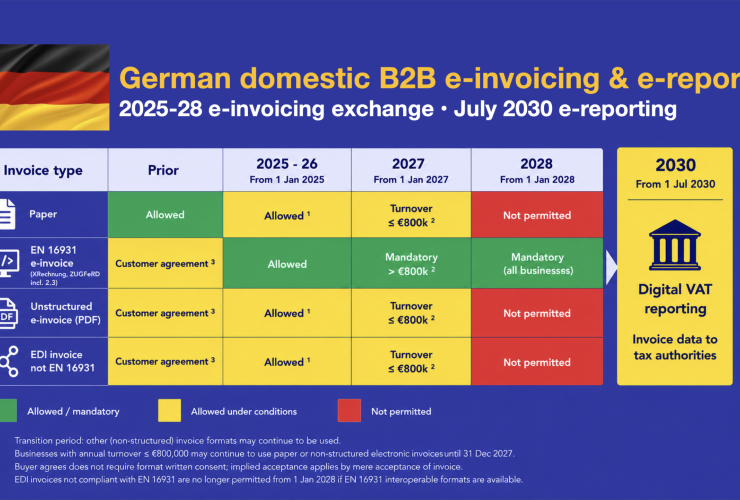
Germany already has its domestic B2B e-invoicing transition underway. This is distinct from the JStG 2026 ViDA transposition and will ultimately feed into the EU’s wider digital reporting framework.
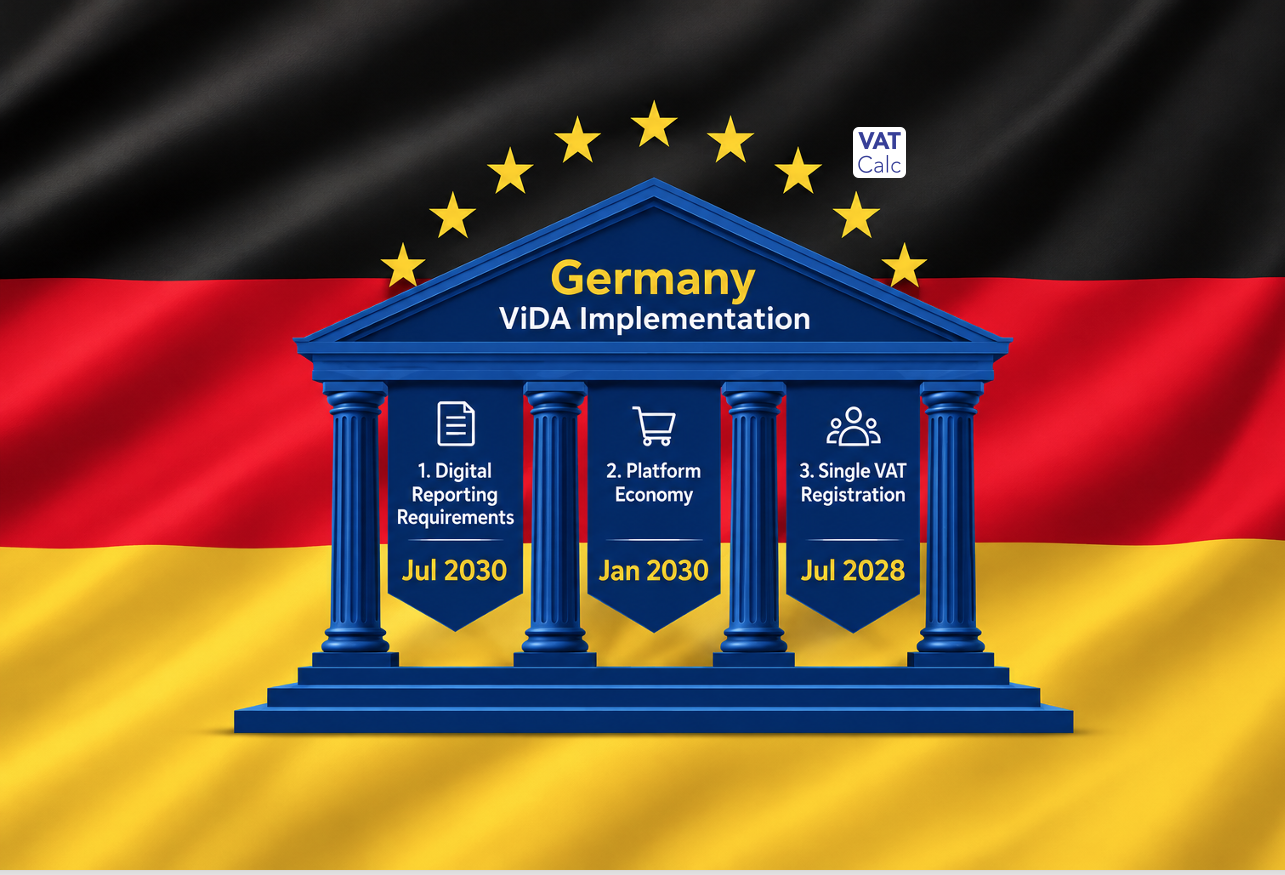
Further German legislation will therefore be required to implement later ViDA stages, including the broader Single VAT Registration reforms, platform economy measures and the Digital Reporting Requirements (DRR) for intra-EU transactions from 1 July 2030.
JStG 2026 should consequently be viewed as Germany’s first ViDA implementation law, rather than its complete ViDA implementation.
Germany will be one to watch as its existing domestic e-invoicing regime is progressively aligned with the EU-wide ViDA model.