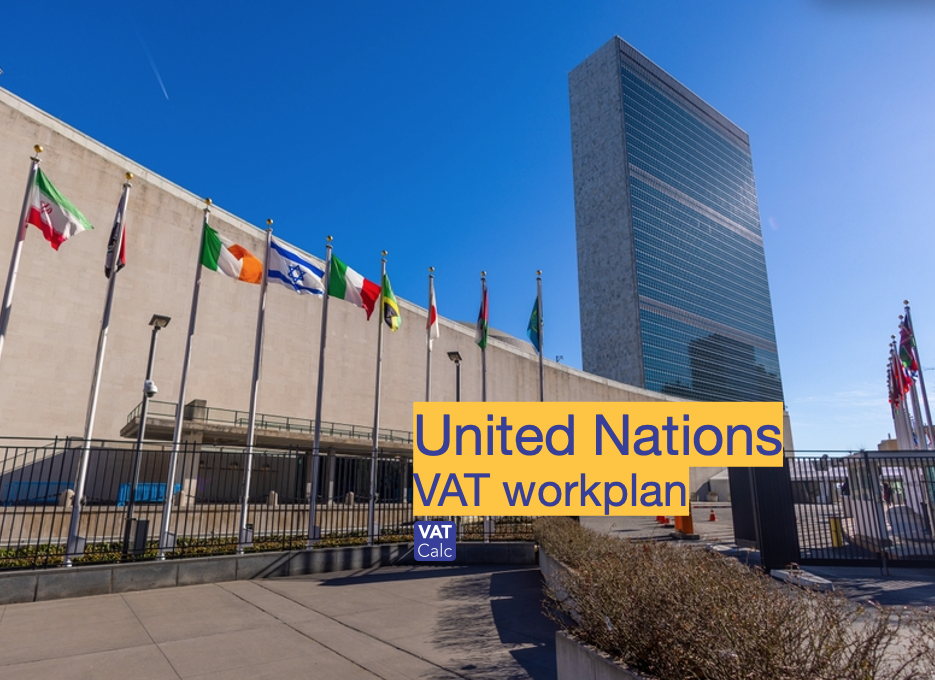
UN sets focused VAT roadmap to 2028 with new Subcommittee workplan
The United Nations Committee of Experts on International Cooperation in Tax Matters has outlined a more practical and execution-driven VAT agenda through to 2028. Its new Subcommittee on Indirect Taxes will develop guidance on how VAT systems actually operate in practice, with a clear emphasis on developing country challenges.
United Nations steps-up indirect tax role
United Nations is significantly stepping up its tax activities, marking a historic shift toward taking a leading role in global tax rule-setting, traditionally left to the OECD. The shift in this latest workplace is notable. VAT design is well understood. The pressure now sits in administration, digitalisation and cross-border enforcement.
Five workstreams targeting VAT execution gaps
The workplan centres on five priority areas:
- Digital economy VAT Focus on platform-based collection and cross-border B2C supplies. Key issues include identifying the liable party in complex supply chains and managing input tax recovery in platform models. Digital trade continues to outpace consistent VAT treatment.
- Fraud prevention and SME compliance Addresses structural fraud risks linked to input tax credits, alongside weak refund processes and SME compliance burdens. Increasingly, fraud is digitally enabled, pointing to the need for stronger systems and real-time controls.
- Cross-border dispute resolution A major gap. VAT lacks the equivalent of treaty-based dispute mechanisms seen in direct tax. The Subcommittee will explore ways to prevent disputes and reduce reliance on fragmented domestic litigation.
- Financial services, FinTech and crypto Rapid innovation is exposing weaknesses in traditional VAT exemptions. Inconsistent treatment between legacy financial services and digital models risks distortion and revenue loss, particularly in cross-border contexts.
- VAT regressivity Examines whether VAT disproportionately impacts lower-income households and whether reduced rates or alternative compensation mechanisms are effective. This remains politically sensitive and is still being scoped
March 2028 workplan to October 2028 delivery
The Subcommittee will develop draft outputs across 2026 to 2028, with multiple workstreams progressing in parallel. Importantly, it will coordinate with wider UN tax initiatives, including digital economy taxation and tax administration reform.
UN steps up indirect tax activities
This is a clear signal of convergence in global VAT thinking. The challenges identified, digital trade, fraud, disputes and financial innovation, are universal.
For tax authorities, the workplan provides a structured reform agenda. For businesses, it points to increasing scrutiny and alignment across jurisdictions. And for technology providers, the direction is obvious: VAT compliance is becoming a systems challenge, requiring real-time, legislation-driven solutions rather than manual interpretation.