France’s e-reporting net is wider than many foreign sellers think
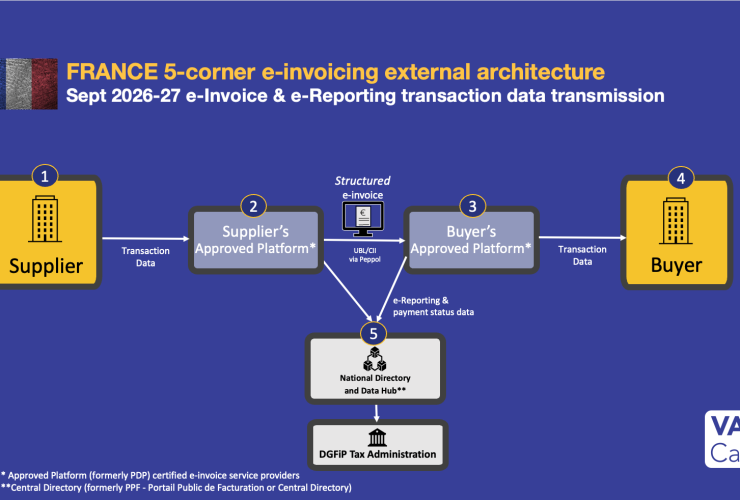
France’s e-invoicing and e-reporting mandate is now live since 1 September 2026. For non-residents with a French VAT number, they are excused from the exchange of e-invoicing, but are subject e-reporting for non-resident rules. However, mid and smaller non-residents have a 1-year waiver till 1 September 2027.
Also, there is a phased introduction of the VAT transactions which must be reported in e-reporting for resident and non-residents.

1. Phased by size of taxpayer
A non-resident business falls into this first wave only if it is a ‘Large Enterprise’, meeting at least two of the following thresholds base on 2024 submited accounts:
-
- Employees : > 250
- Turnover : > €50 million
- Balance sheet : > €43 million
These thresholds must be assessed on a worldwide basis, not by looking only at French turnover or French transactions.
Smaller non-resident businesses benefit from a one-year deferral. From 1 September 2027, the obligation extends to all businesses, including smaller non-resident VAT registrations.
2. Phased by transaction scope
The French rules also phase in the mandate by limiting which transactions must be reported in the first year:
1 Sept 2026: in-scope non-resident businesses only have to e-report transactions on which French VAT is actually collected.
1 Sept 2027: the scope expands to include other transactions where VAT is due in France even if collected through different mechanisms. This wider scope includes:
- intra-Community acquisitions of goods;
- transactions subject to the reverse charge; and
- more generally, supplies falling under reverse charge Articles 194 and 199 of the VAT Directive
NOTE: where a non-resident must comply with e-reporting, they are obliged to apposition an “Approved Platforms“, Plateforme agréée ‘PA’.
5 examples to help understand if you are subject to e-reporting
A business does not need a fixed establishment in France to be pulled into the country’s new digital VAT reporting rules. In these examples, the real trigger is not where the seller is established. It is where the goods are located at dispatch, who the customer is, and whether the supply is taxable in France.
Note: VATCalc’s tax engine is expert at determining if any invoice is subject to e-invoicing and e-reporting. Let us know if you would like a look!
1: Belgian large enterprise selling from France to French consumers
A large Belgian company, established in Belgium and with no fixed establishment in France, sells toys from France to private individuals resident in France.
This business is taxable and liable for French VAT. Because the goods are dispatched from France to French consumers, the sale is a domestic French B2C supply. As a result, the company will fall within the French transaction e-reporting regime from 1 September 2026. It must also have chosen an approved platform before that date.
2: German SME selling from France to French consumers
A German SME, established in Germany and with no fixed establishment in France, sells goods from France to private individuals resident in France.
Again, this is a domestic French B2C supply. The company is taxable and liable for French VAT and will therefore be subject to transaction e-reporting. The difference here is timing. As an SME, its reporting obligation starts on 1 September 2027, and it must have selected an approved platform before that date.
3: German SME selling from France to an Italian business customer
A German SME, established in Germany and with no fixed establishment in France, sells kitchenware to a restaurant in Italy. The goods are shipped from a warehouse in France to Italy.
Here, the VAT result is different. The supply is an intra-Community supply and is exempt from VAT in France. Because the transaction is not one that falls into the French domestic reporting net, the seller is not subject to French e-reporting for this transaction and does not need to select an approved platform on that basis.
4: Non-resident triangular goods movement into France
A large company established in the Netherlands, with no permanent establishment in France but holding a French VAT registration, purchases raw materials from an Italian supplier. The goods are transported from Italy to a warehouse located in France.
From a French VAT perspective, the Dutch company is liable for VAT in France on the intra-Community acquisition of the goods. As a non-established but VAT-registered entity, it falls within the scope of France’s e-reporting regime.
- The transaction must be reported via e-reporting (not e-invoicing), as it involves cross-border B2B flows not covered by domestic clearance e-invoicing
- The Dutch company must transmit transaction data to the French tax authorities via a certified platform (PDP or PPF)
- The obligation applies from 1 September 2027, unless the business qualifies as a Large Enterprise, in which case reporting may be required earlier under the phased rollout
- The company must also have selected and onboarded an approved platform before the go-live date
This example highlights a key feature of the French model: non-resident VAT registrations are explicitly brought into scope of e-reporting, even where there is no French establishment, ensuring that intra-EU supply chains feeding into France remain visible to the tax authorities.
5. German supplying goods from France to Italy customer
A German SME with no permanent establishment in France supplies goods from France to a customer in Italy. The transaction qualifies as an intra-Community supply, and is therefore VAT exempt. Although the goods physically move from France, the supplier remains a non-resident VAT taxpayer.
E-reporting obligation:
- The transaction is outside the scope of French e-reporting obligations.
- The German SME is not required to report the transaction via the French e-reporting regime.
- There is no requirement to register with or use a French approved e-invoicing platform (PDP).
French e-reporting focuses on transactions that are taxable in France or fall within domestic reporting scope. Exempt intra-Community supplies by non-established suppliers are excluded.
Why this matters for non-residents
The contrast is sharp. Two businesses with no French fixed establishment can still be caught by French e-reporting simply because they hold and dispatch goods from France to French consumers. But where the same stock movement supports an exempt intra-EU B2B supply, the reporting obligation falls away.
For tax and finance teams, the lesson is simple: French warehousing can create French digital reporting obligations faster than many groups expect.