For resident and non-resident businesses:
-
Automate detection of global transactions e-invoicing or e-reporting obligations
- Avoid accepting purchase e-invoice VAT errors based on Peppol tax code reconciliations
VATCalc automates e-invoicing readiness and Peppol tax code accuracy
VATCalc continues to redefine what a single global tax engine and reporting application can do. In its latest product update, two new automations take centre stage — transforming how businesses comply with the wave of e-invoicing and e-reporting mandates arriving worldwide.
1. Automatically know when to e-invoice or e-report
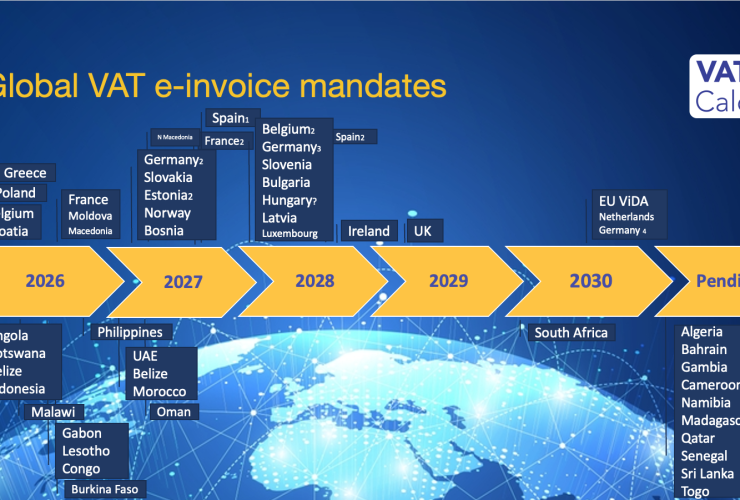
As national tax authorities roll out digital reporting mandates — from Belgium’s 2026 e-invoicing law to France’s phased rollout from September 2026 — identifying when a transaction must be e-invoiced or simply e-reported has become a growing burden for ERP and finance teams.
VATCalc’s tax engine, VAT Calculator, now does this automatically. Users can log into the same single tax engine that calculates VAT and instantly see whether a transaction falls within an e-invoicing or e-reporting obligation.
For example, when testing a Belgian domestic services transaction dated in 2026, VAT Advisor confirms that the transaction falls within the new e-invoicing mandate — meaning the supplier must issue and exchange the invoice through Peppol. At the same time, it clarifies that e-reporting to the Belgian authorities won’t begin until 2028.
This automation eliminates manual checks and regional guesswork, allowing ERP systems and e-invoicing providers to trigger the correct workflow automatically.
2. Validate Peppol tax codes and avoid invoice rejections
The second major enhancement ensures e-invoices can’t be rejected for tax code mismatches. VATCalc now maps each VATCalc tax code to both your internal ERP code (e.g., SAP) and the required Peppol tax identifiers used in network exchanges.
Two key codes are now surfaced:
-
Tax Category – defines what the VAT treatment is (standard, zero, exempt, reverse charge, etc.).
-
VATEX Code – defines why the exemption applies, referencing the correct national law or EU article.
This dual mapping ensures consistency between your ERP, e-invoicing gateway, VAT return, and the tax authority’s own records. The data is also returned in VATCalc’s API, enabling fully synchronised e-invoicing flows without reconciliation errors or duplicate mapping exercises.
3. Built-in VAT returns compliance, no reconciliations
Together, these two automations close the final gap between invoice compliance and VAT reporting. Businesses can now:
-
Instantly know whether to e-invoice or e-report any transaction.
-
Ensure Peppol tax codes are always correct, avoiding rejections.
-
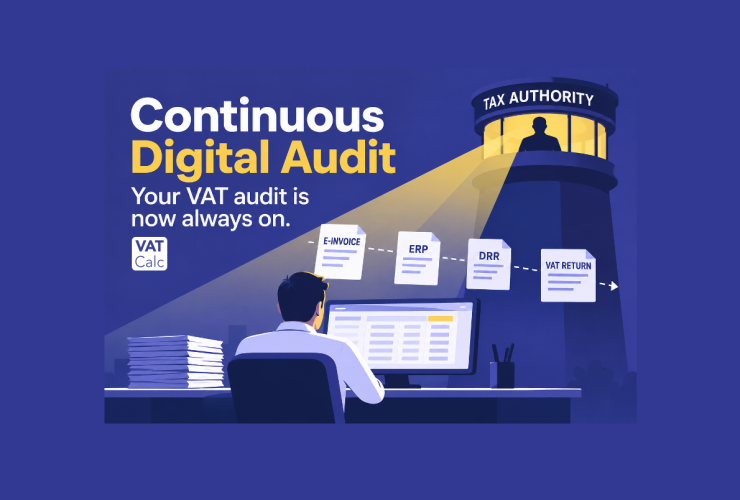
Achieve real-time alignment between ERP, e-invoice, and VAT return data.
All within VATCalc’s single legislative engine — no extra mapping tables, manual checks, or reconciliations required.
If you’d like to see these automations in action, request a demo of VAT Advisor, or explore the bulk transaction options available via API integration.
VATCalc — the world’s only single global VAT engine and reporting application, now automating the future of e-invoicing.