
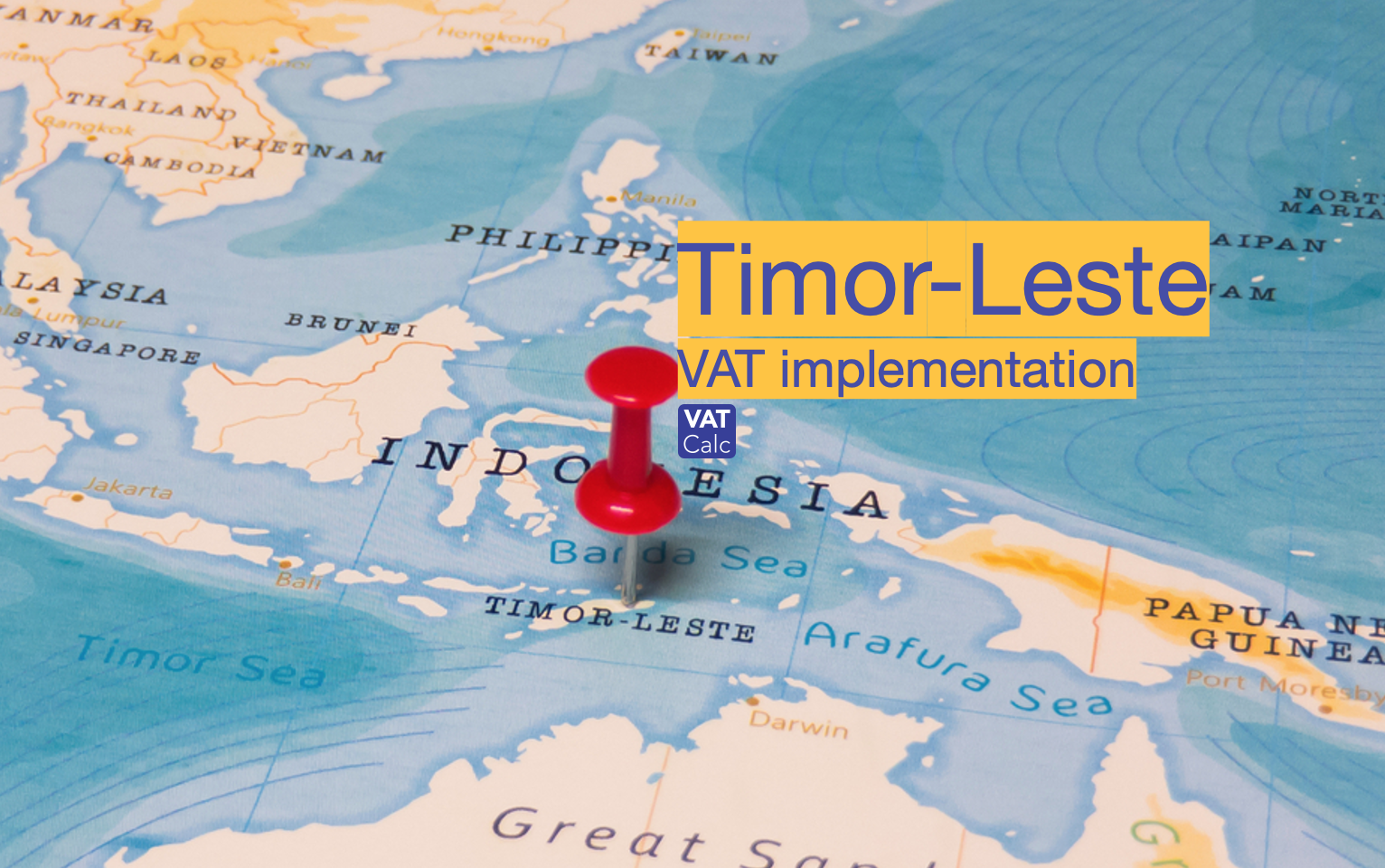
Public Consultation on replacing Sales Tax with VAT
Timor-Leste hNational Parliament launching a public consultation on the country’s first draft VAT law.
Commission C of the National Parliament, which is responsible for public finance, will hold a national public seminar on 18 September 2026 to gather views from businesses and other stakeholders before the legislation progresses through government.
This is the first formal consultation stage ahead of the draft law being approved by the Council of Ministers and subsequently submitted to Parliament. The draft legislation itself has not yet been published.
VAT targeted for 2027
The government continues to target 2027 for the introduction of VAT, alongside the creation of a dedicated tax authority to administer the new regime.
However, the technical design of the tax remains largely unknown. The draft legislation has not been released, leaving several key policy questions unanswered, including:
- the standard VAT rate;
- the compulsory registration threshold;
- exemptions and zero-rated supplies;
- the treatment of imports; and
- broader administrative and compliance requirements.
There is currently little detail available on the future compliance burden.
Part of wider economic reform
The government has linked the VAT project to wider fiscal modernisation and Timor-Leste’s preparations for ASEAN accession.
Officials have stated that VAT is intended to broaden the country’s revenue base while recognising the potential impact on consumers. Basic necessities may therefore be excluded from VAT or brought within scope gradually rather than from day one.
The Minister of Finance has also confirmed that the government intends to undertake its own public awareness campaign before seeking Cabinet approval and formally introducing the legislation into Parliament.
One of Asia’s remaining non-VAT jurisdictions
Timor-Leste remains one of the few jurisdictions in Asia without a VAT or GST system. Timor-Leste would be joining 176 countries with a VAT regime.
Its indirect tax system currently relies primarily on taxes on imported goods and services rather than a comprehensive consumption tax. The move to VAT therefore represents a significant structural reform of the country’s tax system rather than a routine legislative update.