Poll-leading Reform proposes major VAT threshold rise, but economists question long-term impact
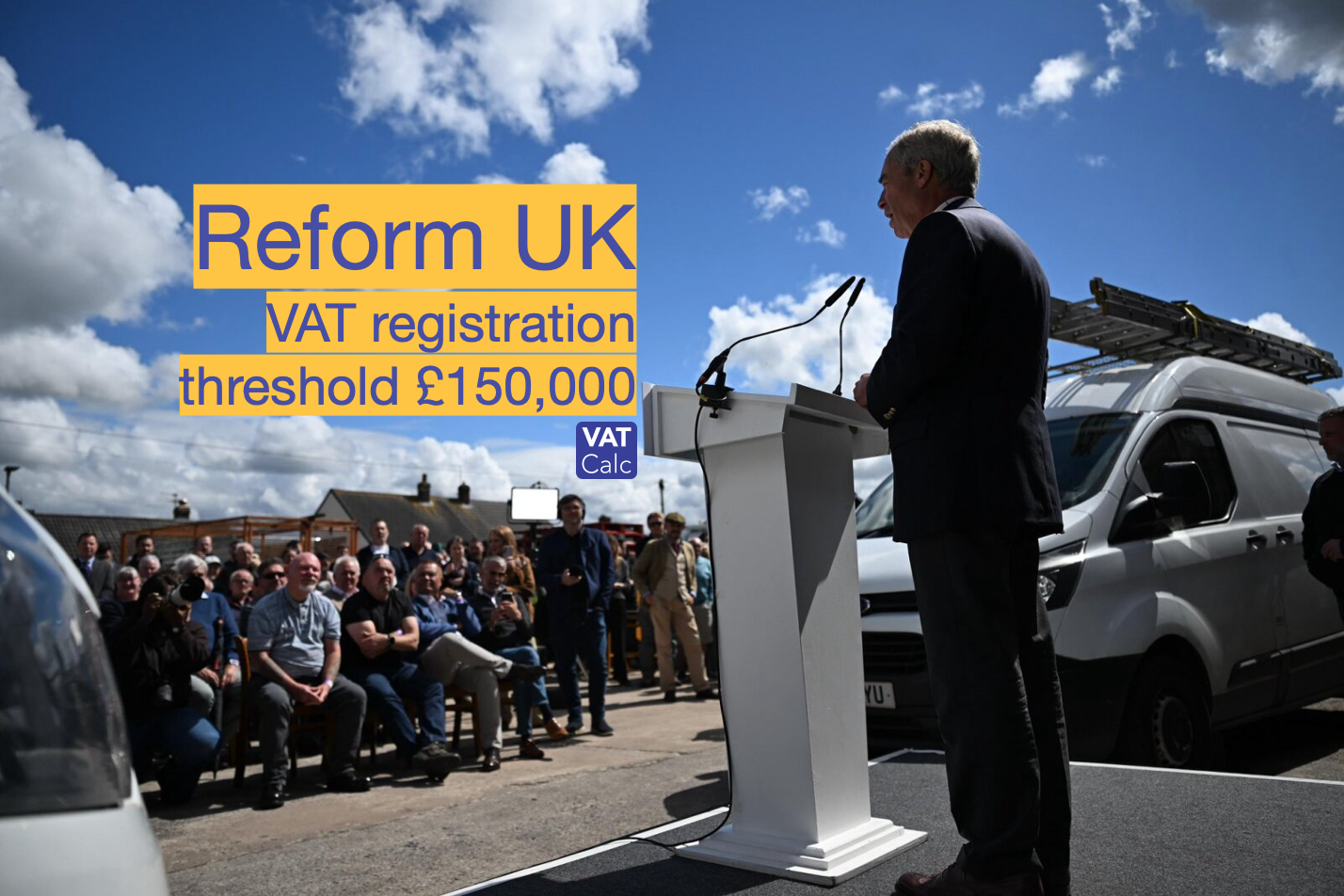
Reform UK has pledged to increase the UK VAT registration threshold from £90,000 to £150,000, describing the current limit as a barrier to growth for sole traders and small businesses. Reform called it a ‘fair deal for the white van man”
Reform earlier this year promised to cut pub VAT.
Aim to tackle ‘bunching’ and effects inflation
Announcing the proposal on 10 June 2026, Nigel Farage argued that many businesses deliberately restrict turnover to avoid the administrative burden and commercial impact of VAT registration. Reform estimates that around 750,000 businesses would benefit from the change, with a net cost to the Treasury of approximately £2.1 billion annually.
The party also pledged to make quarterly digital tax reporting voluntary, reversing elements of the UK’s Making Tax Digital programme for sole traders.
Raising already high threshold doesn’t remove cliff edge
The UK already operates one of the world’s highest VAT registration thresholds. Reform argues that Brexit gives the UK flexibility to raise the threshold beyond the EU’s €100,000 limit.
However, tax specialists may question whether the proposal solves the underlying problem. A higher threshold reduces compliance costs for smaller businesses, but it does not remove the VAT “cliff edge”. Instead, it moves it from £90,000 to £150,000. Businesses may continue to limit growth or defer contracts to remain below the new threshold.
Critics may also argue that a higher threshold increases competitive distortions between VAT-registered and non-registered businesses and removes more economic activity from the VAT system.
A longer-term solution could involve tapering VAT obligations as businesses grow, reducing the sharp financial impact of crossing the registration threshold rather than simply moving it.
The proposal is not government policy and would require Reform UK to win the next General Election before implementation.