SAF-T vs e-invoicing & e-reporting: understanding the difference in the new digital VAT World
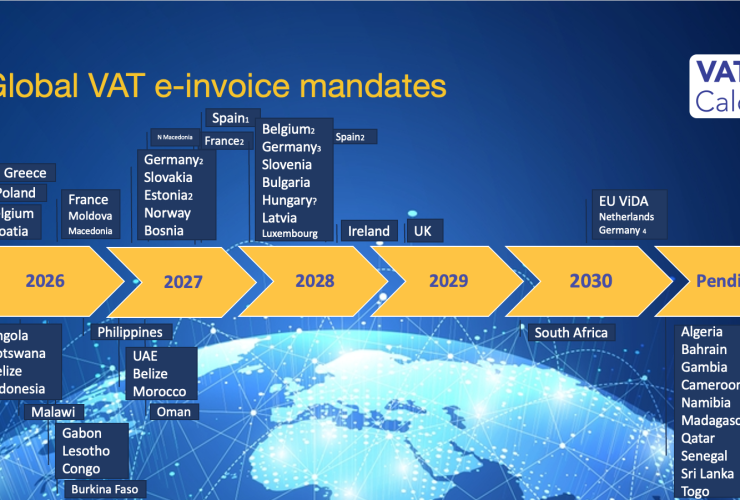
As tax authorities accelerate real-time e-invoicing, businesses are increasingly confronted with multiple, and often overlapping, data-reporting obligations. These typically fall into three broad categories: Standard Audit File for Tax (SAF-T), e-invoicing, and e-reporting (including models emerging under EU VAT in the Digital Age (ViDA)). But is the older SAF-T reporting, often periodic, now ready to be retired by live e-invoicing and reporting?

SAF-T: A holistic view of the business
SAF-T is not a transactional reporting regime. It is an accounting audit file standard suggested by the OECD 20+ years ago to give tax authorities a broad, standardised extract of a business’s underlying books and records. Depending on the country, this may include general ledger entries, chart of accounts, customer and supplier masters, invoices, payments, inventory movements, and fixed assets.
From a VAT perspective, OECD SAF-T focuses on how indirect tax is built up across all business activities. It allows authorities to reconcile VAT returns back to source accounting data, test VAT logic across sales and purchases, and identify inconsistencies between postings, tax codes, and reported liabilities. In short, SAF-T is about end-to-end VAT integrity, not just individual transactions.
This is why SAF-T regimes (such as those in Portugal, Poland, Norway, Romania, and others) are often used for audit, assurance, and post-filing control, even where real-time e-invoicing already exists.
e-invoicing and e-reporting: transaction-level control
By contrast, e-invoicing and e-reporting regimes are transaction-centric. Their primary objective is to capture VAT-relevant data at or near the point of supply, often in real time. Crucially, unlike SAF-T, they are often limited in scope of transaction – so often not including: B2C; export; some transaction thresholds; and intra-community.
E-invoicing mandates focus on structured invoice data: taxable amount, VAT rate, VAT amount, supplier, customer, and product or service classification. E-reporting models (including ViDA’s Digital Reporting Requirements) similarly concentrate on outbound and inbound transaction data, sometimes without a formal invoice exchange.
These regimes provide tax authorities with immediate visibility of individual supplies, supporting fraud prevention, cross-checks, and near real-time analytics. However, they do not, on their own, explain how VAT is posted, adjusted, reclaimed, or ultimately declared across the wider accounting system.
Why the distinction matters
The key distinction is scope.
-
SAF-T answers “how did you get to these VAT numbers?”
-
E-invoicing and e-reporting answer “is the right VAT due on this transaction?”
In practice, tax authorities increasingly expect both. Businesses must therefore manage VAT consistently across real-time transaction reporting, periodic VAT returns, and audit-ready accounting data extracts. Expecially in countries like Norway and Poland who had adopted SAF-T in VAT reporting.
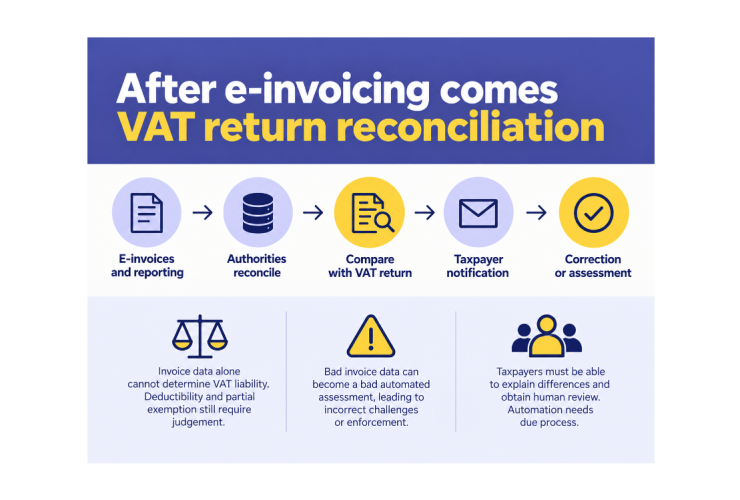
But all the only partial scope of e-invoicing / e-reporting mandates means there are gaps and reconciliation challenges to manage.
VATCalc: one engine, all reporting forms
VATCalc is designed for this reality. Unlike traditional point solutions, VATCalc supports all SAF-T regimes from a single, legislative-coded data model, ensuring that accounting extracts, VAT logic, and reporting outputs remain consistent across jurisdictions.
At the same time:
-
VAT Calculator accurately determines sales VAT on e-invoices in line with local domestic law and cross-border rules – this is our tax engine.
-
VAT Auditor validates and audits purchase VAT on incoming e-invoices, supporting correct recovery and risk control.
-
VAT Filer seamlessly reconciles and submits VAT returns using the same underlying data, without re-keying or parallel systems.
Because all modules operate on the same core engine, businesses can meet SAF-T, e-invoicing, e-reporting, and VAT return obligations without fragmentation, manual reconciliation, or duplicated implementations.
Ready for any digital reporting future
Whether the requirement is periodic SAF-T, real-time e-invoicing, ViDA-style e-reporting, or a combination of all three, the direction of travel is clear: more data, more consistency, and more scrutiny. VATCalc provides a single, integrated platform capable of supporting any form of digital VAT reporting, today and as mandates continue to evolve.