e-invoicing is exposing decades of neglected master data. But AI may finally offer a way out of the swamp
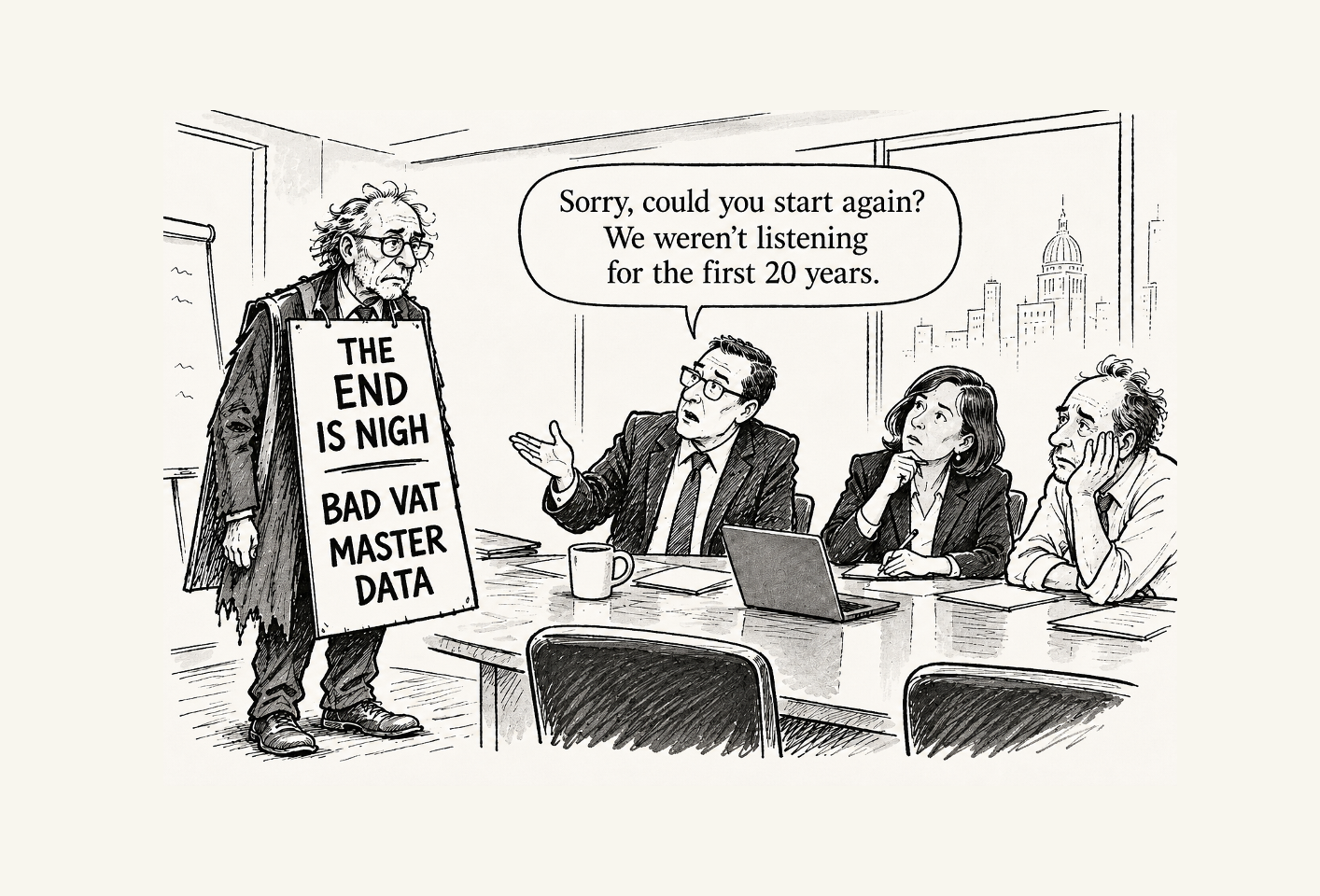
Every finance department has encountered them. The master data specialists who sit muttering to themselves…

Those earnest colleagues who insisted that customer records needed cleaning, product descriptions standardising and tax codes rationalising. They warned that one day all those shortcuts and inconsistencies would come back to haunt us.
Most people smiled politely and returned to more interesting work. Unfortunately, the bores were right.
E-invoicing exposes the master data swamp
For decades, businesses have accumulated vast quantities of inconsistent, incomplete and occasionally mysterious master data. ERP migrations, acquisitions, local tax codes and improvised workarounds have created a swamp that nobody particularly wants to enter.
Traditional VAT compliance could accommodate much of this disorder. Tax teams corrected classifications, adjusted returns and reconciled discrepancies after the event.
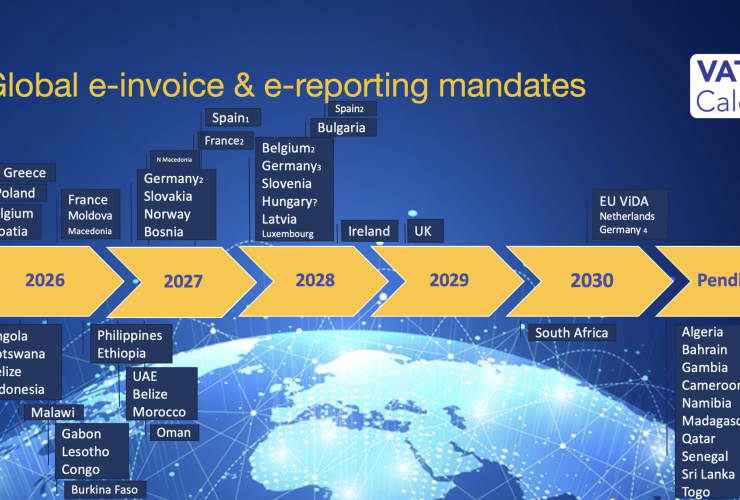
Mandatory e-invoicing is changing that. Germany’s requirements are exposing missing VAT numbers, unreliable customer records and inconsistent tax codes. Structured invoices demand information that businesses have often neglected to maintain.
Croatia provides another example. Its Fiscalization 2.0 regime requires six-digit KPD product classifications on electronic invoices. Further obligations extending to businesses outside the VAT system from January 2027 will widen the challenge – and the EU ViDA Digital Reporting Requirements.
The problem isn’t the e-invoice. It’s the information businesses are putting into it.
AI enters the swamp
Fortunately, just as the problem becomes impossible to ignore, AI is providing new ways to address it.
Tasks that previously required armies of consultants, spreadsheets and endless workshops can increasingly be accelerated through AI-assisted cleansing, enrichment and classification.
AI can interpret inconsistent product descriptions, identify missing information and map thousands of legacy ERP tax codes into a standardised structure. This is particularly valuable for multinationals operating multiple ERP systems, each with its own historical peculiarities.
But there is an important distinction between using AI to understand a transaction and trusting it to calculate the VAT.
AI prepares the data. The tax engine applies the law.
VATCalc combines both capabilities:
- Our AI Item Classification helps businesses classify products and services; and
- Our AI Mapping Studio accelerates the mapping of ERP data and legacy tax codes.
AI handles the ambiguity and proposes classifications for validation. VATCalc’s deterministic tax engine then applies the relevant legislation to determine the correct VAT treatment, with the same platform supporting reporting, returns and audit reconciliation.
AI understands the transaction. VATCalc determines the tax.
The bores get their revenge
For years, master data management was regarded as the unglamorous housekeeping of enterprise technology. Necessary, certainly, but rarely something that excited the boardroom.
Digital VAT compliance has changed that. Poor master data is becoming an externally visible compliance risk, just as AI makes the clean-up increasingly achievable.
The master data specialists can enjoy their moment of vindication. Although one suspects they’ll soon be invited to join the AI Data Governance Steering Committee.
Some things never change.