E-invoicing, pre-filled returns and the growing problem of taxpayer reliance
VAT compliance is becoming increasingly automated. E-invoices feed tax authority platforms, transaction data is matched between suppliers and customers, and tax authorities are moving towards pre-filled VAT returns.

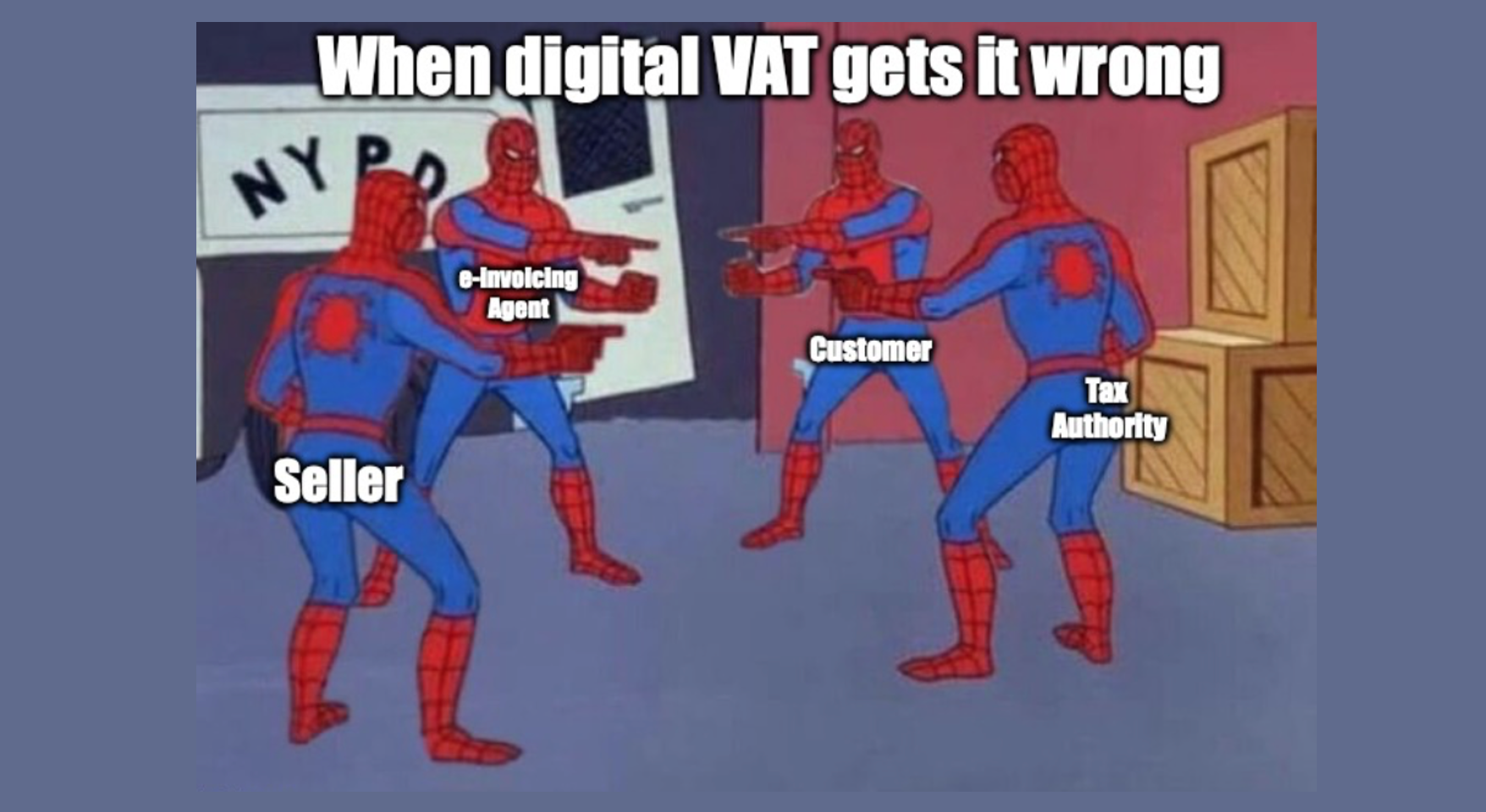
But there is an awkward question behind all this automation: who is responsible when the digital VAT system gets it wrong?
In most cases, the answer, well according the EU VAT Directive and global national rules, remains the taxpayer. That may become increasingly difficult to justify as governments take a greater role in collecting, validating, matching and ultimately calculating VAT data.
The VAT compliance chain is getting longer
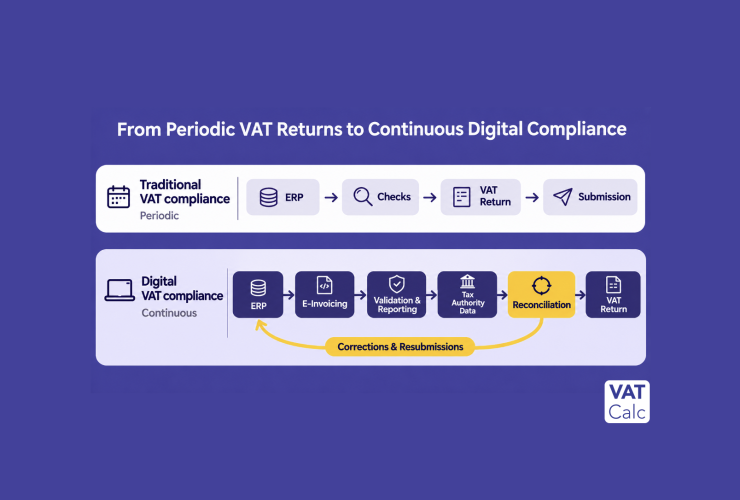
Consider an increasingly typical digital VAT transaction. A supplier’s ERP determines the VAT treatment. An e-invoicing platform creates and transmits the invoice. An accredited provider may validate it. The tax authority receives transaction data, matches supplier and purchaser records and may eventually use those transactions to populate the VAT return.
The compliance chain starts to look like this:
Supplier → ERP/tax engine → e-invoicing provider → tax authority → pre-filled VAT return → taxpayer
Errors can arise anywhere along it: incorrect VAT determination, rejected or altered data, timing differences, mismatched transactions, incorrectly processed credit notes or transactions allocated to the wrong period.
Yet responsibility for finding the error can still end up with the taxpayer.
A valid e-invoice isn’t necessarily correct VAT
This is particularly important with e-invoicing.
An invoice successfully passing through an e-invoicing network does not mean its VAT treatment is correct. Technical validation can establish that required fields exist and that an invoice complies with a specified format. It cannot necessarily establish whether the transaction has been classified correctly, an exemption applies, the place-of-supply rules are correct or the customer is entitled to deduct the VAT.
The problem becomes more interesting when tax authorities use those same invoices for VAT control.
If an invoice has passed through a government-mandated system, been accepted by the tax authority and subsequently appears in a pre-filled VAT return, how much checking can reasonably still be demanded of the taxpayer?
If the answer is “everything”, digitalisation has removed surprisingly little compliance responsibility.
Pre-filled VAT returns expose the problem
Hungary and Romania have already demonstrated some of the practical difficulties surrounding pre-filled VAT reporting. Tax authorities can possess enormous quantities of transaction data without necessarily possessing all the information required to determine the final VAT position.
Timing differences, missing transactions, corrections, deductions and legal interpretation still matter. A pre-filled return may therefore be better understood as the tax authority’s proposed VAT position rather than an unquestionably correct return.
This creates a different compliance task. Instead of preparing a VAT return solely from its accounting records, a business increasingly has to reconcile its books, its e-invoices and the tax authority’s data.
If those three don’t agree, somebody still has to determine which one is right.
Tax liability isn’t the same as penalty liability
An error by a tax authority does not necessarily mean VAT legally due should disappear. The underlying tax may still be payable. But penalties are different.
If a taxpayer supplied the required information and reasonably relied upon an official calculation, should it be penalised because the authority’s system subsequently processed that information incorrectly?
A solution could be protected reliance: where taxpayers have complied with clearly defined obligations, they should receive protection against penalties arising from errors in designated official calculations.
That concept could become increasingly important for VAT.
ViDA makes the question more urgent
The EU’s VAT in the Digital Age reforms will dramatically increase the amount of structured transaction data flowing through VAT systems. That should improve fraud detection and potentially simplify compliance, but it will also mean more automated comparisons and system-generated discrepancies.
The question therefore starts to change from “who filed the VAT return?” to “who controlled the data and calculation that produced the VAT result?”
Businesses may increasingly be required to use mandated ViDA digital infrastructure while remaining responsible for detecting errors generated somewhere within it.
The VAT return isn’t disappearing — partly because liability isn’t
Tax authorities may eventually possess enough transaction data to construct much of a VAT return themselves. But as long as taxpayers remain responsible for the final VAT position, businesses will still need a control point between their accounting records, tax determination, e-invoices, tax-authority data and the return.
The VAT return isn’t dying. It is becoming a reconciliation statement.
And behind that reconciliation sits a question digital VAT reform has yet to resolve properly:
If governments increasingly calculate the tax, at what point must they also accept some responsibility when the calculation is wrong?