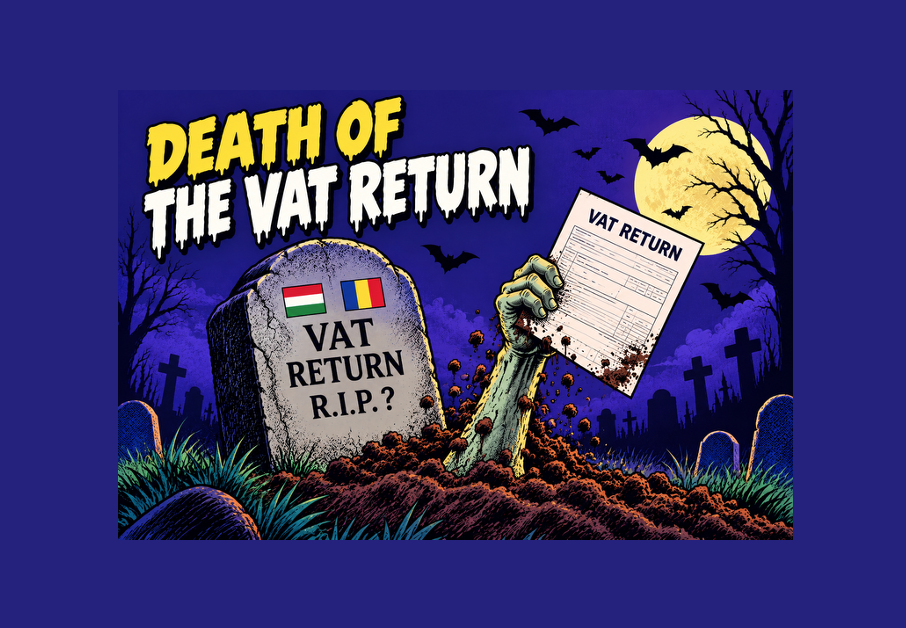
Hungary and Romania expose different problems with pre-filled VAT returns: having the transaction data does not mean having the return
Pre-filled VAT returns look like the logical next step in digital tax administration as global e-invoicing mandates roll out.

E-invoicing, SAF-T, customs reporting and fiscalised cash registers give tax authorities unprecedented transaction-level data. But turning those feeds into a VAT return is proving rather harder than collecting them.
Hungary and Romania provide two useful warnings.
Romania: the reconciliation problem
Romania launched RO e-TVA in 2024. ANAF uses information from e-Factura, SAF-T, customs, electronic cash registers and other sources to construct its own VAT position and compare it with the taxpayer’s D300 return.
The original model had teeth. Significant differences could trigger compliance notifications requiring taxpayers to explain discrepancies.
Romania subsequently retreated from much of that enforcement framework. Key obligations and sanctions were removed as the authorities encountered the practical difficulty of reconciling their data with taxpayers’ VAT positions.
Timing differences, credit notes, corrections, cash accounting and customs transactions can all create legitimate discrepancies.
The wider experience of e-invoicing reinforces the point. A majority of businesses still do not routinely reconcile their e-invoice data with their VAT returns. Manual processes, fragmented systems and master-data problems remain common.
Pre-filling does not make those differences disappear. It makes finding and resolving them more important.
Hungary: the implementation problem
Hungary provides a different warning.
NAV already receives extensive transaction data through Online Számla invoice reporting, online cash registers and customs systems. Its eÁFA service is intended to use this information for increasingly automated VAT compliance.
Yet in October 2026, NAV proposed slowing the mandatory transition.
Instead of withdrawing the existing ÁNYK filing system at the end of 2026, NAV proposes a phased migration. The largest businesses would move during 2027, while most VAT taxpayers, including SMEs, would have until 1 January 2028.
NAV’s consultation explains why.
55% of accountants cited insufficient preparation time and delayed accounting software development. More strikingly, 64% of software developers had not yet begun actual testing.
The tax authority can have the data and the infrastructure. The accounting ecosystem still has to be ready to use it.
Having the invoices is not having the return
Romania and Hungary expose different parts of the same problem.
Romania shows the difficulty of reconciling tax authority data with the taxpayer’s VAT position. Hungary shows the implementation challenge even when extensive transaction data already exists.
And businesses face the same issue internally. E-invoice data has to be matched with ERP records, accounting entries and the eventual VAT return. Today, that reconciliation is still far from universal and frequently requires manual intervention.
The process is therefore actually:
- Transaction data → tax determination → validation → reconciliation → VAT return
That matters as tax authorities increasingly look towards pre-filled VAT returns.
Pre-filled VAT does not eliminate compliance. It shifts the work towards validation, exceptions and reconciliation.