Fiscalis Workshop reviews Platform Economy under EU VAT in the Digital Age (ViDA)
The European Commission’s Fiscalis Workshop in Madrid (17–18 September 2025) brought together around 80 participants from 27 Member States, the VAT Expert Group (VEG), and representatives from the platform economy.
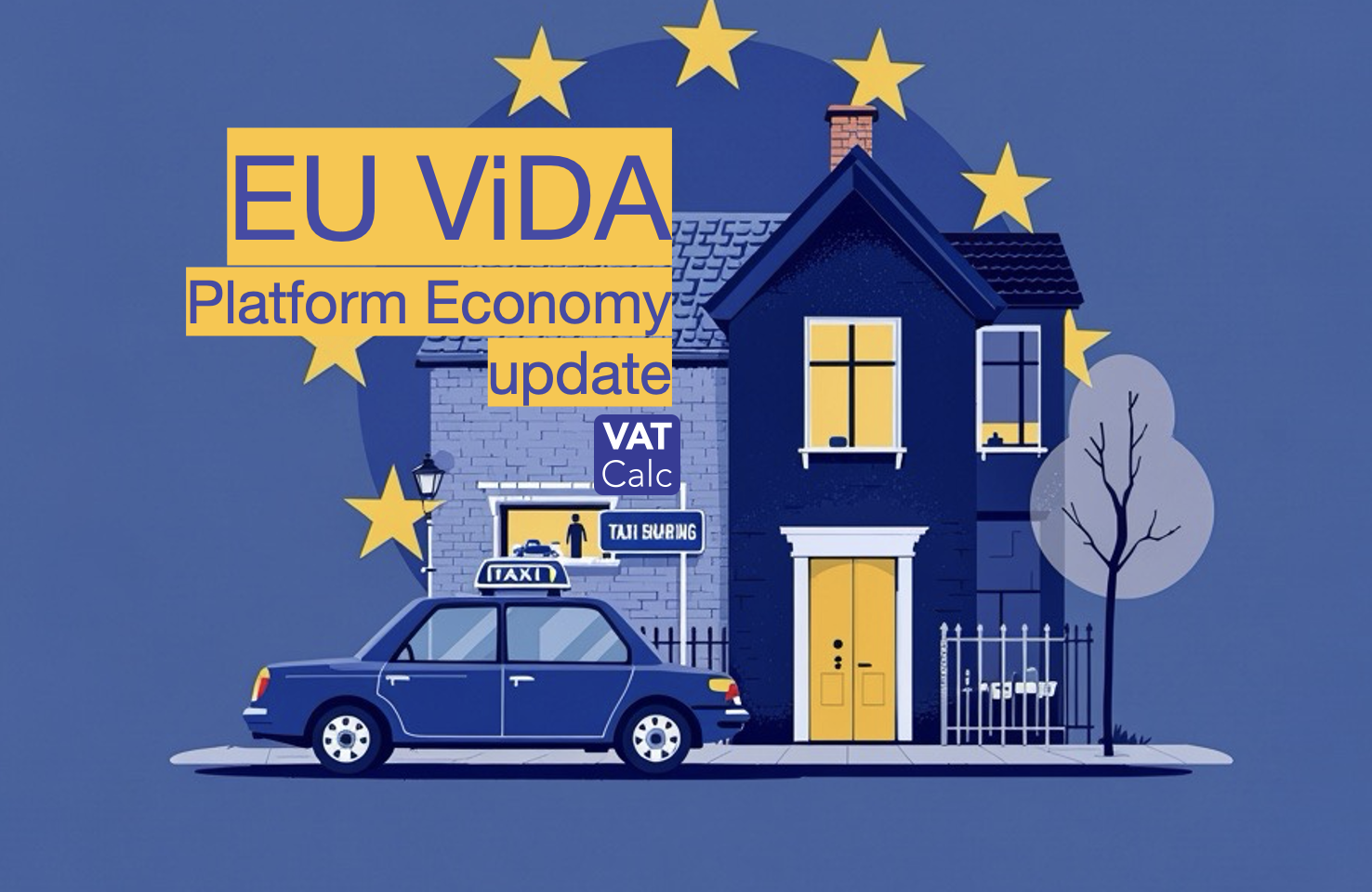
This was an assessment of the progress and challenges surrounding Pillar 2 of the VAT in the Digital Age (ViDA) package — focusing on the imposition of the (Deemed Supplier Mechanism DSM) on the platform economy and the forthcoming explanatory notes.
This Pillar becomes voluntary July 2028 and mandatory January 2030.

Deemed Supplier, complex supply chains and Toms – lawmakers and marketplaces exchange views
The workshop fostered dialogue between tax administrations and the digital economy. Participants agreed that balanced input from both sides is essential to ensuring that the explanatory notes — expected in draft form by Q1 2026 — provide sufficient clarity and practical guidance for implementation across the EU. Businesses and Member States have been invited to submit further feedback within two weeks following the event.
Challenges around ViDA Pillar 2
1. Application of the deemed supplier model (DSM)
The workshop’s central theme was how to apply the DSM, under which online platforms may be treated as the supplier for VAT purposes when facilitating certain transactions (notably short-term accommodation and passenger transport). The discussion highlighted the tension between creating a level playing field and avoiding undue administrative burdens on smaller operators.
2. Roles and responsibilities of platforms
Participants examined the scope of platforms’ compliance duties, including record-keeping, invoicing, and VAT collection. Many called for clearer demarcation between platforms’ intermediary role and full VAT liability as deemed suppliers.
3. Interaction with Article 28 and TOMS
Complex overlaps between the DSM, Article 28 (agency relationships), and the Tour Operators Margin Scheme (TOMS)remain a key interpretative challenge. Some Member States questioned whether double taxation or inconsistent treatment could arise where platforms mediate in multi-party or chain transactions.
4. SME exemption and proportionality
Delegates discussed whether the small enterprise exemption under Article 284 could apply to platform operators acting as deemed suppliers. This raises questions about proportionality and the risk of competitive distortions if digital intermediaries are excluded.
5. Facilitation fees and Article 46a
The taxation of facilitation fees charged by platforms — and the interaction with new Article 46a clarifying place-of-supply rules — was identified as another technical area requiring explicit examples in the explanatory notes.
6. 2028 voluntary launch timing and implementing regulation
The workshop also addressed concerns about synchronising the adoption of implementing measures with national transposition timelines. Several Member States urged the Commission to ensure legal certainty well in advance of 2027, when ViDA’s platform reforms are expected to take effect.
Policy differences on Platform Economy reform
Debate was particularly animated around:
-
Whether the deemed supplier model should be optional in specific cases;
-
The dividing lines between the DSM, Article 28 and TOMS;
-
Treatment of complex, multi-link or chain transactions;
-
The broader interaction of the DSM with general VAT rules; and
-
The need for transparency from Member States in applying uniform interpretations.
Next – completing explanatory notes early 2026
The Commission will now begin drafting the explanatory notes, taking into account the workshop’s findings and subsequent written feedback. A first draft is anticipated in early 2026, with continued consultation between Member States, businesses and VAT practitioners.
EU VAT in the Digital Age reforms
| EU VAT in the Digital Age | |
| 3 pillars to improve efficiency of VAT for all and reduce fraud | |
| 1. Digital Reporting Requirements; e-invoicing | Jul 2030-35: Mandatory digital reporting of intra-community transactions; obligation to be able to issue and receive intra-community e-invoices; member states free to impose own e-invoicing or real-time reporting but most conform to EU e-invoice standard EN 16931 |
| Read more about EU Digital Reporting Requirements (DRR) | |
| Structured e-invoices mandated for intra-community supplies | |
| EC Sales lists replaced by Digital Reporting Requirements | |
| 10-day e-invoicing deadline for intra-community sales | |
| 5-day e-reporting time limit intra-community purchases | |
| Withdrawal of EU permission requirements for e-invoicing | |
| Central VIES database launch | |
| 2 Platform economy | Jul 2028 / Jan 2030: Travel & accommodation sharing platforms to become deemed supplier / liable to users' VAT. New definitions of the roles of providers, users and platforms to avoid double and no-taxation (voluntary Jul 2028) |
| Read more - Travel & accommodation platforms deemed suppliers for EU VAT | |
| 3 Single VAT Registration; extension of OSS | July 2028: Following the 1 July 2021 introduction of the One Stop-Shop (OSS), extended to cover movement of own stocks prior to cross-border B2C to reduce the foreign, non-resident VAT registrations & returns. Plus to movements of own stock with ending of 'call-off' stock burden |
| January 2027 initial changes | |
| Transfer of own goods OSS extension | |
| Call-off stock VAT simplification ends | |
| Harmonisation of B2B Reverse Charge rules | |
| Creation of Single VAT Registration identiy | |
| Securing IOSS (Mar 2028) | |