Commission publishes the future registration model underpinning the expanded OSS and Single VAT Registration reforms
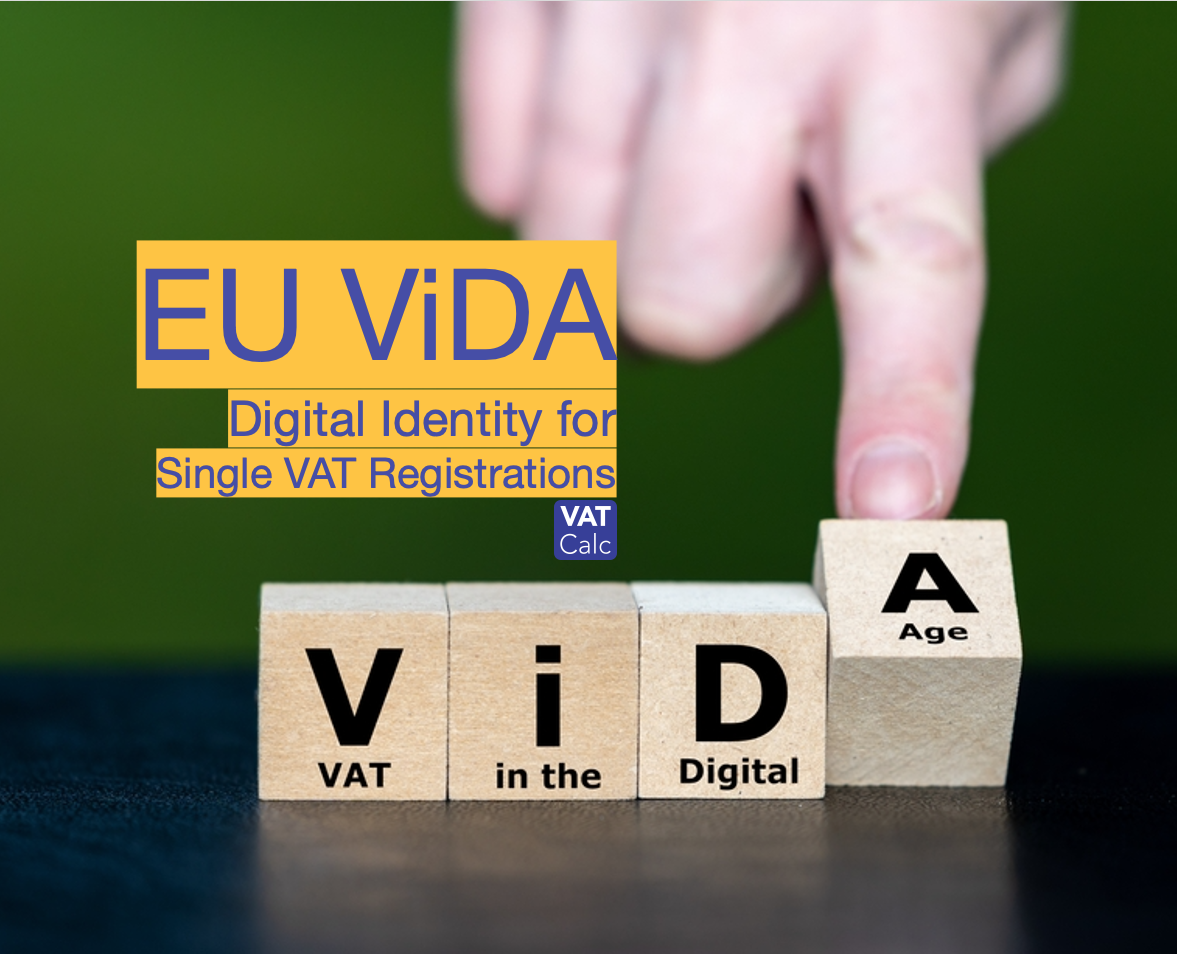
The European Commission has published the technical framework that will support the VAT in the Digital Age (ViDA) Single VAT Registration (SVR) reforms, providing the first detailed view of the taxpayer information businesses will need to maintain under the expanded One Stop Shop (OSS) regime.

While the regulation introduces a small number of registration changes from 1 January 2027, including additional website and VAT group information, the far more comprehensive digital taxpayer model will accompany the wider Single VAT Registration reforms from 1 July 2028.
More than a VAT registration
Under the new July 2028 model, businesses using the One Stop-Shop OSS returns for Transfer of Own Goods scheme will maintain a much richer taxpayer profile. Depending on the scheme used, registration information may include:
- VAT registration numbers held in multiple Member States;
- details of fixed establishments;
- VAT group status;
- electronic interface (marketplace) status;
- website addresses;
- contact information;
- bank account details (IBAN/BIC);
- previous OSS registrations;
- SME scheme registration numbers;
- intermediary identification numbers; and
- commencement and registration dates.
Rather than simply identifying a business for VAT purposes, the Commission is creating a digital taxpayer identity capable of supporting registration, reporting and administrative cooperation across the European Union.
Improving data quality and exchange between countries
The regulation also introduces measures to improve the quality of registration data.
Member States will increasingly pre-fill registration applications using information already held within their national databases, while businesses remain responsible for confirming that the information is correct before submission.
At the same time, VAT registrations and identification data will be exchanged automatically between Member States through a central register or another trusted data-sharing platform, ensuring tax authorities maintain an up-to-date view of businesses using the various VAT special schemes.
A single digital taxpayer identity
Rather than treating taxpayer registration, VAT determination and VAT reporting as separate compliance processes, Single VAT Registration moves towards a connected digital framework built around a single taxpayer identity.
That identity will support:
- VAT registrations;
- VAT determination;
- One Stop Shop reporting;
- Transfer of Own Goods reporting;
- automated information exchange between Member States; and
- future digital VAT initiatives.
VATCalc perspective
The Commission’s new registration model reinforces the direction of travel for digital VAT compliance.
Success under ViDA will depend not only on calculating the correct VAT, but also on maintaining consistent taxpayer data that flows seamlessly into reporting and audit.
This is where integrated tax technology becomes increasingly valuable. By combining taxpayer master data, legislative-coded VAT determination and OSS reporting within a single platform, VATCalc helps businesses manage the increasingly connected compliance requirements introduced by ViDA.
EU VAT in the Digital Age reforms
| EU VAT in the Digital Age | |
| 3 pillars to improve efficiency of VAT for all and reduce fraud | |
| 1. Digital Reporting Requirements; e-invoicing | Jul 2030-35: Mandatory digital reporting of intra-community transactions; obligation to be able to issue and receive intra-community e-invoices; member states free to impose own e-invoicing or real-time reporting but most conform to EU e-invoice standard EN 16931 |
| Read more about EU Digital Reporting Requirements (DRR) | |
| Structured e-invoices mandated for intra-community supplies | |
| EC Sales lists replaced by Digital Reporting Requirements | |
| 10-day e-invoicing deadline for intra-community sales | |
| 5-day e-reporting time limit intra-community purchases | |
| Withdrawal of EU permission requirements for e-invoicing | |
| Central VIES database launch | |
| 2 Platform economy | Jul 2028 / Jan 2030: Travel & accommodation sharing platforms to become deemed supplier / liable to users' VAT. New definitions of the roles of providers, users and platforms to avoid double and no-taxation (voluntary Jul 2028) |
| Read more - Travel & accommodation platforms deemed suppliers for EU VAT | |
| 3 Single VAT Registration; extension of OSS | July 2028: Following the 1 July 2021 introduction of the One Stop-Shop (OSS), extended to cover movement of own stocks prior to cross-border B2C to reduce the foreign, non-resident VAT registrations & returns. Plus to movements of own stock with ending of 'call-off' stock burden |
| January 2027 initial changes | |
| Transfer of own goods OSS extension | |
| Call-off stock VAT simplification ends | |
| Harmonisation of B2B Reverse Charge rules | |
| Creation of Single VAT Registration identiy | |
| Securing IOSS (Mar 2028) | |