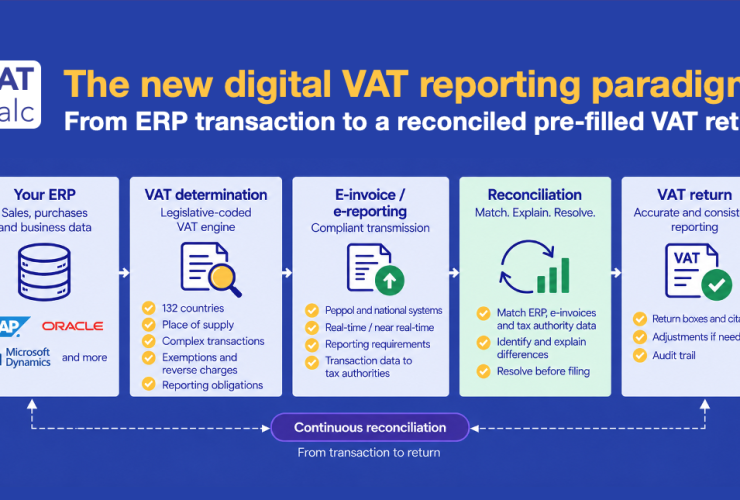
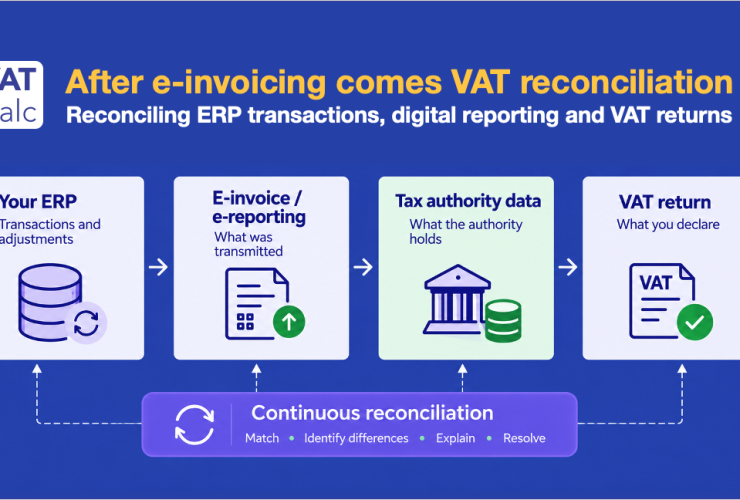
Diverse country standards; manual reconciliation; invoice and return mismatches; and differences to returns
Across Europe, tax authorities are turning to Standard Audit Files for Tax (SAF-T) as part of their push toward digitalisation and real-time oversight. While the idea is simple — standardised electronic reporting of transactional data — the reality for businesses, especially non-resident entities, is anything but straightforward.
Why SAF-T is so difficult
At its core, SAF-T compliance demands that businesses provide transactional data in a specific structure, schema, and syntax defined by each country. But here’s the problem:
-
No single standard: While SAF-T was first introduced by the OECD, each country has developed its own variation — from Portugal to Poland to Romania — with different data points, naming conventions, and XML requirements.
-
Manually intensive mapping: To comply, businesses must map their raw ERP data into each national SAF-T schema. This is often a manual, error-prone process, requiring expensive consultants or custom IT builds.
-
VAT calculation mismatches: Even after data is mapped, there’s a critical risk — does the SAF-T file actually tie back to the VAT on the invoices and returns? If not, discrepancies are flagged, audits triggered, and penalties follow.
-
Non-resident complexity: For businesses without a local presence, the challenge multiplies. Understanding local data expectations, aligning ERP outputs to national formats, and maintaining compliance across multiple jurisdictions is a near-impossible task without specialist support.
The VATCalc advantage: Legislative-driven SAF-T
This is where VATCalc is unique. Unlike generic SAF-T preparation tools or bolt-on solutions, VATCalc is built on a legislative codified tax engine. That means the rules of VAT — down to the article level of national laws and EU directives — are already digitalised inside the application.
What does that mean in practice?
-
Single source of truth: The same codified rules drive invoice VAT calculation, VAT return preparation, and SAF-T submission. No reconciliation headaches, no mismatched data, no separate tools to build or maintain.
-
Automation out of the box: Because the VAT rules are pre-built into VATCalc, businesses don’t spend months designing mappings and validations. They can be onboard and generating compliant SAF-T files in hours, not weeks.
-
Audit-proof compliance: VATCalc’s Auditor validates every transaction against legislation before SAF-T generation, ensuring amounts in SAF-T files reconcile with invoices and VAT returns – submitted within our single application in VAT Filer. This dramatically reduces the risk of audits or penalties.
-
For non-resident businesses: VATCalc handles multi-jurisdictional compliance centrally. Instead of relying on local advisors for each SAF-T format, businesses manage their filings through a single platform — with accuracy built into the core engine.
No other tax technology comes close
Other SAF-T tools can generate XML files — but they don’t solve the fundamental challenge: ensuring that the reported data actually matches legislated VAT treatments. That’s what makes VATCalc different. With VATCalc, compliance isn’t bolted on — it’s built in.
For businesses navigating SAF-T, VATCalc offers something no one else does: a single, legislative-driven application where invoice VAT, VAT returns, and SAF-T are all aligned — reducing cost, risk, and complexity in one stroke.
Standard Audit File for Tax SAF-T countries
| Country (click for details) | Date | Scope | |
| 15 | Mozambique | ? | Proposal in parliament |
| 14 | Belgium | Oct 2026 | Accounting SAF-T |
| 13 | Bulgaria | 2026 | Phased introduction over two years |
| 12 | Ukraine | On pause | 2025 launch missed; legislation withdrawn |
| 11 | Denmark | Jan 2024 | Phased implementation from 2024 |
| 10 | Romania | Jan 2022 | Mandatory monthly filings initially large taxpayers (due Jan 2023) |
| 9 | EU OSS & IOSS | Jul 2021 | On-demand for sellers, marketplaces or Intermediaries |
| 8 | Norway | 2020 | Replaced VAT return 2022 |
| 7 | Angola | 2019 | On-demand |
| 6 | Lithuania | 2019 | On-demand; residents and non-residents above €30,000 sales threshold |
| 5 | Poland | 2016 | Mandatory, monthly replaced VAT return Oct 2020 |
| 4 | France | 2014 | On-demand |
| 3 | Luxembourg | 2011 | On-demand |
| 2 | Austria | 2009 | On-demand |
| 1 | Portugal | 2009 | Monthly for residents and non-residents (Jun 2022) |