The costly errors of getting VAT Wrong – how Calculator prevents them
VAT may be billed as a “transaction tax,” but every business knows it is far more complex in practice. A single misstep in determining VAT can ripple through invoices, returns, and audits, creating costly problems.
Without a robust tax engine, businesses are left relying on manual rules, spreadsheets, or inconsistent ERP set-ups — all prone to error.

Here are some of the most common mistakes companies face:
1. Wrong Place of Supply
One of the hardest tasks in VAT is working out where a transaction is taxable. For cross-border services or digital sales, rules differ between B2B and B2C, and exemptions apply in unexpected ways. Businesses often apply the wrong country’s VAT, leading either to underpayments (a compliance risk) or overpayments (an avoidable cost). This can apply in cases such as the new B2C live streaming services rules in the EU.
2. Incorrect Rates and Exemptions
With over 175 country’s with VAT, keeping track of standard, reduced, and zero rates is a never-ending task. A single rate change — like Hungary’s food VAT cuts or Germany’s temporary fuel reductions — can catch businesses off guard. Worse, exemptions (e.g., in healthcare or financial services) are often misapplied, with companies charging VAT where none is due, or failing to charge it where it is.
3. Deductibility Errors
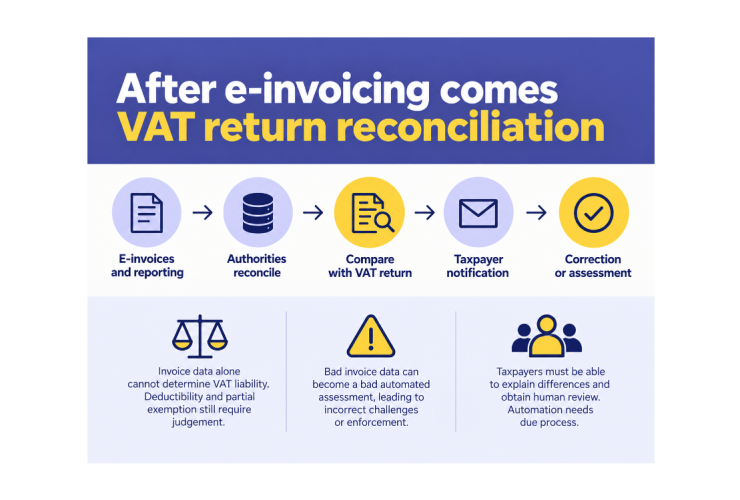
Not all VAT can be recovered. Rules around deductible vs. non-deductible input VAT vary by country and transaction type — travel, entertainment, or mixed-use costs are frequent problem areas. Misstated input VAT is one of the most common triggers of tax authority challenges.
4. Invoicing Mistakes
Even if the VAT is calculated correctly, invoices may not comply with local rules. Missing VAT numbers, incorrect descriptions, or failure to include mandatory references (such as reverse charge notices) can all invalidate the invoice, leaving businesses exposed. Tax cases such as ECJ VAT invoice disclosure requirements show how getting this wrong leads to lost VAT and penalties.
How VATCalc’s Calculator Fixes It
VATCalc’s Calculator removes these risks by codifying national VAT laws and the EU VAT Directive directly into its tax engine. That means:
-
Correct place of supply rules are embedded and continuously updated, with national tax law citations
-
All VAT rates and exemptions are pre-coded with legislative references
-
Deductibility is validated automatically – with clear full or partial deductibility calculations
-
Invoices are generated with the right statutory details every time – including domestic reverse charge mentioning
Because Calculator is integrated with VATCalc’s Filer, the same legislative engine that determines tax on invoices also drives your VAT returns, SAF-T, and e-reporting. No manual reconciliations, no parallel systems, no hidden errors.
Getting VAT wrong is costly. With VATCalc’s Calculator, you can get it right — every time, everywhere.
Contact us for a FREE trial
VAT automation products that simplify your international VAT determination, invoicing and reporting processes