2023 latest estimate of lost EU VAT widening by €27bn with mixed results across EU 27
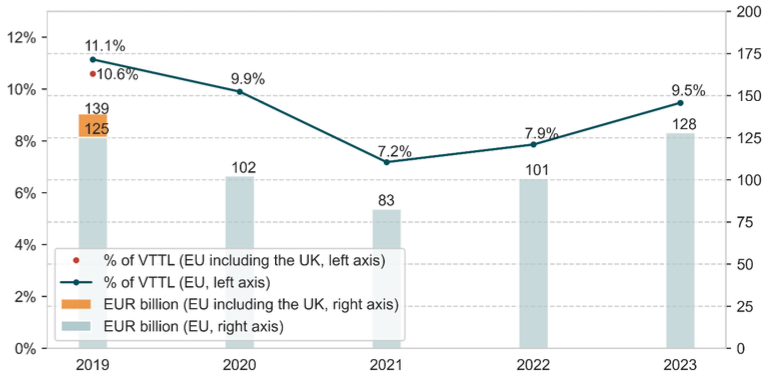
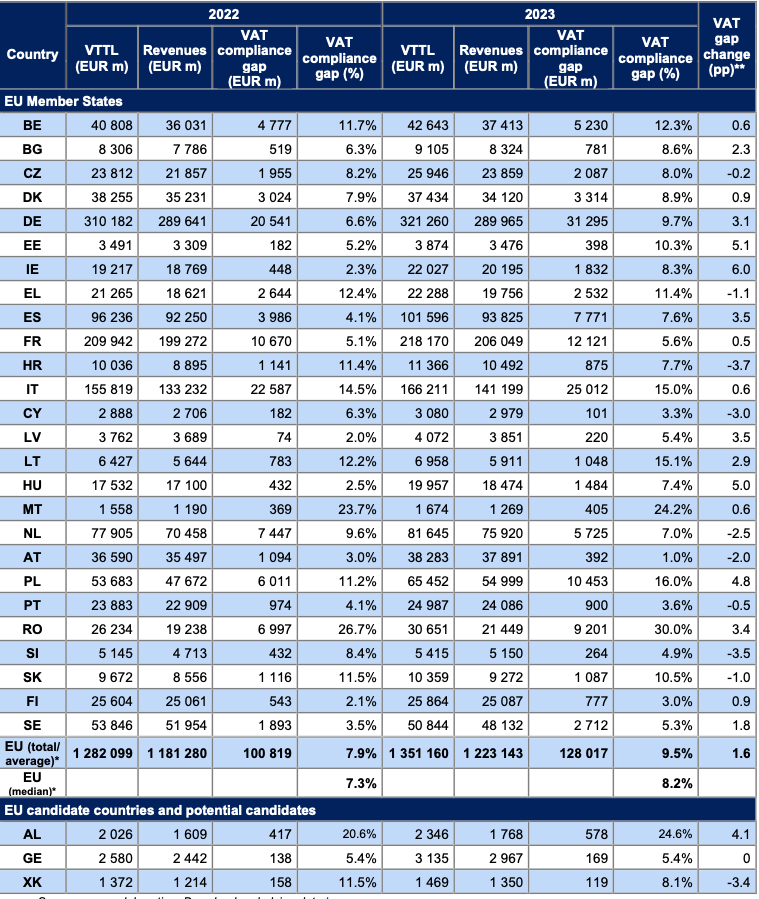
On 11 December 2025, the latest estimate of missing VAT revenues across the EU 27 member states was published by the European Commission. This shows an increase in the levels of uncollected VAT to €128bn from €101 billion 2022.
Major increases in VAT gap came from: Romania; Ireland; Poland; Latvia; Estonia.
The big improvers were: Croatia; the Netherlands; Cyprus and Slovenia.
Evolution of the VAT Gap from 2019 to 2023
Key EU VAT Policy Developments During 2023
EU VAT policy in 2023 was shaped by two major forces: the phased withdrawal of crisis-era reliefs and the initial implementation of measures under the Reduced VAT Rates Directive. Across the EU, Member States adjusted rates, modernised compliance frameworks, and advanced digital reporting initiatives.
Shifts in VAT Rates and Reliefs
Rollback of Crisis Measures
-
Many countries began reinstating pre-crisis VAT rates on energy.
-
Some temporary VAT reductions or zero-rates on essentials (including food, gas, and construction materials) were extended despite broader withdrawal trends.
Expansion of Zero-Rating for Essential Goods
-
Cyprus, Spain, Ireland, and Poland introduced or broadened zero-rating for core consumer goods.
-
Germany, Ireland, Austria, and the Netherlands adopted zero-rating for solar panels to support Green Deal environmental objectives.
Standard Rate Adjustments
-
Several countries updated VAT registration thresholds to ease administrative pressure on SMEs.
Compliance and Administration Changes
New Compliance Regimes
-
Poland launched VAT groups, enabling consolidated reporting.
-
Reverse charge mechanisms were expanded in Germany, Hungary, and Belgium.
Strengthened Enforcement Measures
-
Belgium extended its statute of limitations for VAT fraud and late filings.
-
Malta introduced stricter reporting obligations and tougher penalties.
Progress on E-Reporting and E-Invoicing
Advancements in Digital VAT Compliance
-
Portugal and Romania made significant progress towards mandatory e-invoicing and e-reporting.
-
Bulgaria, Spain, Slovakia, and Latvia reformed bad debt VAT recovery rules to improve accessibility for businesses.
 COVID and inflation-linked bankruptcies; sector hits
The rise in the gap has been attributed to financial difficulties following the ending of the COVID pandemic. In particular, the tourism and hospitality sectors were most damaged.
The VAT Gap seeks to estimate the difference between tax forecasts and actual receipts. Losses are down to:
- liquidations of companies owing VAT;
- tax authorities administrative inefficiencies
- lawful VAT structure optimisation; and
- fraud.
The European Commission Taxud launched a EU VAT Gap Initiative in 2022 to help exchange ideas between EU member states’ tax administrations to help close the gap.
ViDA proposals on e-invoicing and digital reporting to close gap further
The EU proposals for VAT in the Digital Age, which will include intra-community digital reporting requirements and e-invoicing to help drive down this gap further.