

DGI confirms 4-corner UBL e-invoicing 2026
Morocco’s Directorate General of Taxes (DGI) has confirmed the completion of the 2025/26 B2B e-invoicing pilot.
Based on the 2026 Finance Act, the full roll out is 2026, although no mandatory dates have been set.

Pre-clearance model, with Certified Service Providers to be introduced later
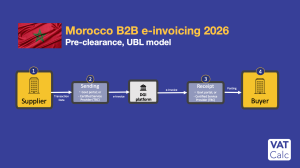
A draft decree outlining the framework has been submitted to the General Secretariat of the Government. This covers the new technical platform, which was developed, tested and validated during the pilot. It will be a phased, B2B launch, with B2C to follow at a later date.
Pre-clearance checks
In adopting pre-clearance Continuous Transaction Controls, the DGI service will first validate supplier invoices for:
- Formats
- Digital signature
- Data completness
Three options for e-invoicing submissions
There will be three options for submitting e-invoices:
- Free portal, aimed at small businesses with low volumes of invoices;
- Direct integration with taxpayers’ ERP’s via EDI; or
- Certified Service Providers
Initially, the DGI will act as e-invoicing service agent and platform operator. But it does plan to introduced Certified Service Providers who will act as clearing agents.
The adoption of e-invoicing is on the rise in Morocco, however, it is currently not mandatory. Businesses can choose to use e-invoices, but they must abide by the requirements laid out in the tax code, such as appropriate record keeping and ensuring that the recipient agrees to receive e-invoices.
Micro-services and universal standards 2026 launch
The DGI has adopted a microservices-based architecture, ensuring agility and scalability to meet the requirements of modern tax systems.
The Moroccan e-invoicing mandate is be based on universal formats such as the Universal Business Language (UBL) and the Cross-Industry Invoice (CII). These formats are standardised and widely recognised internationally, facilitating seamless interoperability across different systems and jurisdictions. Another critical aspect of this initiative involves promoting widespread adoption of electronic signatures.

