
Commissioner plans phased e-invoicing & e-reporting ahead of ViDA
Today’s Maltese budget has highlighted the EU state’s 24.2% VAT Gap, more than double that of the EU average.
This has prompted The Tax and Customs Administration (MTCA) to announced a phased introduction of e-reporting, including pre-filled VAT returns, in line with the July 2030 e-invoicing mandate.

The Commissioner for Tax and Customs Joseph Caruana has confirmed the MTCA will be accelerating Digital Real-Time Reporting (DRR) and e-invoicing, capturing transaction data as it occurs to reduce reliance on retrospective audits, cut errors, and enhance transparency. A phased launch schedule is expected soon, and will complete before the start of July 2030 DRR pillar of ViDA.
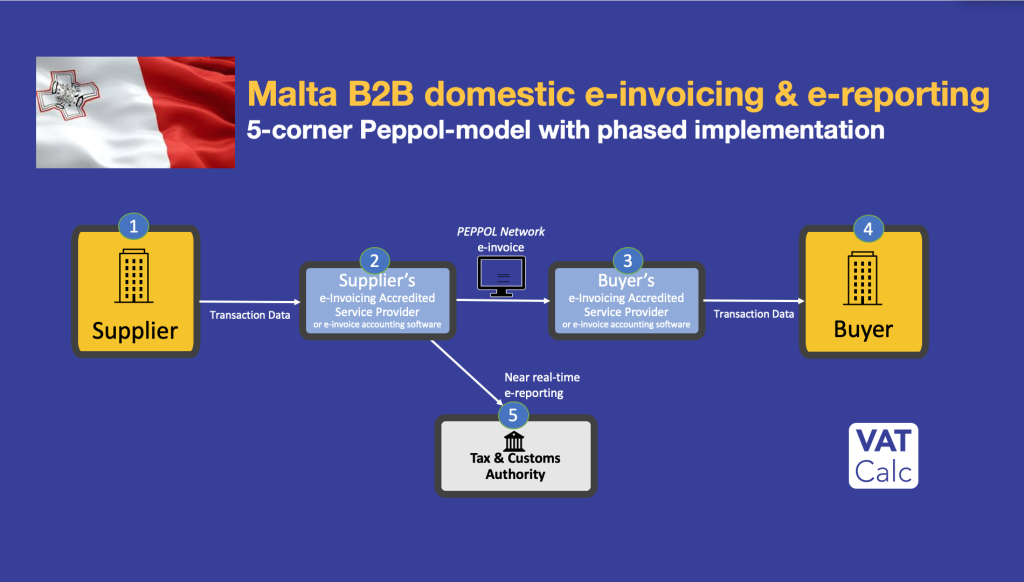
Malta prepares for ViDA
The initiative also anticipates the EU’s VAT in the Digital Age (ViDA) mandate, which requires real-time digital reporting by 2030. By gradually phasing in the system, Malta hopes to give businesses time to adapt while gaining a head start in regional digital tax administration.
There is today no B2B e-invoicing mandate. Malta has, over the past 3 years, been studying in detail the adoption and implementation of e-invoicing and real-time reporting for B2B, B2G and B2C transactions.
All public contracting authorities are required to accept and process electronic invoices that comply with the European Standard for e-invoicing, EN 16931 with Peppol base. Malta has chosen to use the Peppol BIS Billing 3.0 and its Core Invoice Usage Specification (CIUS) at the national level and does not foresee any separate national CIUS or additional extensions beyond the European standard.


