NAV indicates phased launch of B2B domestic e-invoicing from 2028
The National Tax Authority (NAV) and the Ministry of National Economy have confirmed the phased implementation of structured e-invoicing from 2028. Mandatory regime would likely follow in 2029. This follows a November 2025 public consultation and would cover domestic transactions, and dovetail with the ViDA intra-community transaction Digital Reporting Requirements too. Peppol will be adopted as the primary method of e-invoice exchange.
This mandate would replace the existing Real time RTIR reporting

Peppol e-invoicing model for domestic and ViDA intra-community transactions
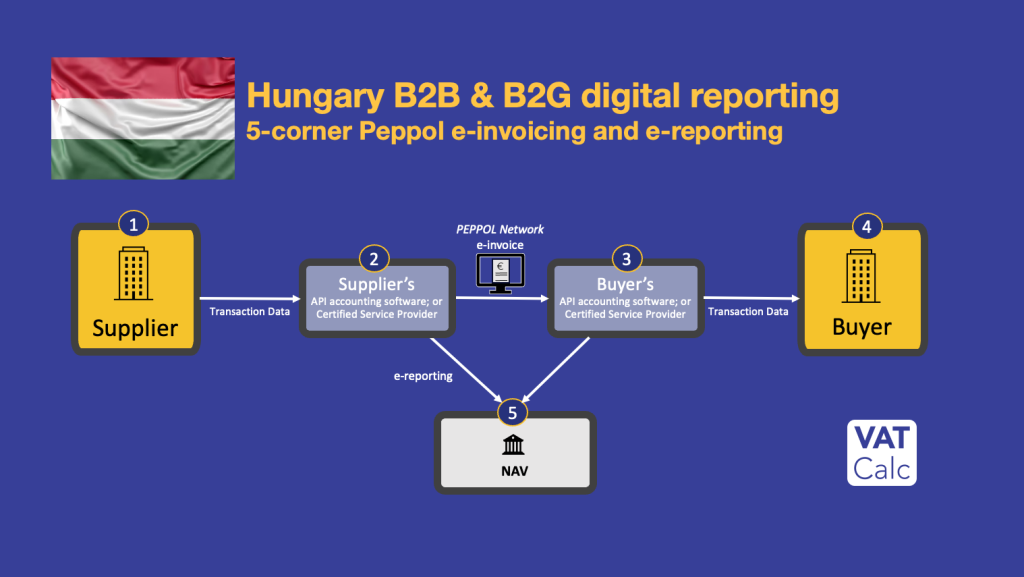
Scope of proposed Hungarian e-invoicing & e-reporting so far
- In scope for 2028 transactions include B2B and B2C domestic supplies and then intra-community B2B supplies as per ViDA for July 2030.
- E-invoices must comply with the EU’s EN 16931 standard, updated for 2026. NAV will provide a conversation solution between the existing OSA data structure and EN 16931. E-invoices will be XML-based
- A supplementary human-readable version of the e-invoice may be attached via an ESLT solution to be provided
- Invoice issuance deadlines:
- 8 days for domestic transactions (as per today)
- 10 days for intra-community supplies
- E-invoices should be exchanged by Peppol Network or similar secure, encrypted and authenticated channels. NAV will be appointed as the Hungarian Peppol Authority.
- Methods to send e-invoices:
- API adapted accounting software – this must be self-accredited, without a detailed IT audit
- Accredited e-invoice service providers
- Likely free NAV platform or app
- There must be basic logic checks on the contents of an e-invoice before issuance to ensure it complies for the schema etc of the new mandate, including validating the tax number of counter parties
- Taxpayers must provide each copy with an electronic stamp to NAV as part of the e-reporting process.
- Hungary will take-up the ViDA option of e-reporting purchase transaction to NAV. This must be done within 5 days of receipt of an e-invoice from the seller.
- Whilst data reporting on e-reporting on intra-community transactions will be limited per ViDA, NAV is requiring for e-invoicing data set for domestic transaction data.
- To support NAV’s monitoring for discrepancies, a new ‘Status Report‘ of e-invoices must be submitted with the regular Hungarian VAT return.
- B2C transactions are excluded from the mandate
- NAV support services for the mandate:
- Free application for e-invoicing to comply with ViDA
- Archiving retaining taxpayers e-invoices
- E-invoice feedback to keep taxpayers informed on status of reported transactions
- ViDA-OSA conversion tool to ensure can still apply existing OSA structure
1 Jan 2026 e-invoicing mandated for water utility supplies
The wholesale or utility of supply of water is to be mandated for Hungarian e-invoicing from 1 January 2026. This latest extension of e-invoicing follows the July 2025 mandate for
E-invoicing is separate from the existing real-time reporting requirement, in place since 2018. See our Hungary VAT guide for more background.
1 July 2025 obligation to use structured e-invoicing to prevent fraud
From 1 July 2025, Hungary’s e-invoicing mandate will extend to all business transactions within the electricity and natural gas sectors, per Government Decree No. 273/2007 (electricity) and Decree No. 19/2009 (natural gas). This applies to suppliers, traders, distributors, and transmission system operators, as well as non-consumer entities such as corporations, partnerships, trusts, and NGOs.
The original plan was for 1 January 2025, but this was shifted following industry feedback.
Follow global e-invoicing mandate tracker for details on Europe and rest of the world.
E-invoices may utilize any format approved by the Hungarian Tax Authority, such as UBL 2.1, UN/CEFACT CII, PEPPOL BIS 3.0, or signed PDFs. Storage must comply with VAT regulations. The framework does not mandate a specific e-invoicing format or exchange method, granting flexibility for entities in the electricity and gas sectors.
Hungary real-time transaction reporting 2018
Hungary leverages the NAV (Nemzeti Adó- és Vámhivatal) Online Számla system to collect VAT data in real-time via XML transmissions. While e-invoicing remains optional, entities must ensure compliance with the RTIR (Real-Time Invoice Reporting) system for tax data validation. Digital signatures are mandatory only for PDF invoices, whereas XML invoices are validated instantly through RTIR submissions.
Archiving requirements stipulate secure storage of e-invoices for a minimum of 8 years. This comprehensive approach facilitates seamless data collection, validation, and regulatory compliance without imposing rigid technological constraints on businesses.
Europe e-invoicing
VAT Rates
| wdt_ID | Country | Region | European Union | Rate | Rate type | Description |
|---|---|---|---|---|---|---|
| Country | Region |