
Ethiopia is targeting the rollout of e-invoicing to all large taxpayers by the end of December 2026, with VAT compliance as the initial priority.
The timetable was confirmed in Ethiopia’s commitments under its IMF programme. The Ministry of Revenue intends to use e-invoicing to improve monitoring of VAT returns and payments. Ethiopia has published Electronic Invoicing System Administration Directive No. 1142/2026,

Pre-clearance continuous transaction control model
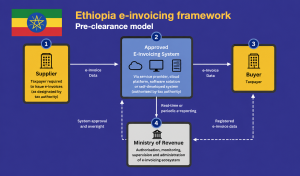
The Directive is now in force, but detailed taxpayer rollout schedule has not yet been published. Large taxpayers should therefore prepare for implementation by the end of 2026, while awaiting the Ministry’s formal notification of who must migrate and from which date.
Instead, it creates the regulatory framework that will underpin the regime, setting out how electronic invoicing systems will be approved, supervised and operated. The Ministry of Revenue Ethiopia is expected to designate taxpayers required to issue electronic invoices and publish the implementation timetable through subsequent guidance.
This is a notable approach. Rather than announcing a mandate first and issuing the technical rules later, Ethiopia has established the governance framework before beginning taxpayer onboarding.
A regulated e-invoicing ecosystem
The Directive applies to:
- taxpayers required to issue electronic invoices;
- electronic invoicing software providers;
- electronic invoicing service providers; and
- businesses operating self-developed invoicing systems.
Businesses will be permitted to issue electronic invoices using one of several approved models:
- approved electronic invoicing service providers;
- approved software solutions;
- approved cloud-based systems; or
- self-developed systems authorised by the tax authority.
The framework therefore regulates not only taxpayers, but the entire technology ecosystem supporting electronic invoicing.
Approval regime for software and service providers
A central feature of the Directive is the introduction of an approval and supervision regime.
Separate requirements are established for:
- taxpayers operating their own systems;
- cloud-based electronic invoicing platforms;
- software developers;
- electronic invoicing service providers.
The tax authority will be responsible for authorising, monitoring and supervising approved systems throughout their operation.
The Directive also requires valid electronic invoices to be registered through the Electronic Invoicing System and introduces invoice registration numbers and QR codes as part of the authentication process.
Full invoice lifecycle governed
The framework regulates the administration of electronic invoices throughout their lifecycle, including:
- invoice acceptance and registration;
- invoice cancellation;
- tax debit notes;
- tax credit notes;
- price and transaction adjustments; and
- administrative processing by the tax authority.
This provides businesses with defined procedures for correcting commercial transactions whilst maintaining audit integrity.
Manual invoicing permitted during outages
Recognising that technical failures may occur, the Directive permits taxpayers to issue manual invoices where an approved electronic invoicing system becomes unavailable.
However, this is only a contingency measure.
Businesses authorised to use manual invoices must complete corrective actions once electronic services are restored, ensuring transactions are subsequently incorporated into the electronic invoicing system.
Government entities included
Government budget institutions are also brought within the framework.
They must issue withholding tax receipts for domestic purchases of goods and services using the electronic invoice registration system, extending the regime into public sector procurement.
Implementation status – Ministry of Revenue yet to set timetable
The Directive has entered into force and provides the legal basis for Ethiopia’s electronic invoicing regime.
However, businesses are not yet subject to a universal mandatory implementation deadline.
Instead, the legislation enables the Ministry of Revenue to approve electronic invoicing systems and require designated taxpayers to adopt electronic invoicing. Further guidance is expected on:
- the categories of taxpayers that will be brought into scope;
- the implementation timetable;
- technical specifications for approved systems; and
- taxpayer onboarding procedures.
VATCalc comment – framework before timetables
The significance of this Directive lies less in an immediate compliance deadline and more in the architecture it creates.
Ethiopia has deliberately separated the legal framework from the implementation timetable. Before mandating electronic invoicing, it has established the regulatory regime governing approved software, cloud platforms, service providers and self-developed systems.
That gives software vendors and multinational businesses time to prepare for approval and integration requirements ahead of the first taxpayer implementation waves. It also suggests Ethiopia is moving towards a centrally supervised electronic invoicing model, with the detailed rollout expected to follow in future technical guidance.