
Eswatini (formerly Swaziland) issues public e-invoicing tender
The Southern African state of Eswatini is running a bidding process until 16 May for partners for the provision of fiscalisation technologies, with a formal tender in April 2025, to build a national e-invoicing regime. It’s likely that a 5-corner model e-invoicing between businesses and e-reporting to the tax authorities.
The tender is being run by the Eswatini Revenue Service (ERS). It is aiming for the project to be live by January 2028.
E-invoicing, e-reporting, fiscal devices and AI adoption
The scope includes:
- B2B e-invoicing;
- Fiscal data reporting ERS;
- Fiscal devices, including POS, to integrate with ERS;
- Use of blockchain technologies for transaction data storage and smart contracts;
- Artificial Intelligence and machine learning to analyse tax transactions to validate compliance;
- Mobil solutions and apps to support tax administration;
- Compliance automation, for taxpayer reporting and timely VAT payments; and
- Stock management and movement reporting to ERS.
Eswatini introduced VAT in 2012, which is currently charged at 15%.
Surrounding South Africa e-invoicing may go to a second consultation on its potential e-invoicing regime.
5-corner, Peppol e-invoicing model probable
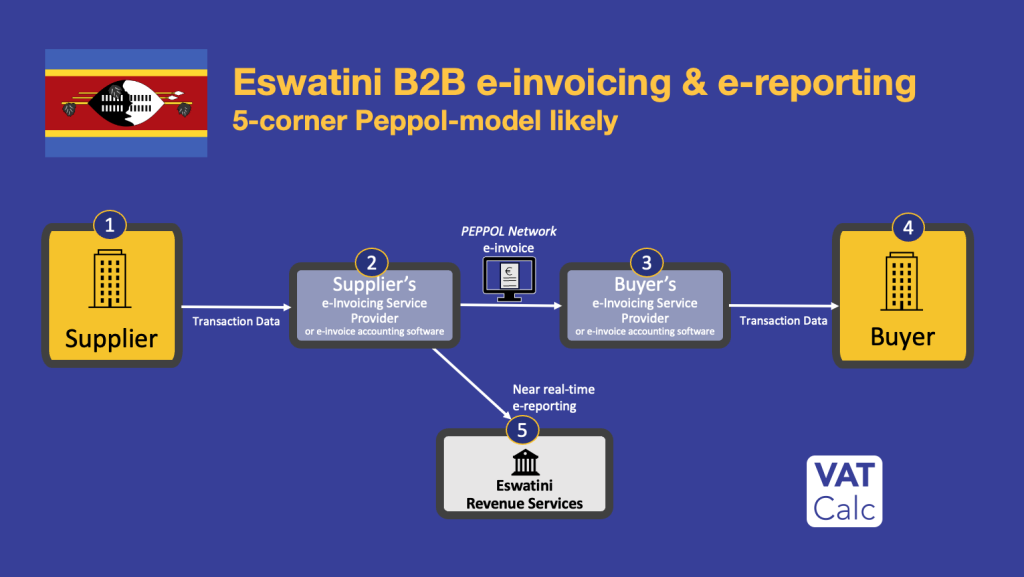
A 5-corner electronic invoice model involves five key parties: the supplier, supplier’s service provider, buyer’s service provider, buyer, and the tax authority. The supplier sends an e-invoice to their service provider, which formats and validates it.
The invoice is then transmitted to the buyer’s service provider, ensuring compliance with local regulations. The tax authority may receive a copy in real time or be notified of the transaction. This model promotes interoperability, tax compliance, and audit readiness while reducing fraud. It’s widely used in regions with decentralized but controlled e-invoicing frameworks, such as PEPPOL in the EU.
